How to Mark Specimen Provenance Properly
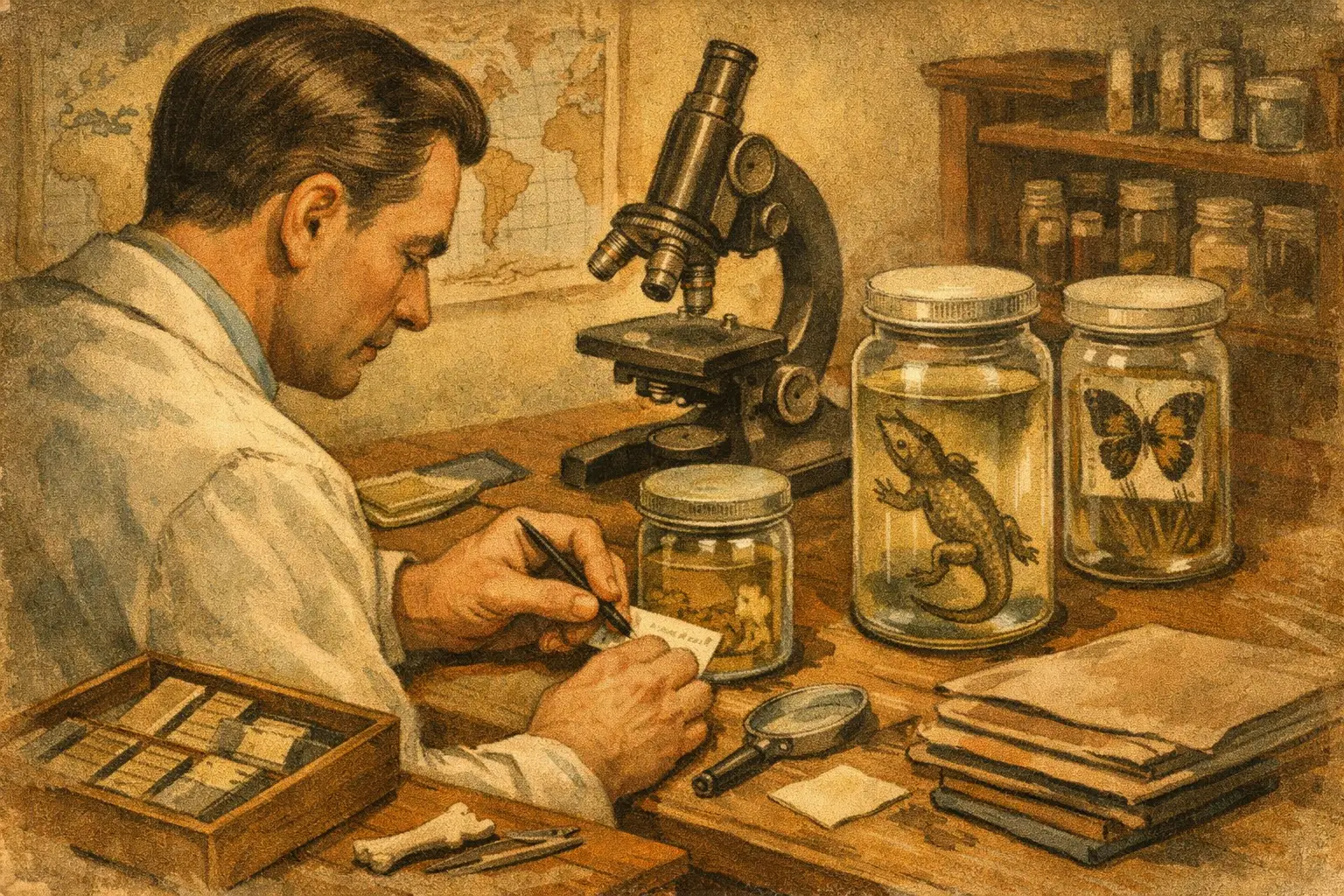
Learn how to mark specimen provenance with clear standards for labels, databases, locality detail, and provenance records collectors can trust.
A specimen with no locality is harder to study, harder to compare, and usually worth less to a serious collection. That is the practical reason collectors keep asking why mineral provenance matters - not as a paperwork exercise, but as a core part of identification, cataloging, and long-term collection value.
For collector-grade minerals, provenance is not a decorative extra. It is part of the specimen. A fluorite from Illinois, a pyrite from Navajún, or a wulfenite from Arizona carries meaning through origin, not only through species name. Once that origin is recorded loosely, inconsistently, or not at all, the specimen becomes less useful in a scientific, curatorial, and market sense.
What specimen provenance should actually include
The first mistake is treating provenance as a single place name. In practice, provenance is a layered record. The more serious the collection, the more clearly those layers should be separated.
At minimum, the origin record should include:
- country
- state, province, or region when relevant
- district, county, or mining area
- mine, quarry, outcrop, or exact locality
- acquisition source
- acquisition date, if known
- former collection, old label, or dealer attribution, if applicable
That distinction matters. Locality and ownership history are related, but they are not the same thing. A specimen may come from the Tsumeb Mine and also from a named historical collection. Both are provenance data, but they describe different aspects of the object.
How to label provenance on the specimen record
If your goal is consistency, use a fixed hierarchy every time. Do not alternate between broad and narrow formats depending on what feels convenient in the moment. A record that says "Morocco" next to one specimen and "Bou Azzer District, Drâa-Tafilalet, Morocco" next to another creates noise in the catalog.
A practical structure looks like this:
1. Separate broad locality from exact locality
Use one field for the full geographic hierarchy and another for the specific collecting site if your system allows it. That makes sorting and searching far easier later.
For example:
- Broad locality: Potosí Department, Bolivia
- Exact locality: Siglo XX Mine, Llallagua, Rafael Bustillo Province
This also helps when an old label gives only partial information. You can preserve the original wording while adding a normalized location in the main catalog.
2. Record the source of the information
Not all provenance data has equal certainty. Some details come from a mine label, some from the dealer, some from an old handwritten tag, and some from later research. Those should not be blended into one unquestioned statement.
A clean record often includes:
- locality as stated on original label
- standardized locality used in the catalog
- confidence level or note about uncertainty
That small distinction protects the integrity of the collection. If you later revise a locality, you still retain the historical wording attached to the specimen.
3. Preserve original spelling in notes, standardize in the main field
Collectors regularly inherit labels with obsolete mine names, old regional terms, or variant spellings. Do not erase that history. Preserve the original text in a note or transcription field, but standardize the searchable catalog entry for consistency.
This is especially useful for older European labels, legacy dealer stock, and localities that have changed administrative names over time.
Jak oznaczać pochodzenie okazów on physical labels
Digital records carry the full depth of provenance, but physical labels still matter. The challenge is space. A cabinet label cannot hold every data point without becoming unreadable.
The best approach is tiered labeling.
A display label should usually include:
- species name
- exact or accepted locality in a shortened format
- catalog number
A full archive label, whether printed or stored with the specimen box, can include:
- complete locality hierarchy
- acquisition source
- acquisition date
- old collection or dealer reference
- notes on label history or uncertainty
That division keeps the visible presentation clean while preserving curatorial depth behind the scenes.
What not to do on labels
A few habits create long-term problems:
- using only the country name for common specimens from heavily collected regions
- abbreviating localities so aggressively that they become ambiguous
- mixing acquisition source with geologic origin in one line
- rewriting old information without keeping the original wording anywhere
- relying on memory for unlabeled material, even temporarily
Temporary usually becomes permanent. In many collections, the biggest provenance losses happen not through dramatic mistakes but through small delays in documentation.
How detailed should provenance be?
It depends on the specimen, the source, and the confidence of the data.
For an inexpensive thumbnail acquired from a flats tray, you may have only country and mining district. That is still worth recording. For a high-end classic, a micromount with a published locality, or a specimen from a notable collection, the standard should be much higher.
Use this rule: record the most precise provenance you can support, not the most precise provenance you can guess.
That means if the label says "Touissit, Morocco," do not expand it to a specific mine unless you have a credible basis. On the other hand, if you have an original dealer card naming the exact shaft or level, that detail belongs in the record.
How to handle uncertain or incomplete origins
Uncertain data is still data, provided it is marked honestly. The problem is not incomplete provenance. The problem is incomplete provenance presented as certain.
Useful ways to handle uncertainty include:
- adding "probably" or "attributed to" in notes, not in the normalized main field unless necessary
- using a dedicated confidence note such as confirmed, probable, or unverified
- storing image records of old labels and envelopes alongside the specimen record
- distinguishing between seller-provided locality and independently verified locality
For advanced collections, photographs of labels are often as important as photographs of the specimen itself. They preserve chain-of-custody evidence and allow future review without repeated handling of fragile paper tags.
Jak oznaczać pochodzenie okazów in a digital catalog
A spreadsheet can work at first, but provenance becomes difficult to manage once your collection grows or your records need hierarchy, searchability, label printing, and image support. A proper catalog structure should let you record locality data in a repeatable format, while also preserving the exact wording from historical sources.
At a minimum, your digital system should support:
- separate fields for species, locality, source, and notes
- catalog numbers tied to each specimen
- image attachments for the specimen and its labels
- searchable locality formatting
- room for alternate names or legacy locality text
- printable labels that pull from the same master record
This is where a collector platform has a real advantage over a generic notes app. Provenance is not just text storage. It is structured specimen data that needs to remain readable on-screen, printable in cabinet form, and usable years later when you revisit the collection.
A practical format collectors can adopt immediately
If your current records are inconsistent, do not start by rebuilding everything from scratch. Start by applying one standard to all new acquisitions, then retrofit older specimens gradually.
A reliable specimen provenance template can look like this:
- Catalog number: CN40-2026-0142
- Species: Cerussite
- Standard locality: Touissit District, Oriental Region, Morocco
- Exact locality: Touissit Mine
- Locality as labeled: Touissit, Morocco
- Acquisition source: dealer, private collection, field collected, auction, estate
- Acquisition date: month/day/year
- Former collection: if applicable
- Provenance notes: old label present, locality unverified, matched to dealer invoice, etc.
The strength of this format is not complexity. It is separation. Each kind of information has its place, so you do not end up with a single overloaded text block that becomes harder to search and trust over time.
Why provenance discipline pays off later
Collectors often feel the benefit only years later. A well-documented specimen is easier to insure, exhibit, trade, study, and digitize. It is also easier to compare against literature records and other examples from the same locality.
Good provenance supports better collection management in several ways:
- it reduces duplicate buying caused by vague records
- it improves label quality and display consistency
- it helps verify species associations tied to locality
- it preserves historical context from old collections
- it strengthens resale and institutional credibility
That last point matters more than many collectors expect. Two visually similar specimens can sit in very different curatorial categories once locality quality and provenance chain are taken seriously.
If you want a collection to function like an archive rather than a storage box, provenance needs to be treated as primary data. Start with the label in your hand, capture exactly what it says, normalize it carefully, and leave room for future correction. A specimen can survive a century in a drawer. Its origin record usually will not, unless you build it to last.