What Photos to Add to a Mineral Specimen Record
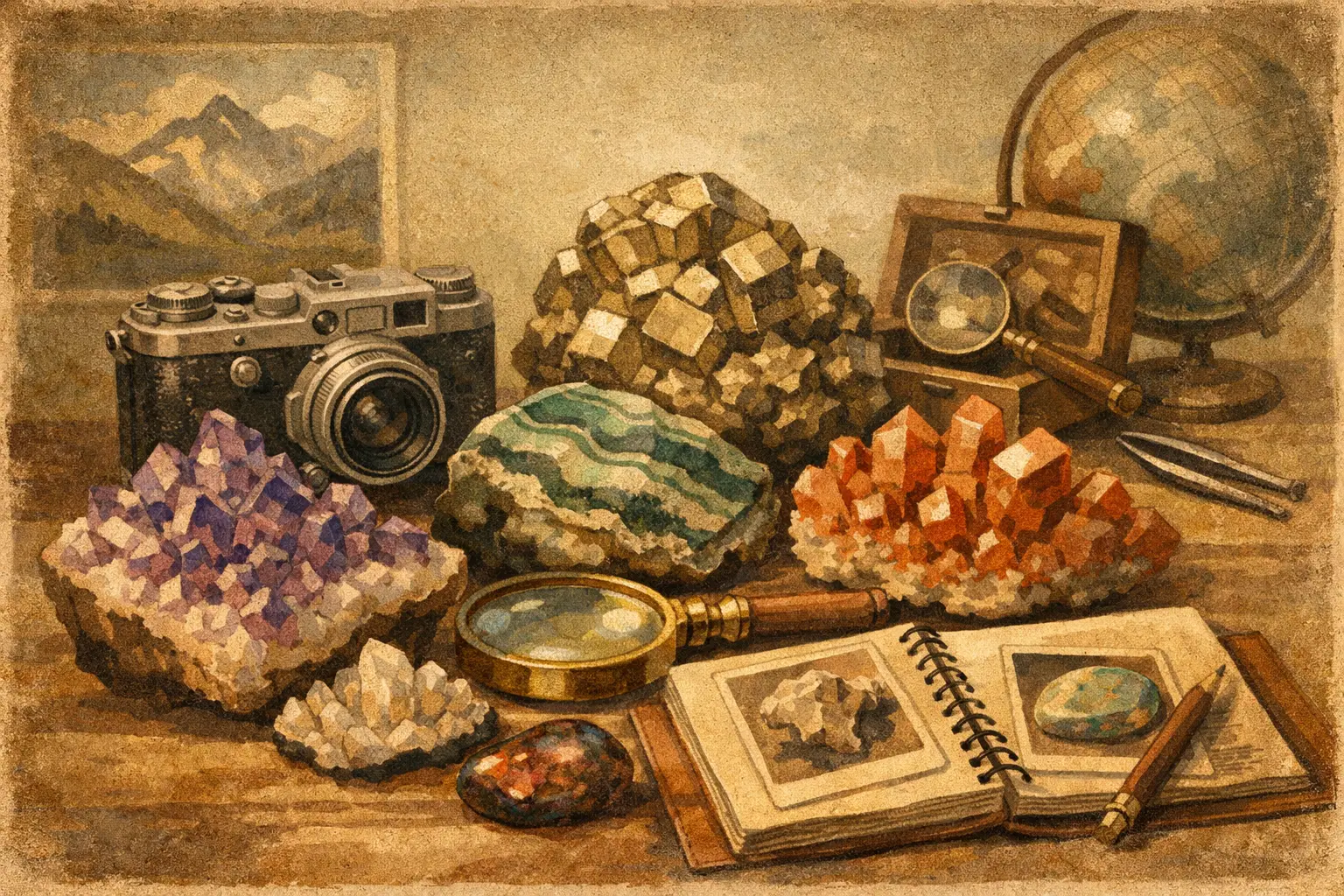
What photos should you add to a specimen record? Find out which shots best document the mineral, confirm its condition, and facilitate cataloging.
When a specimen record is missing the right images, even strong written data loses value fast. The question of what photos to add to a specimen is really a question about documentation quality: what needs to be visible so the specimen can be identified, assessed, compared, and presented properly over time.
For serious mineral collecting, one attractive photo is rarely enough. A collector-grade record should show habit, luster, damage, matrix relationship, scale, and any traits that matter for classification or provenance. Good specimen photography does not mean making the piece look dramatic at all costs. It means making the specimen legible.
What photos to add to a specimen record to make it complete
If you are building a digital catalog, the most useful image set usually starts with five core views. These are not excessive. They are the minimum that lets a record work later, when memory fades and the specimen is no longer in your hand.
- A primary front view that represents the specimen as it should appear in the catalog
- A rear view that shows matrix, contacts, repairs, labels, or mounting traces
- At least one side or angled view that reveals depth and crystal architecture
- A scale image with ruler, caliper, or a consistent size reference
- A detail shot for the most important feature, such as crystal terminations, zoning, inclusions, twinning, etching, or surface damage
That combination covers both presentation and evidence. If you only add one glamour shot, you may end up with a record that looks good but says very little.
The primary catalog image
This is the image most people treat as the whole record, but it should be only the anchor. Use a neutral background, even lighting, and a stable orientation. The goal is not artistic drama. The goal is a clear, repeatable image that shows the specimen in its most informative display position.
For cabinet specimens, the best front view usually balances aesthetics and morphology. If the specimen has a dominant crystal face, a preferred growth direction, or a classic association with matrix, choose the orientation that communicates that clearly. If there is no single obvious front, pick the view you would want to see first if you were reviewing the specimen years later.
Reverse and side views
Back and side images are where many records become genuinely useful. The reverse often reveals old adhesive, contact points, trimming, saw marks, natural fracture surfaces, or an older collection label still attached to the matrix. These details matter for condition assessment and provenance.
Side views help when the specimen has significant relief, cavity depth, stacked crystal growth, or a form that reads poorly from the front. A fluorite cluster, for example, may look compact head-on but show stepped growth and damage clearly from an angle. A thumbnail on matrix may appear ordinary in one view and highly diagnostic in another.
Photos that support identification, not just appearance
A specimen record should help answer future questions. Is the luster vitreous or silky? Are the crystals doubly terminated? Does the piece show cleavage, iridescent tarnish, zoning, or mineral association that was easy to miss at first glance? The right close-ups make the record far more durable.
Detail shots and macro images
Add close-up images when the specimen has a feature that carries scientific, market, or display importance. Useful macro targets include:
- Crystal terminations
n- Twinning or epitaxy
- Color zoning
- Inclusions
- Surface texture
- Damage to edges or tips
- Contact areas that affect display value
- Fine secondary mineralization
Not every specimen needs all of these. A massive specimen may need texture and fracture detail rather than crystal morphology. A micromount or miniature may need several macro images because the defining features are too small to read in a standard catalog shot.
The trade-off is practical. More detail images improve documentation, but they can also clutter a record if they repeat the same information. Add close-ups with a purpose. Each one should answer a question the main image cannot.
Scale and measurement photos
Dimensions entered as text are essential, but an image with scale adds context that numbers alone do not provide. A cluster listed as 4.8 cm can feel larger or smaller depending on relief, orientation, and matrix spread. A ruler or caliper image helps resolve that immediately.
For consistency, use the same style of scale image across your collection. That makes browsing easier and reduces ambiguity. If you manage many thumbnails, miniatures, or micromounts, consistency becomes even more important because size perception can shift dramatically between records.
What to photograph when condition matters
Collectors often hesitate to show imperfections, but hiding them weakens the record. A strong specimen file should document both strengths and liabilities.
If the specimen has edge wear, repaired contacts, cleaved areas, bruised terminations, or an unstable mount, photograph those areas directly. This is especially relevant for pieces that change hands, travel to shows, or are used in public galleries and collection presentations. Transparent documentation protects the integrity of the catalog.
Condition images do not need to be harsh or unflattering. They need to be accurate. Diffuse lighting and close focus are usually enough. The point is not to make damage look worse, but to make it visible and interpretable.
What photos to add to a specimen with a label and documentation
For many advanced collectors, the specimen is only part of the object. The historical paper trail matters too. If the specimen includes old labels, dealer cards, collection numbers, locality notes, or storage box annotations, photograph them.
These documentation images are often treated as secondary, but in provenance-sensitive collecting they can be as important as the specimen views themselves. Include:
- Front and back of original labels
- Handwritten locality slips
- Old inventory numbers attached to the specimen or box
- Dealer envelopes for micromounts
- Accompanying identification notes, if they add verifiable context
A label image can preserve information that might fade, detach, or become separated later. It also reduces transcription errors when you build or update the digital record.
Lighting choices change what the record says
The same specimen can look materially different under different lighting. This is why one photo is often misleading, especially for reflective or translucent minerals.
Diffuse light is best for overall form, matrix relationship, and honest color. More directional light can help show luster, striations, and crystal edges. Backlighting may be useful for translucent minerals, but only if it reveals a real property rather than creating a dramatic effect that distorts the specimen’s appearance.
It depends on the species and habit. Metallics, for example, often need careful light control to avoid blown highlights. Transparent fluorite or calcite may benefit from separate shots for external form and internal color zoning. Iridescent surfaces can be especially tricky because a single angle may exaggerate or suppress the effect.
If you need two images to tell the truth of the specimen, add two images. Documentation should follow the object, not a fixed photography rule.
A practical image set for most mineral records
For most collection-management workflows, a complete but efficient record includes:
- 1 primary catalog view
- 1 rear view
- 1 side or angled view
- 1 scale image
- 1 to 3 macro details
- 1 to 3 documentation images for labels or notes, when relevant
That means many specimens can be documented well in 5 to 9 images. Rarely is that excessive for a serious collection. In fact, it is usually the threshold where the record becomes genuinely useful for comparison, insurance support, resale preparation, exhibit planning, and long-term catalog quality.
If you are working in a collection platform such as Cabinet No. 40, this structure also keeps image roles clear. The lead image serves presentation, while supporting views preserve evidence and context.
Common mistakes when choosing photos for a specimen record
The most common problem is redundancy. Five near-identical front angles do less for the record than one front view and one clear reverse. The second problem is overediting. Heavy contrast, oversaturated color, and aggressive background cleanup can make a specimen look polished in the digital sense while becoming less trustworthy as a document.
Another mistake is skipping label photography because the data has already been typed into the record. Typed data is useful, but it is still an interpretation. An image of the original label preserves the source.
Finally, many collectors underestimate the value of photographing damage or unusual structure early. That matters when a specimen changes over time, sheds material, or is later re-identified. Good records are not built only for today’s display. They are built for future verification.
The best test is simple: if the specimen were packed away for five years, would your images let you understand what it is, how it looks, what condition it is in, and why it belongs in the collection? If the answer is yes, you have probably added the right photos. If not, the specimen is asking for one or two more careful views.