White Crystals of Hambergite from Skardu, Pakistan

SKU: B-0224_5-PK

An exceptional specimen of hambergite - numerous elongated crystals with a platy habit and distinct pearly luster are set against a light background. The specimen is characterized by a snow-white color and very good exposure of individual crystals, which create a dynamic, three-dimensional composition. Due to the rarity of hambergite occurring in such well-formed crystal groups, this is a specimen of high systematic value. Main Features: rare mineral; platy crystal habit; pearly luster; snow-white color; ex coll. K. Urbanik. Condition: Very good - the crystals are well-formed and securely set on the matrix.
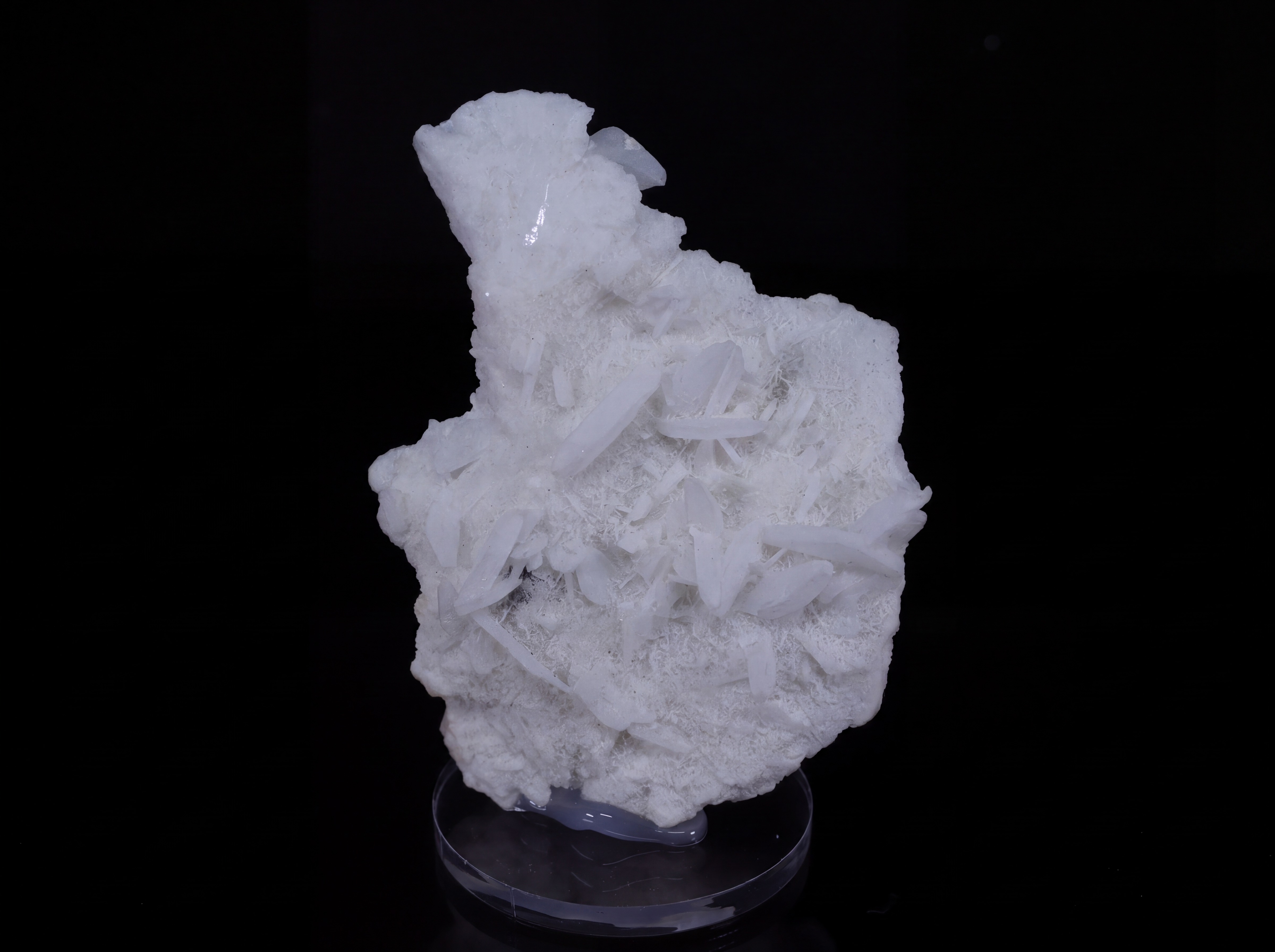
White Crystals of Hambergite from Skardu, Pakistan

Price: 103 EUR (449 PLN)

Availability: In stock

Location: Skardu, Pakistan

Size: 62 x 45 x 15 mm

Weight: 29 g

Chemical formula: Be₂BO₃(OH,F)

Crystal system: rhombohedral

Mohs hardness: 7

Mineral group: Typical Nesoborate Group

Rarity: Very Rare

Characteristics Hambergite is a rare mineral, a beryllium borate, which typically forms colorless, transparent, or translucent crystals. It often occurs in prismatic or tabular forms, with a distinct vitreous luster. Hambergite specimens are prized by collectors due to their rarity and aesthetic appeal. Physical Properties This mineral is characterized by a hardness of 7.5 on the Mohs scale. It has a specific gravity of approximately 2.347. Hambergite's luster is vitreous, and its streak is white. The mineral is transparent to translucent. Colors and Varieties Hambergite most commonly occurs as colorless, although it can also take on grayish or yellowish hues. In transmitted light, it is always colorless. No specific commercial varieties of this mineral are known. History and Name The mineral was discovered in 1890 and named after Axel Hamberg, a Swedish mineralogist and geologist. The name commemorates his contributions to mineralogical research. Uses Due to its rarity and lack of sufficient deposits, hambergite has no industrial applications. It is solely a collector's mineral, sought after by enthusiasts of rare specimens.

Diagnostic features

Identification Hambergite can be identified by its colorless or slightly tinted, transparent crystals with a vitreous luster. Its high hardness (7.5 on the Mohs scale) and white streak are also characteristic. It often occurs as prismatic or tabular crystals. Distinguishing from Similar Minerals Due to its appearance, hambergite can be confused with other colorless minerals such as quartz, topaz, or beryl. It differs from quartz by its higher hardness and different crystallization habit. It can be distinguished from topaz and beryl based on density and specific crystallographic and chemical features. Crystal Forms Hambergite forms prismatic or tabular crystals. They often occur as single, well-formed crystals, but can also form aggregates.

Formation environment

Genesis Hambergite is a rare mineral, forming in granitic pegmatites, especially those rich in beryllium and boron. It is a secondary mineral, forming in the late stages of magma crystallization. Mineral Associations It often co-occurs with other pegmatitic minerals such as quartz, feldspars, muscovite, tourmaline, beryl, and other rare beryllium and boron minerals. Localities The most important hambergite localities are in Madagascar, Norway (Langesundsfjord), as well as in the United States (California) and Russia (Urals).

For the collector

Quality Criteria The most prized hambergite specimens are those with large, well-formed, transparent, and colorless crystals. The purity of the mineral, absence of inclusions, and mechanical damage are also important. Specimens with aesthetic associations with other minerals are also highly valued. Popular Localities The most sought-after hambergite specimens come from Madagascar, where crystals of exceptional quality and size are found. Norwegian localities also provide interesting specimens.

See mineralogical reference for Hambergite in the Knowledge Base →

View product →