Hambergite
Chemical formula: Be<sub>2</sub>BO<sub>3</sub>(OH)
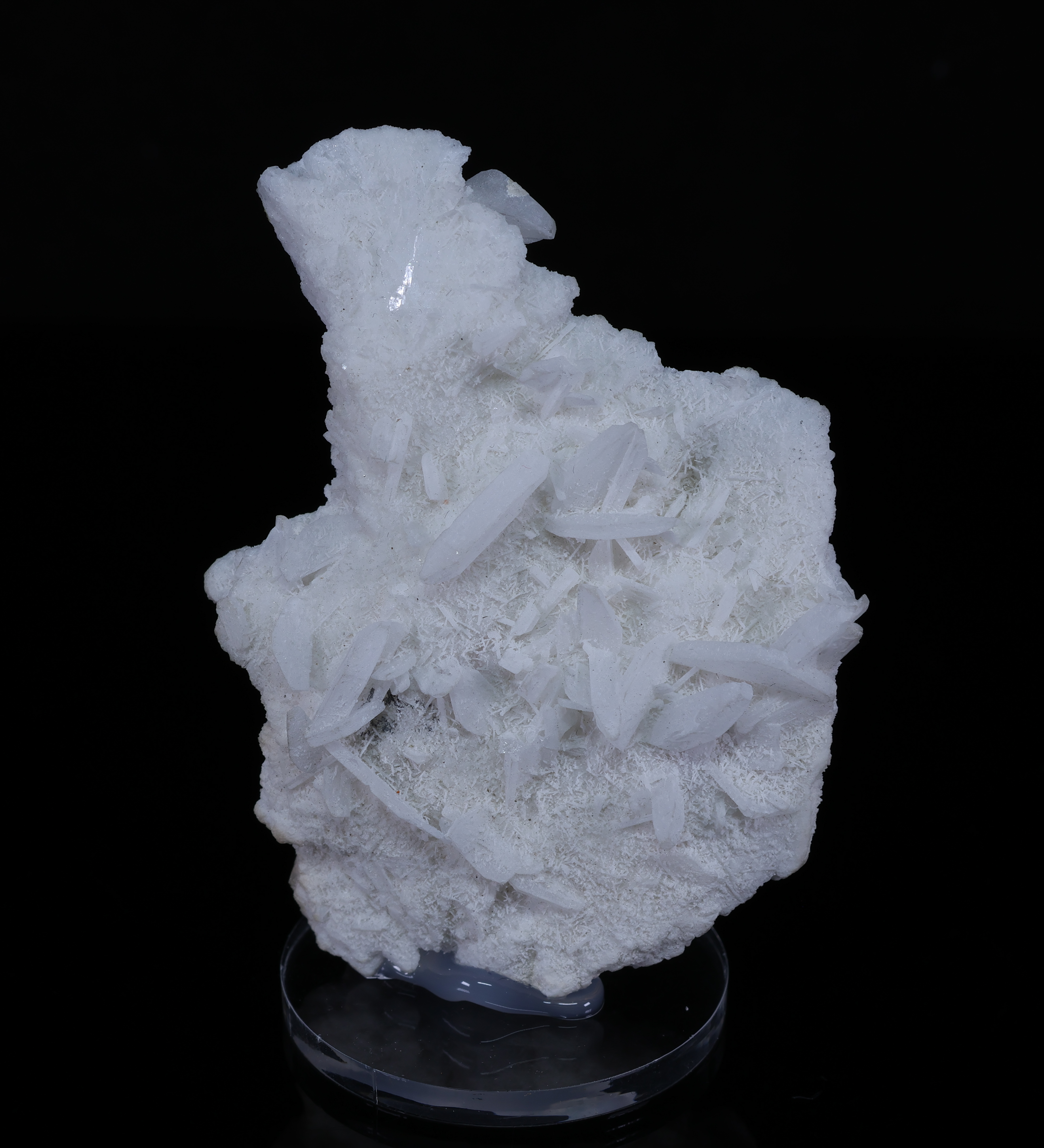
Hambergite is a rare beryllium mineral, a beryllium and hydroxyl borate, valued by collectors for its transparency and distinct crystals.
Properties
- Mohs hardness
- 7.5
- Luster
- Szklisty
- Streak
- White
- Density
- 2.347
- Cleavage
- On {010}; on {100} good.
- Fracture
- Nierówny
- Transparency
- Transparent,Translucent
- Crystal system
- Orthorhombic
Diagnostic features
## Identification Hambergite can be identified by its colorless or slightly tinted, transparent crystals with a vitreous luster. Its high hardness (7.5 on the Mohs scale) and white streak are also characteristic. It often occurs as prismatic or tabular crystals. ## Distinguishing from Similar Minerals Due to its appearance, hambergite can be confused with other colorless minerals such as quartz, topaz, or beryl. It differs from quartz by its higher hardness and different crystallization habit. It can be distinguished from topaz and beryl based on density and specific crystallographic and chemical features. ## Crystal Forms Hambergite forms prismatic or tabular crystals. They often occur as single, well-formed crystals, but can also form aggregates.
Geological environment
## Genesis Hambergite is a rare mineral, forming in granitic pegmatites, especially those rich in beryllium and boron. It is a secondary mineral, forming in the late stages of magma crystallization. ## Mineral Associations It often co-occurs with other pegmatitic minerals such as quartz, feldspars, muscovite, tourmaline, beryl, and other rare beryllium and boron minerals. ## Localities The most important hambergite localities are in Madagascar, Norway (Langesundsfjord), as well as in the United States (California) and Russia (Urals).
Rarity
Uncommon
For collectors
## Quality Criteria The most prized hambergite specimens are those with large, well-formed, transparent, and colorless crystals. The purity of the mineral, absence of inclusions, and mechanical damage are also important. Specimens with aesthetic associations with other minerals are also highly valued. ## Popular Localities The most sought-after hambergite specimens come from Madagascar, where crystals of exceptional quality and size are found. Norwegian localities also provide interesting specimens.
Care and storage
## Cleaning Hambergite specimens can be cleaned gently using a soft brush and lukewarm water. For more stubborn dirt, distilled water can be used. Avoid vigorous scrubbing to prevent scratching the mineral's surface. ## What to Avoid Avoid contact of hambergite with strong acids and bases, which can damage the mineral's surface. Prolonged exposure to direct sunlight is not recommended, although the mineral is stable. Sudden temperature changes can also be harmful. ## Storage Hambergite is best stored in enclosed display cases or boxes, away from dust and potential mechanical damage. Due to its hardness, it can be stored with other minerals of similar hardness, but always ensure adequate protection against scratching softer surfaces.