Imposing Axinite from Pakistan

SKU: B_35_0004

An impressive cabinet specimen of axinite, which forms a dense, spatial group composed of numerous crystals. Main Features: outstanding crystal group; high luster; impressive cabinet size. Condition: Very good - the crystals are sharp, saturated in color, and perfectly exposed; no visible, fresh mechanical edge damage.
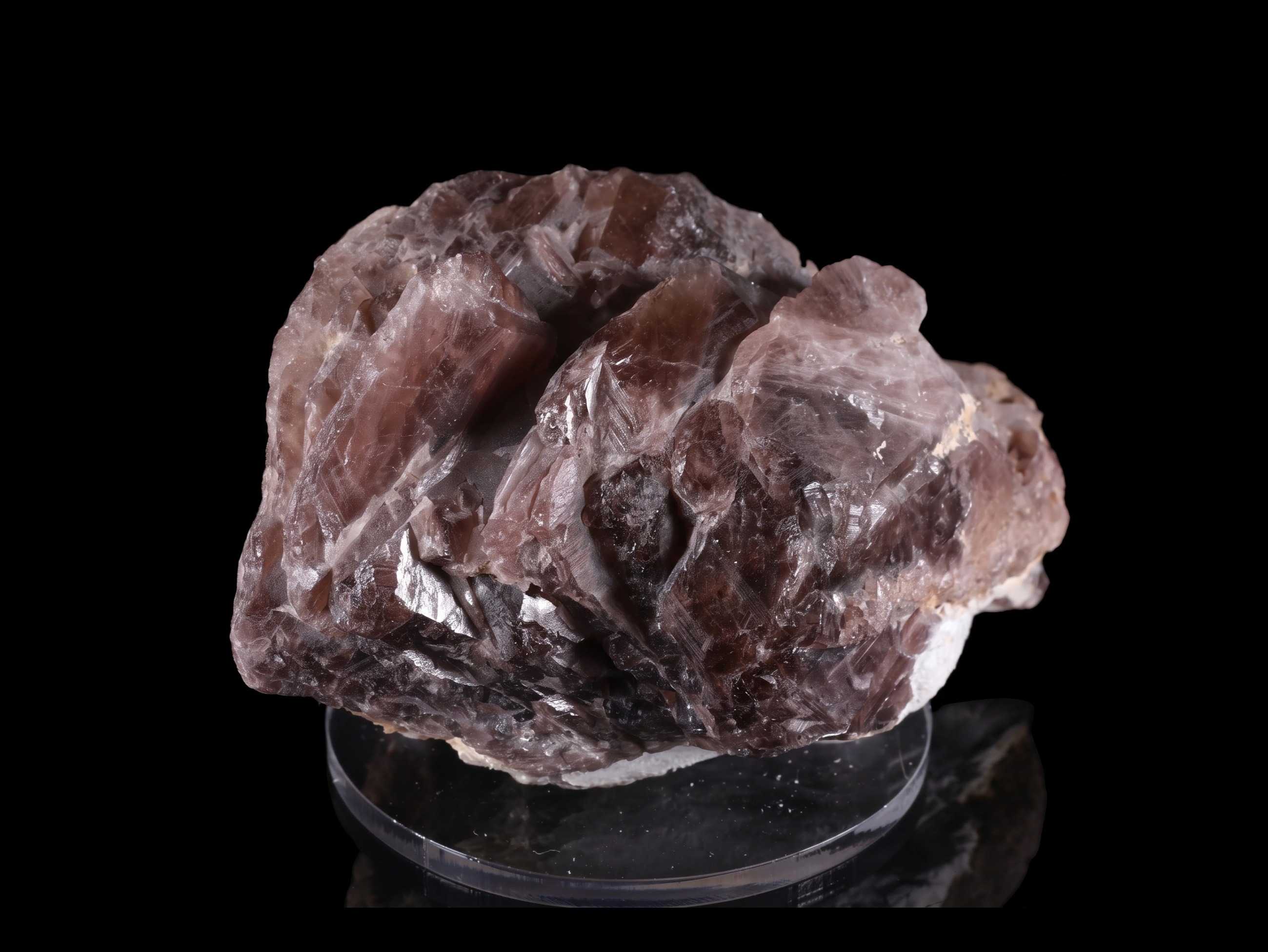
Imposing Axinite from Pakistan

Price: 133 EUR (579 PLN)

Availability: In stock

Location: Skardu District, Gilgit-Baltistan, Pakistan

Size: 83 x 55 x 50 mm

Weight: 180 g

Chemical formula: Ca₂(Fe,Mn)Al₂BSi₄O₁₅(OH)

Crystal system: Triclinic

Mohs hardness: 6.5–7.0

Characteristics Axinite is a silicate mineral that forms characteristic, wedge-shaped or tabular crystals, often with sharp edges. Typical axinite specimens range in color from brown to violet-brown, although they can also occur in shades of yellow, green, and even be colorless. Axinite crystals can be transparent to translucent, and their surfaces often exhibit a vitreous luster. Physical Properties The hardness of axinite on the Mohs scale is 6.5-7, making it a relatively hard mineral. It has a vitreous luster, and its transparency ranges from transparent to translucent. The density of axinite is approximately 3.26-3.36 g/cm³. Colors and Varieties Axinite occurs in many colors, most commonly shades of brown, violet, yellow, green, and also gray. Colorless specimens are rarer. The color of axinite depends on the presence of various trace elements in its structure. There are no widely known commercial varieties of axinite, however, individual specimens may be valued for their intensity and purity of color. History and Name The name axinite comes from the Greek word "axine", meaning axe, referring to the characteristic shape of its crystals. The mineral was first described in 1797 by René Just Haüy. Uses Axinite is primarily a collector's mineral, valued for its aesthetic crystals and variety of colors. Transparent specimens with intense colors are sometimes cut as ornamental stones, although due to their hardness and cleavage, they require careful handling during processing.

Diagnostic features

Identification Axinite can be identified by its characteristic wedge-shaped crystal habit, vitreous luster, and hardness of 6.5-7 on the Mohs scale. It often occurs in radial or lamellar aggregates. The color, although variable, often takes on shades of brown, violet, or yellow. Distinguishing from similar minerals Axinite can be confused with some garnets or tourmalines due to its color and luster. However, it differs from garnets by its wedge-shaped crystal habit and lack of isometric forms. Axinite differs from tourmalines by the absence of a distinct prismatic habit and different cleavage.

Formation environment

Genesis Axinite forms under conditions of contact and regional metamorphism, especially in boron-rich rocks such as skarns, marbles, and schists. It often occurs in hydrothermal veins and rock fractures. Mineral associations Axinite often co-occurs with quartz, epidote, garnets, calcite, chlorite, titanite, and various boron minerals. Localities Known axinite localities include Russia (Urals), France (Dauphiné), Switzerland (Alps), USA (California, Nevada), Mexico (Baja California), Brazil, Tanzania, and Pakistan.

For the collector

Quality criteria The most prized axinite specimens are those with well-formed, large, and transparent crystals of intense color. Clarity and absence of mechanical damage also contribute to collector value. Specimens with rare colors, such as intense violet or green, are particularly sought after. Popular localities Exceptional axinite specimens come from the Alps (France, Switzerland), where large, well-formed crystals are found. Other valued localities include Russia (Urals) and Mexico (Baja California), known for beautiful, often violet crystals.

See mineralogical reference for Axinite in the Knowledge Base →

View product →