Axinite
Chemical formula: Ca₂Fe²⁺Al₂BSi₄O₁₅(OH)
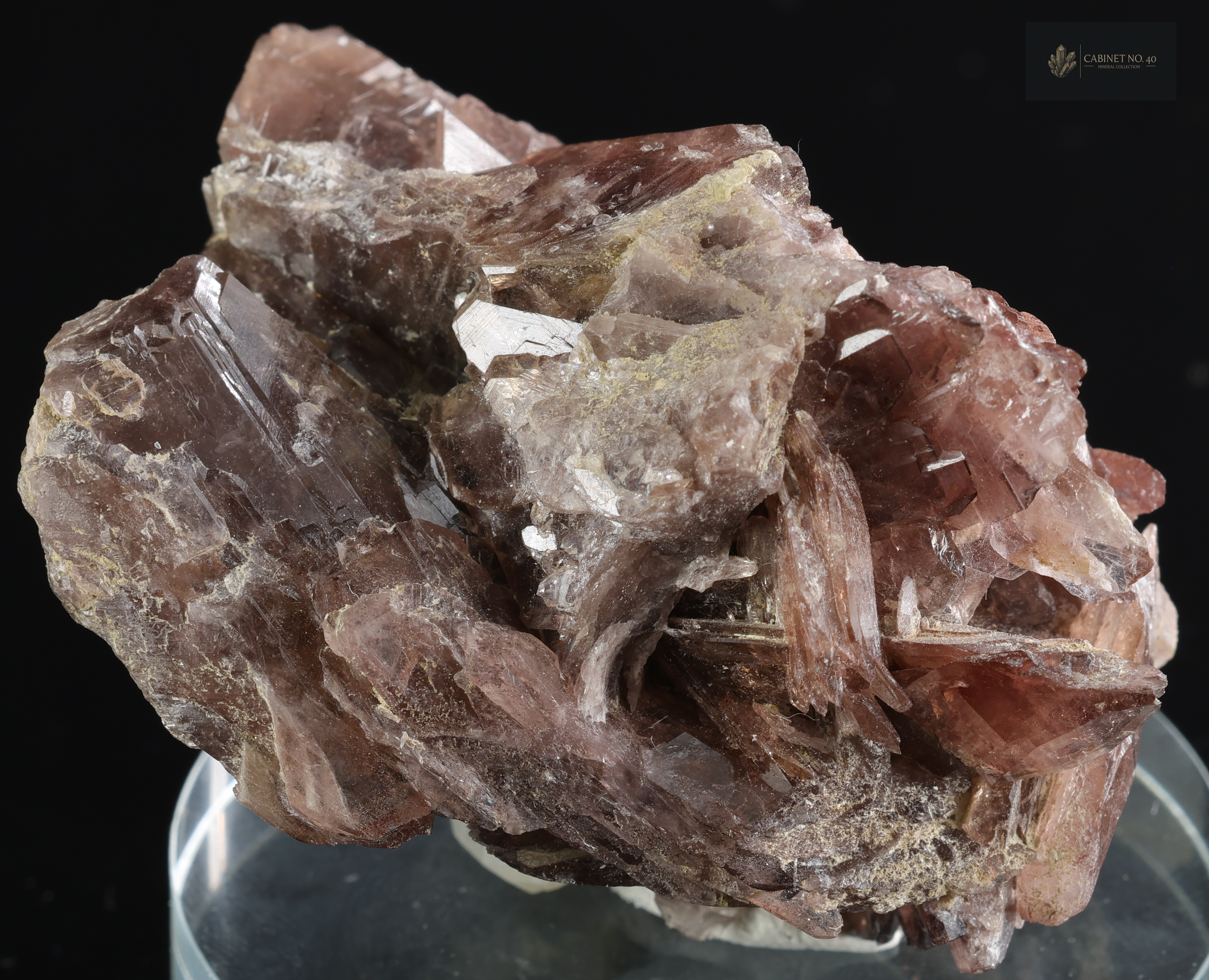
Axinite is a mineral from the silicate group, characterized by wedge-shaped crystals and often occurring in shades of brown, violet, or yellow.
Properties
- Mohs hardness
- 6.5-7
- Luster
- Vitreous
- Streak
- White
- Density
- 3.26-3.36
- Cleavage
- Good on {100}
- Fracture
- Conchoidal
- Transparency
- Transparent to translucent
- Crystal system
- Triclinic
Diagnostic features
## Identification Axinite can be identified by its characteristic wedge-shaped crystal habit, vitreous luster, and hardness of 6.5-7 on the Mohs scale. It often occurs in radial or lamellar aggregates. The color, although variable, often takes on shades of brown, violet, or yellow. ## Distinguishing from similar minerals Axinite can be confused with some garnets or tourmalines due to its color and luster. However, it differs from garnets by its wedge-shaped crystal habit and lack of isometric forms. Axinite differs from tourmalines by the absence of a distinct prismatic habit and different cleavage.
Geological environment
## Genesis Axinite forms under conditions of contact and regional metamorphism, especially in boron-rich rocks such as skarns, marbles, and schists. It often occurs in hydrothermal veins and rock fractures. ## Mineral associations Axinite often co-occurs with quartz, epidote, garnets, calcite, chlorite, titanite, and various boron minerals. ## Localities Known axinite localities include Russia (Urals), France (Dauphiné), Switzerland (Alps), USA (California, Nevada), Mexico (Baja California), Brazil, Tanzania, and Pakistan.
Rarity
Not very common
For collectors
## Quality criteria The most prized axinite specimens are those with well-formed, large, and transparent crystals of intense color. Clarity and absence of mechanical damage also contribute to collector value. Specimens with rare colors, such as intense violet or green, are particularly sought after. ## Popular localities Exceptional axinite specimens come from the Alps (France, Switzerland), where large, well-formed crystals are found. Other valued localities include Russia (Urals) and Mexico (Baja California), known for beautiful, often violet crystals.
Care and storage
## Cleaning To clean axinite, it is recommended to use a soft brush and lukewarm water with mild soap. After washing, rinse the mineral thoroughly with clean water and dry with a soft cloth. ## What to avoid Axinite is sensitive to sudden temperature changes, which can lead to cracks. Avoid contact with strong acids and bases, which can damage its surface. Prolonged exposure to direct sunlight can cause some colored varieties to fade. ## Storage Axinite specimens are best stored in separate boxes or pouches to avoid scratches from harder minerals. An ideal place is one with stable temperature and humidity, away from direct sunlight.