Glaucocerinite on matrix from Lavrion in Greece

SKU: A-0215_4-GR

A specimen of a rare zinc, aluminum, and copper mineral, originating from the historic mining district of Lavrion in Greece. The mineral occurs as characteristic, blue crusts with a reniform structure, which densely cover almost the entire front part of the brownish matrix. Main Features: intense blue color; reniform habit; rare zinc mineral; specimen from a classic locality; rich coverage of the matrix; ex coll. K.Urbanik Condition: Very good - glaucocerinite crusts without damage.
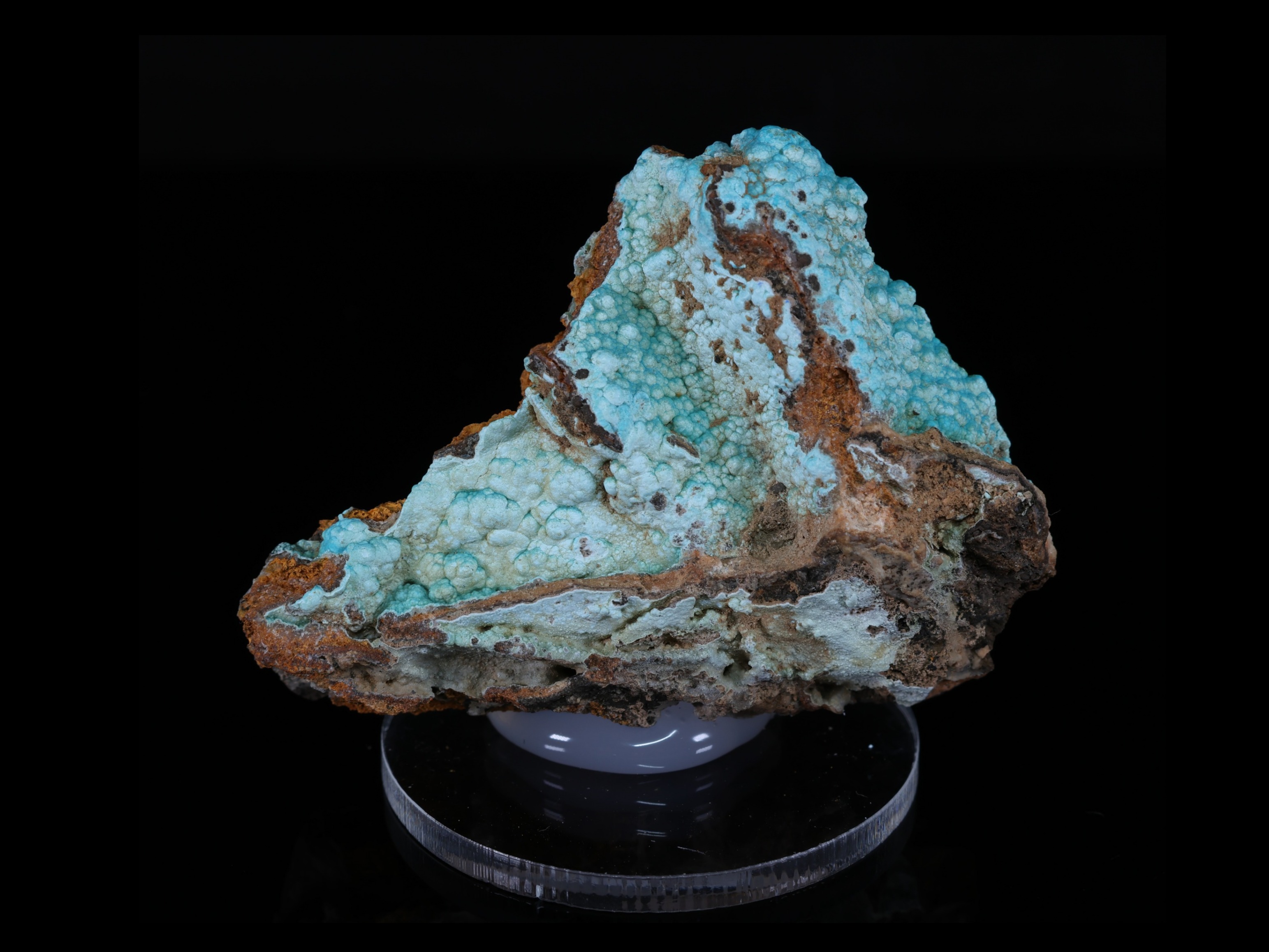
Glaucocerinite on matrix from Lavrion in Greece

Price: 50 EUR (219 PLN)

Availability: In stock

Location: Kamariza, Lavrion, Attica, Greece

Size: 55 x 40 x 20 mm

Weight: 38 g

Chemical formula: Cu₂Zn(PO₄)₂(OH)₂·3H₂O

Crystal system: Rhombic

Mohs hardness: 2

Mineral group: Clay Mineral Groups

Rarity: Rare

Characteristics Glaucocerinite is a secondary mineral, typically forming small, hexagonal plates or lamellar aggregates. It often occurs as coatings and crusts. Its color is usually blue, turquoise, greenish, grayish, or brownish, which gives it a distinctive appearance. Glaucocerinite specimens are usually small and delicate. Physical Properties This mineral is characterized by a very low Mohs hardness of 1. It is transparent to translucent. The density of glaucocerinite is approximately 2.749 g/cm³. Colors and Varieties Glaucocerinite occurs in shades of blue, from light sky blue to turquoise. It can also take on greenish, grayish, or brownish colors, depending on impurities and formation conditions. History and Name Glaucocerinite was discovered in 1932. The name of the mineral comes from the Greek words "glaukos" meaning blue-green and "keras" meaning horn, which likely refers to its color and habit. Uses Glaucocerinite has no industrial applications due to its rarity and delicacy. It is exclusively a collector's mineral, valued for its aesthetics and rarity.

Diagnostic features

Identification Glaucocerinite can be identified by its characteristic blue or turquoise color, low hardness (it can be scratched with a fingernail), and platy or lamellar habit. It often occurs as coatings on other minerals. Distinguishing from Similar Minerals Glaucocerinite can be confused with other blue secondary minerals, such as azurite or chrysocolla. However, its very low hardness and hexagonal crystal system are diagnostic features. Azurite is much harder, and chrysocolla is amorphous and often has a more greenish hue. Crystal Forms Glaucocerinite typically forms small, hexagonal plates. It can also occur in lamellar aggregates, forming coatings and crusts on the surface of other minerals.

Formation environment

Genesis Glaucocerinite is a secondary mineral, formed in the oxidation zones of zinc and lead deposits. It forms as a result of the weathering of primary zinc and aluminum minerals in the presence of sulfates and water. Mineral Associations Glaucocerinite often co-occurs with other minerals from the oxidation zone, such as hydrozincite, smithsonite, hemimorphite, aurichalcite, as well as with manganese and iron oxide minerals. Localities Known glaucocerinite localities include mines in Tsumeb (Namibia), Laurion (Greece), Broken Hill (Australia), and some locations in the United States.

For the collector

Quality Criteria The most prized glaucocerinite specimens are those with an intense, pure blue or turquoise color, well-formed, distinct crystals, and no mechanical damage. Crystal size is also important, although they are usually small. Specimens with aesthetic associations with other minerals are also highly valued. Popular Localities The most sought-after glaucocerinite specimens usually come from Tsumeb, Namibia, where some of the best-formed crystals of this mineral are found.

See mineralogical reference for Glaucocerinite in the Knowledge Base →

View product →