Glaucocerinite
Chemical formula: Zn<sup>2+</sup><sub>1-x</sub>Al<sub>x</sub>(S<sup>6+</sup>O<sub>4</sub>)<sub>x/2</sub>(OH)<sub>2</sub>·nH<sub>2</sub>O (x<0.5, n>3x/2)
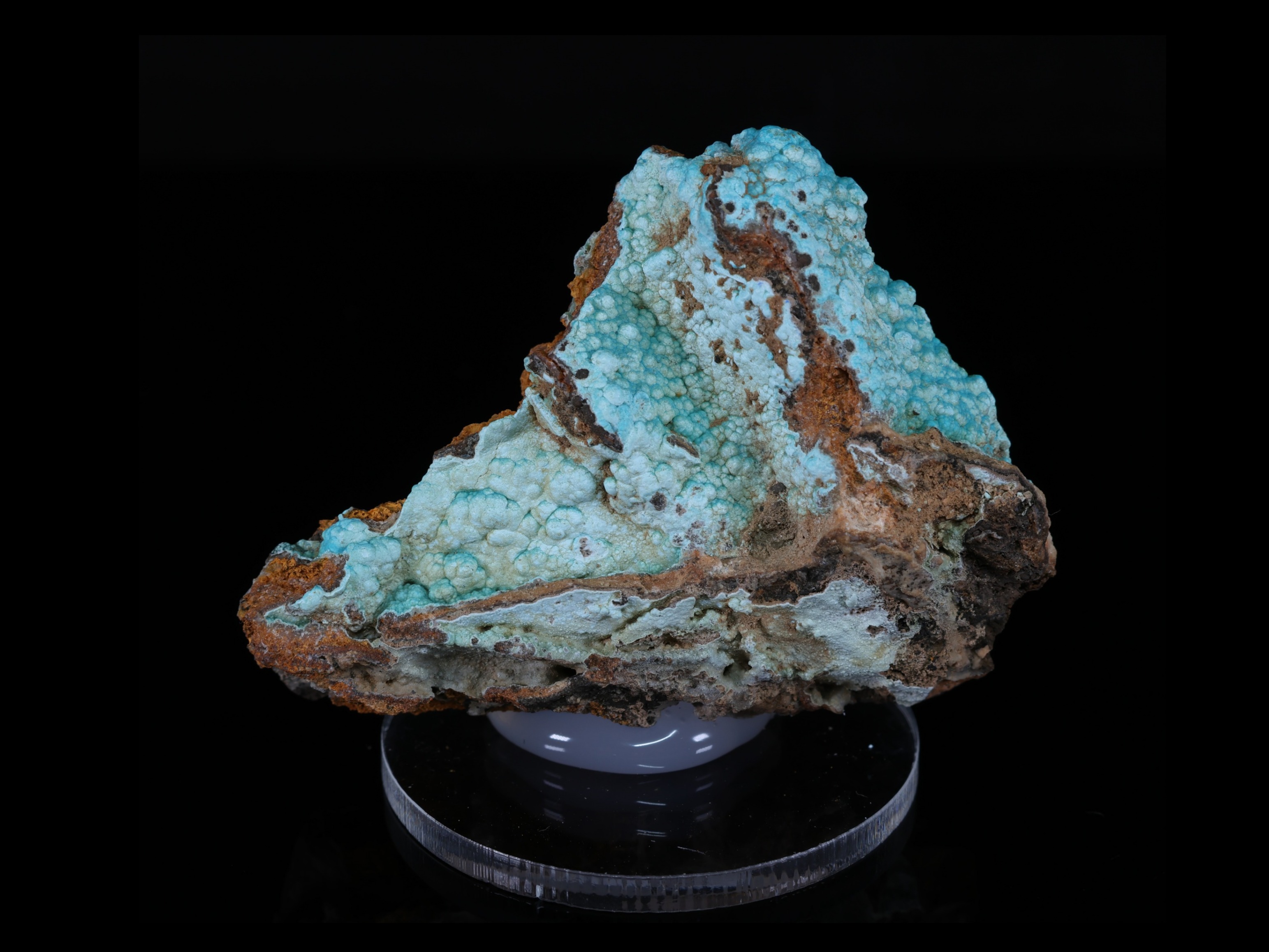
Glaucocerinite is a rare, hydrated zinc and aluminum sulfate, characterized by delicate, platy crystals and a blue color.
Properties
- Mohs hardness
- 1
- Luster
- Pearly
- Streak
- White
- Density
- 2.749
- Cleavage
- Perfect on {0001}
- Fracture
- Uneven
- Transparency
- Translucent
- Crystal system
- Hexagonal
Diagnostic features
## Identification Glaucocerinite can be identified by its characteristic blue or turquoise color, low hardness (it can be scratched with a fingernail), and platy or lamellar habit. It often occurs as coatings on other minerals. ## Distinguishing from Similar Minerals Glaucocerinite can be confused with other blue secondary minerals, such as azurite or chrysocolla. However, its very low hardness and hexagonal crystal system are diagnostic features. Azurite is much harder, and chrysocolla is amorphous and often has a more greenish hue. ## Crystal Forms Glaucocerinite typically forms small, hexagonal plates. It can also occur in lamellar aggregates, forming coatings and crusts on the surface of other minerals.
Geological environment
## Genesis Glaucocerinite is a secondary mineral, formed in the oxidation zones of zinc and lead deposits. It forms as a result of the weathering of primary zinc and aluminum minerals in the presence of sulfates and water. ## Mineral Associations Glaucocerinite often co-occurs with other minerals from the oxidation zone, such as hydrozincite, smithsonite, hemimorphite, aurichalcite, as well as with manganese and iron oxide minerals. ## Localities Known glaucocerinite localities include mines in Tsumeb (Namibia), Laurion (Greece), Broken Hill (Australia), and some locations in the United States.
Rarity
Very Rare
For collectors
## Quality Criteria The most prized glaucocerinite specimens are those with an intense, pure blue or turquoise color, well-formed, distinct crystals, and no mechanical damage. Crystal size is also important, although they are usually small. Specimens with aesthetic associations with other minerals are also highly valued. ## Popular Localities The most sought-after glaucocerinite specimens usually come from Tsumeb, Namibia, where some of the best-formed crystals of this mineral are found.
Care and storage
## Cleaning Due to its low hardness and delicacy, glaucocerinite should be cleaned very carefully. It is recommended to use a soft brush to remove dust. For heavier soiling, gentle washing with distilled water can be attempted, but prolonged soaking should be avoided. ## What to Avoid All chemical agents, including detergents and acids, which can damage the mineral, should be avoided. Glaucocerinite is sensitive to high temperatures and direct sunlight, which can lead to color fading. It is also important to avoid moisture, which can affect the stability of the mineral. ## Storage Glaucocerinite should be stored in a dry, cool, and dark place, away from direct sunlight and heat sources. It is best to place it in a sealed display case or a box lined with soft material to prevent mechanical damage and exposure to moisture.