Paper or Digital Catalog for Your Collection?
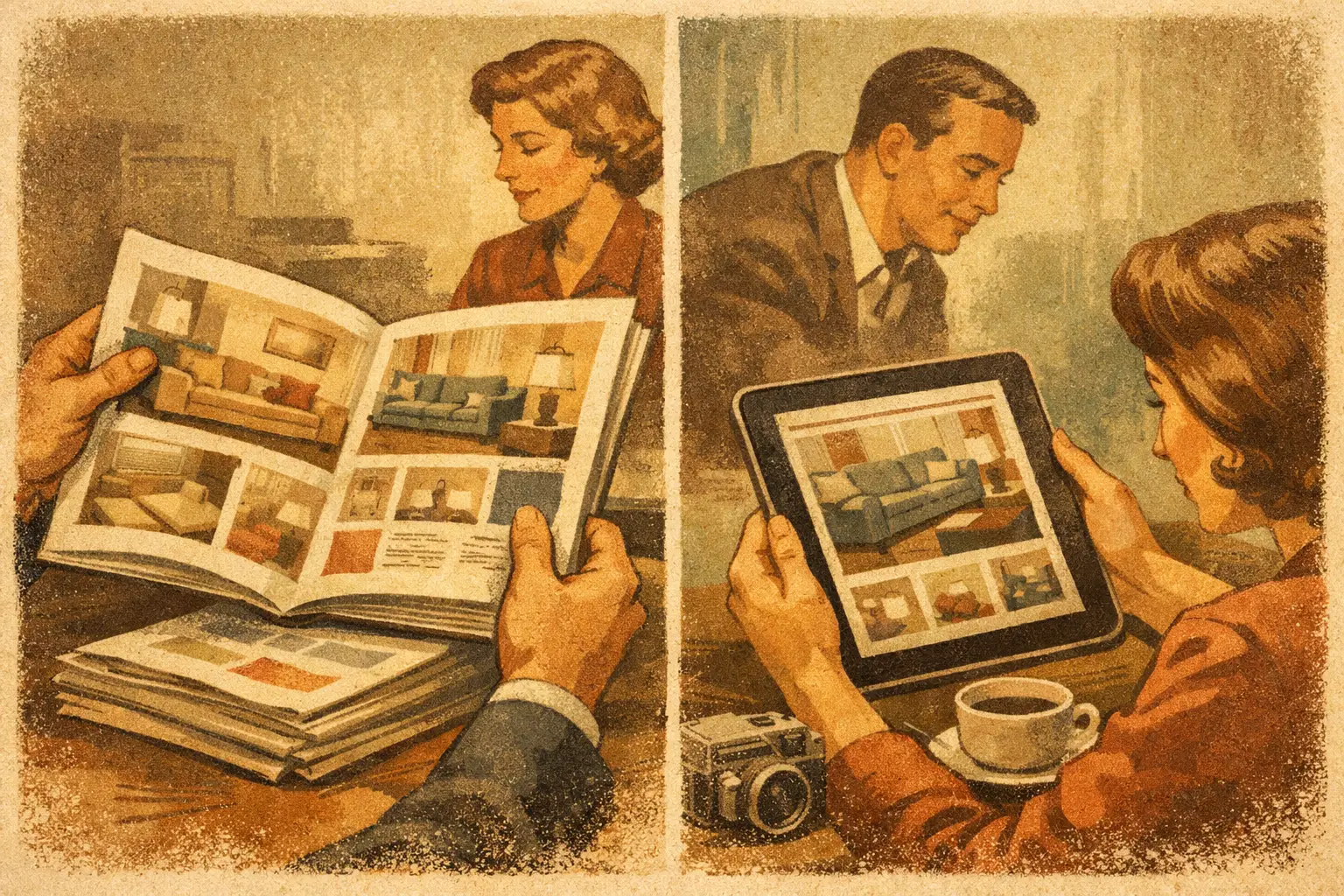
Paper or digital catalog? For a mineral collector, data, photos, labels, and organization are what matter. Check out which works better.
When a collection begins to exceed a dozen specimens, the question is no longer whether it is worth documenting, but how to do it well. That is exactly when the dilemma arises: a paper or digital catalog. For a mineral collector, this is not a matter of convenience for its own sake, but of data quality, control over provenance, and the way the collection is presented.
In a small collection, many things can be remembered. Fluorite from a specific location, calcite bought at a show, pyrite with an old trade name instead of the correct deposit name. The problem starts when memory is no longer enough, and every mistake lowers the informational value of the specimen. A catalog is not an add-on. It is part of the collection.
Paper or Digital Catalog - What the Choice Depends On
First, it is worth organizing the criteria. For a mineral collector, a catalog is not used solely for recording a name. It should include at least:
mineral identification
locality
acquisition date
dimensions
state of preservation
provenance history
inventory number
visual documentation.
The more advanced the collection, the more important label variants, systematic classification, and the ability to track changes in identification become.
In this sense, the choice between paper and a digital system depends on four things:
the scale of the collection
the level of detail in the description
the need to work with photos
the way you present specimens to others.
A person with one drawer of specimens has different needs than a collector building an organized set according to locality, species, or mineralogical classes.
When a Paper Catalog Has a Real Advantage
Paper has one advantage that cannot be disputed - it is direct. A notebook, inventory cards, or a binder allow you to quickly add information at your desk, while organizing drawers, or during a review of specimens. For some collectors, the materiality of the record is also important. A physical card evokes associations with a traditional museum catalog and harmonizes well with the classic way of building a collection.
Paper is also useful as a working tool. You can note temporary identifications, mark specimens requiring verification, or add remarks about damage or purchase history before the data enters a more organized system. It requires no power, no login, and no screen. In practice, it works especially well when the collection is small and maintained according to a simple scheme.
However, there is a limit after which the advantages of paper begin to fade. If you want to store several photographs, data about a previous owner, a provenance map, and a history of identification corrections for a single specimen, the paper quickly becomes too cramped. Paper handles short forms well. It fares worse with relationships between data.
Limitations of a Paper Catalog in a Mineral Collection
The biggest problem with paper is not a lack of elegance, but a lack of flexibility. In mineral collecting, descriptions change more often than one might think. Updating a locality name, refining the mineral assemblage composition, correcting identification after comparative photo analysis - all this requires changes. In a paper catalog, every correction leaves a mark, requires rewriting, or creating new cards.
The second limitation is searching. If you want to check all specimens from Morocco, all cubic fluorites, or all samples purchased from one supplier, a paper catalog forces a manual review. With several dozen items, this is still possible. With several hundred, it becomes impractical.
The third problem concerns imagery. In collecting, high-quality visual documentation is almost as important as the text description. Macrophotography, side shots, photos under different lighting, and sometimes microphotographs do not fit sensibly into a traditional catalog. You can, of course, attach prints, but then the system becomes heavy, expensive, and difficult to update.
Digital Catalog - Advantage in Data and Imagery
A digital catalog provides what modern collection documentation requires:
structure,
scalability,
the ability to work with many types of information simultaneously.
For each specimen, you can save a full set of data, add multiple photos, an inventory number, purchase history, a display label, and internal notes. It is not just an archive. It is a collection management system.
For a mineral collector, the ability to organize specimens along different axes is particularly important. The same specimen can simultaneously belong to a group of fluorites, a set of specimens from one locality, a section of minerals with distinct color zoning, and a set intended for an exhibition. In a digital catalog, such relationships can be recreated without duplicating entries.
A major advantage is also presentation. If you document a specimen carefully, a front photo is not enough. Angled shots, close-up photographs, scale, a view of the base, and sometimes a 360-degree rotation may be needed. In a digital environment, these materials become a natural part of the record. This is important not only for aesthetics but also for identification and later verification of the specimen's condition.
Paper or Digital Catalog for Labels and Numbering
A well-maintained collection needs consistent numbering. A specimen number should link the physical object, the label, and the catalog record. In a paper system, this can be done correctly, but managing numbers is prone to errors, especially when some specimens change location, are temporarily taken for photography, or are grouped into thematic sets.
Digital cataloging allows for greater control. The inventory number becomes the central point of the record, to which photos, descriptions, locality data, and a version of the label for display can be assigned. This is especially useful when you care about a consistent presentation standard, rather than just private notes.
In practice, many collectors begin to appreciate a digital system precisely when preparing labels. A short display label and a full catalog record are two different forms of information. Paper mixes these layers. Digital allows them to be separated without losing order.
Does a Digital Catalog Have Disadvantages?
Of course, it does. Firstly, it requires discipline. The program or spreadsheet itself does not organize the collection automatically. If data is entered carelessly, incorrectly, or inconsistently, even the best system will quickly turn into a chaotic warehouse of information.
Secondly, there is the issue of durability and backups. Paper can be destroyed, but a file can also disappear or become inaccessible. A digital catalog requires regular data protection and thinking about where and in what form it is stored.
Thirdly, not everyone needs an extensive solution. If a collection consists of 20 specimens and each has simple documentation, a full digital system may be redundant. In such a case, a simple database with basic fields may be more sensible than a complex platform with many features.
The Best Solution for Many Collectors: A Mixed Model
In practice, the question of paper or digital catalog often leads to a false alternative. For many collections, a mixed model works best. Paper serves as an auxiliary layer - working notes, sketches of drawer layouts, quick annotations during review. The digital catalog, on the other hand, should serve as the primary register of the collection.
Such a division makes sense because it corresponds to the natural rhythm of a collector's work. First, you examine the specimen, compare features, and write down observations. Then you create an organized record with photos, correct classification, and a label version. Paper supports the process. The digital system maintains the standard.
This is clearly visible especially in collections developed over years. Notebooks preserve the traces of field, purchase, and identification work. The digital catalog, meanwhile, ensures searchability, order, and readiness for presentation.
What to Choose if You Collect Minerals Seriously
If you treat your collection as an organized set with documentary value, the answer is quite clear: the foundation should be a digital catalog. Not because it is more modern, but because it better suits the nature of collector data. Minerals are objects whose significance is based on identification, provenance, imagery, and precision of description. This cannot be conveniently maintained on paper alone.
Paper still makes sense, but rather as a companion tool than the main system. In a collection focused on documentation quality, label consistency, and good presentation, the advantage of a digital solution grows with every new specimen. Especially when you want to browse the collection by locality, species, acquisition dates, or prepare it for public presentation.
That is why more and more collectors treat the catalog not as a notebook with names, but as an extension of the collection itself. If a specimen deserves a careful description, correct classification, and a reliable image, its place is in a system that can preserve this information without simplification. And a good catalog, like a well-chosen label, does not distract from the specimen - it allows you to see it in its proper order.