SKU: F-0082_4-PK
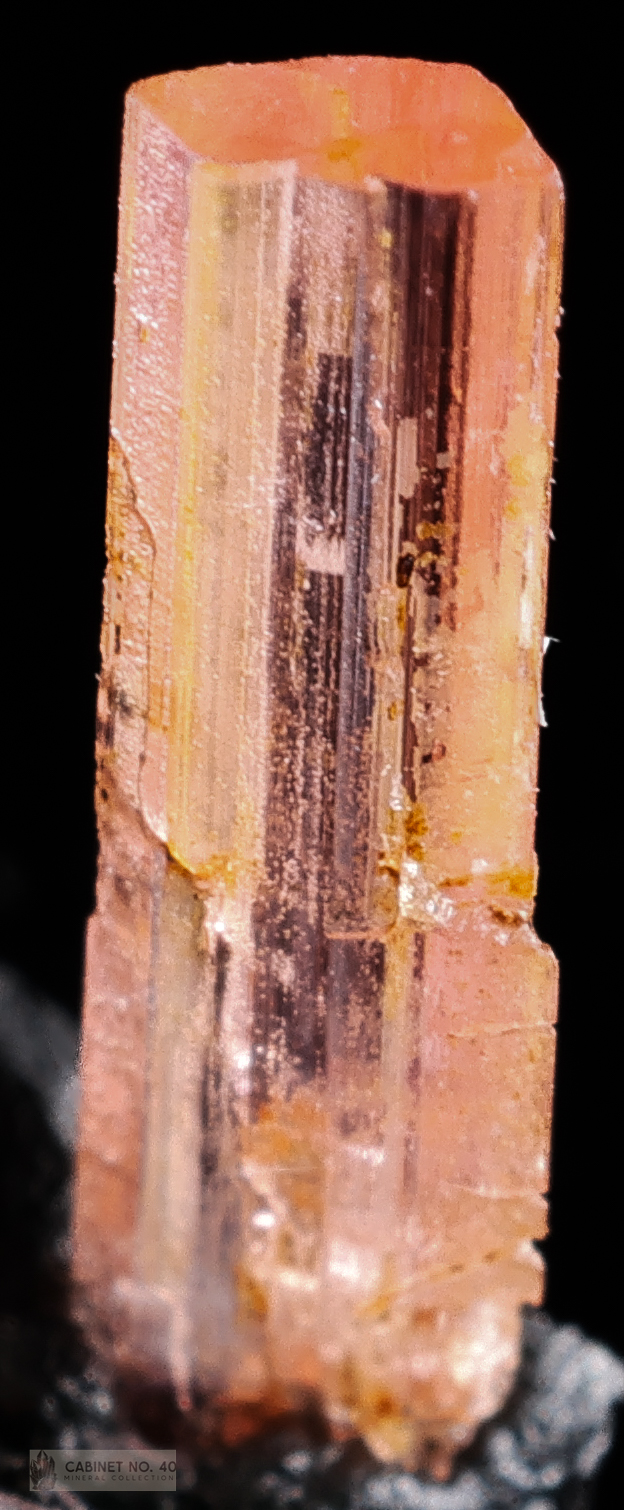
A single, slender crystal of vayrynenite with a distinct prismatic habit and a warm, peach-salmon color. The well-preserved form and clear striations demonstrate the typical characteristics of this rare phosphate from the pegmatites of Gilgit-Baltistan.
Price: 16 EUR (69 PLN)
Availability: In stock
Location: Skardu Area, Gilgit-Baltistan, Pakistan
Size: max 8 mm
Weight: 0.035 g
Chemical formula: (Mg,Fe²⁺)Be(PO₄)
Crystal system: orthorhombic
Mohs hardness: 5–6
Mineral group: Monazite Group Minerals
Rarity: Rare
Characteristics Väyrynenite is a rare mineral from the phosphate group, characterized by the presence of manganese and beryllium in its chemical composition. Typical specimens of väyrynenite occur as well-formed, prismatic or tabular crystals, often with a distinct columnar habit. The surface of the crystals is often smooth and lustrous, which enhances their aesthetic appeal. Väyrynenite often forms aggregates of attractive color, making it a sought-after collector's mineral. Physical Properties The hardness of väyrynenite on the Mohs scale is 5. The luster of the mineral is vitreous. It is transparent to translucent. The density ranges from 3.23-3.26 g/cm³. Colors and Varieties Väyrynenite most commonly occurs in shades of pink, from pale pink to intense pinkish-red. Orange or brownish specimens are also found. The intensity of the color is related to the manganese content in the mineral's structure. History and Name The mineral was discovered in 1954 in Finland and named after Heikki Väyrynen, a Finnish mineralogist and geologist. Uses Väyrynenite has no industrial applications. It is solely a collector's mineral, valued for its rarity and aesthetic appearance.
Identification Väyrynenite can be identified by its characteristic pink or reddish color, vitreous luster, and prismatic or tabular crystal habit. It often occurs in pegmatites, which is an additional diagnostic clue. Distinguishing from Similar Minerals It can be confused with some varieties of tourmaline or rhodonite due to similar coloration. It differs from tourmaline by the absence of distinct pleochroism and lower hardness. It differs from rhodonite by its crystallographic system and the presence of beryllium in its chemical composition. Crystal Forms Väyrynenite most commonly forms prismatic or tabular crystals, often with an elongated habit. Crystals are usually well-formed, with distinct faces and sharp edges. It can also occur as granular aggregates.
Genesis Väyrynenite is a secondary mineral, forming in pegmatite deposits, especially in granite pegmatites rich in phosphates. It forms in the late stages of pegmatite crystallization, in a hydrothermal environment where elements such as manganese and beryllium are present. Mineral Associations Väyrynenite often co-occurs with other pegmatite minerals, such as quartz, feldspars, muscovite, tourmaline, beryl, as well as other phosphates, such as triplite, lithiophilite, apatite, and lazulite. Localities The most important localities for väyrynenite are in Finland (Viitaniemi, Eräjärvi), Pakistan (Gilgit-Baltistan), Afghanistan (Nuristan), Russia (Kola Peninsula), and the United States (Maine, California).
Quality Criteria The most prized väyrynenite specimens are those with intense, uniform pink or red color, with well-formed, transparent crystals of distinct habit. Large, undamaged crystals are particularly sought after. Clarity and lack of inclusions also affect the value of the specimen. Market Prices The prices of väyrynenite vary and depend on the size, quality, and rarity of the specimen. Small, poorly formed crystals can cost tens of dollars, while large, perfectly formed, and intensely colored specimens can fetch prices from several hundred to several thousand dollars. Popular Localities The most prized väyrynenite specimens come from Pakistan, especially from the Gilgit-Baltistan region, where crystals of exceptional size and color are found. Finland is also a source of high-quality specimens.
See mineralogical reference for Väyrynenite in the Knowledge Base →