SKU: P_26-3_3
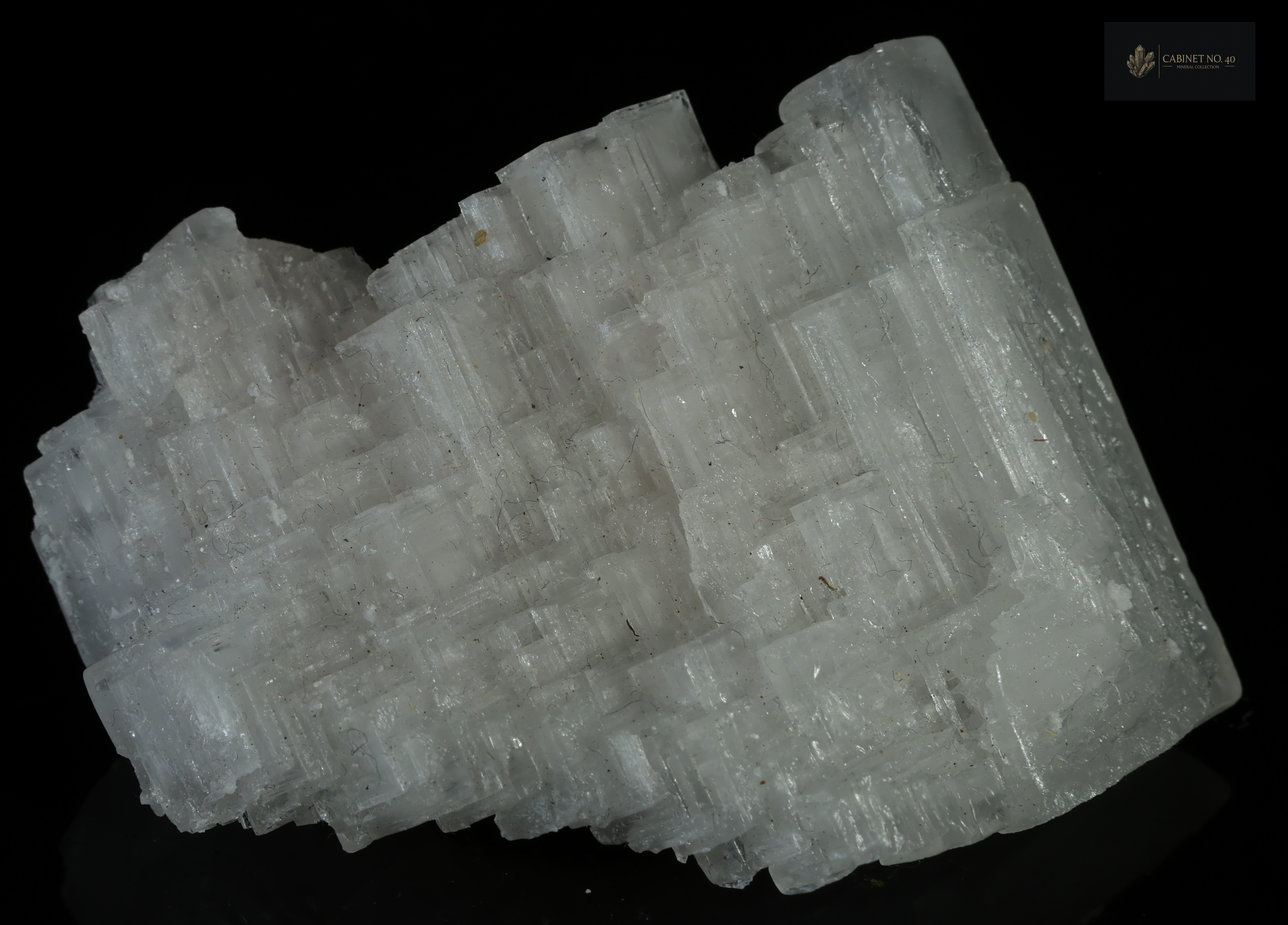
Aesthetic specimen of halite with distinctly stepped, terraced crystal structure. Overall condition good: edges rounded in places typical for halite crystallizing in brines, surfaces matte-silky with local luster.
Price: 11 EUR (49 PLN)
Availability: In stock
Location: Cape Cross area, Arandis Constituency, Erongo Region, Namibia
Size: 51 x 40 x 19 mm
Weight: 20.6 g
Chemical formula: NaCl
Crystal system: Cubic
Mohs hardness: 2.5
Characteristics Halite is a mineral composed of sodium chloride, commonly known as rock salt. Typical halite specimens occur as cubic crystals, often forming aggregates or massive deposits. It can be colorless and transparent, but often takes on white, grayish, and other hues depending on the presence of impurities. Physical Properties Halite is characterized by low hardness, 2.5 on the Mohs scale, which makes it easy to scratch. It has a vitreous luster. It is transparent to translucent. Its density is 2.168 g/cm³. Colors and Varieties Halite most often occurs as colorless or white, but impurities can give it yellow, red, purple, and even blue colors. Reddish hues often result from the presence of iron oxides, while blue and purple can be caused by crystal lattice defects or the presence of potassium. History and Name The name "halite" comes from the Greek word "halos", meaning salt or sea, which refers to its chemical composition and origin. This mineral has been known and used by humans since prehistoric times. As rock salt, halite played a key role in human history as a food preservative and seasoning. Uses The most important use of halite is in the production of food and industrial salt. It is used in the chemical industry for the production of chlorine and sodium hydroxide, as well as a road de-icing agent. In smaller quantities, it is used in medicine and as a decorative element.
Identification Halite is easy to identify due to its salty taste, low hardness (it can be scratched with a fingernail), and excellent cleavage, which causes it to break into perfect cubes. It often occurs as cubic crystals or massive aggregates. Distinguishing from Similar Minerals Halite can be confused with sylvite (KCl), which also forms cubic crystals and has a similar appearance. The main difference is taste – sylvite has a bitter aftertaste, while halite is salty. Additionally, sylvite is slightly harder and has a lower density. Other minerals, such as calcite or quartz, are much harder and do not dissolve in water. Crystal Forms Halite crystallizes in the isometric system, most often forming cubes. It can also occur as octahedra, though less commonly. It often forms granular or fibrous aggregates, as well as massive deposits. Skeletal crystals, known as "hopper crystals", which form due to rapid growth at the edges, are also characteristic.
Genesis Halite forms mainly as a result of the evaporation of saline waters, both marine and lacustrine, in arid climates. It forms in evaporites, which are sedimentary rocks formed from the precipitation of minerals from aqueous solutions. Large halite deposits are often associated with ancient seas or lakes that have dried up. Mineral Associations Halite often co-occurs with other evaporite minerals, such as gypsum, anhydrite, sylvite, carnallite, and other potassium and magnesium salts. It can also form layers with clays and sandstones. Localities Significant halite deposits occur worldwide. The most important localities include: Wieliczka and Bochnia in Poland, Stassfurt in Germany, the Dead Sea region, as well as numerous deposits in the United States (e.g., in Texas, Louisiana) and Canada.
Quality Criteria The most prized halite specimens are those with well-formed, transparent or intensely colored cubic crystals, especially those with rare colors such as blue or purple. Large, undamaged crystals and aesthetic aggregates are also highly valued. Purity and the absence of foreign mineral inclusions increase the value of the specimen. Popular Localities Specimens from Wieliczka (Poland) are particularly sought after by collectors due to their historical significance and often beautiful forms. Other valued localities include Stassfurt (Germany) and deposits in the United States, which yield crystals of various colors.
See mineralogical reference for Halite in the Knowledge Base →