Tinticite
Chemical formula: Fe<sup>3+</sup><sub>3</sub>(PO<sub>4</sub>)<sub>2</sub>(OH)<sub>3</sub>·3H<sub>2</sub>O
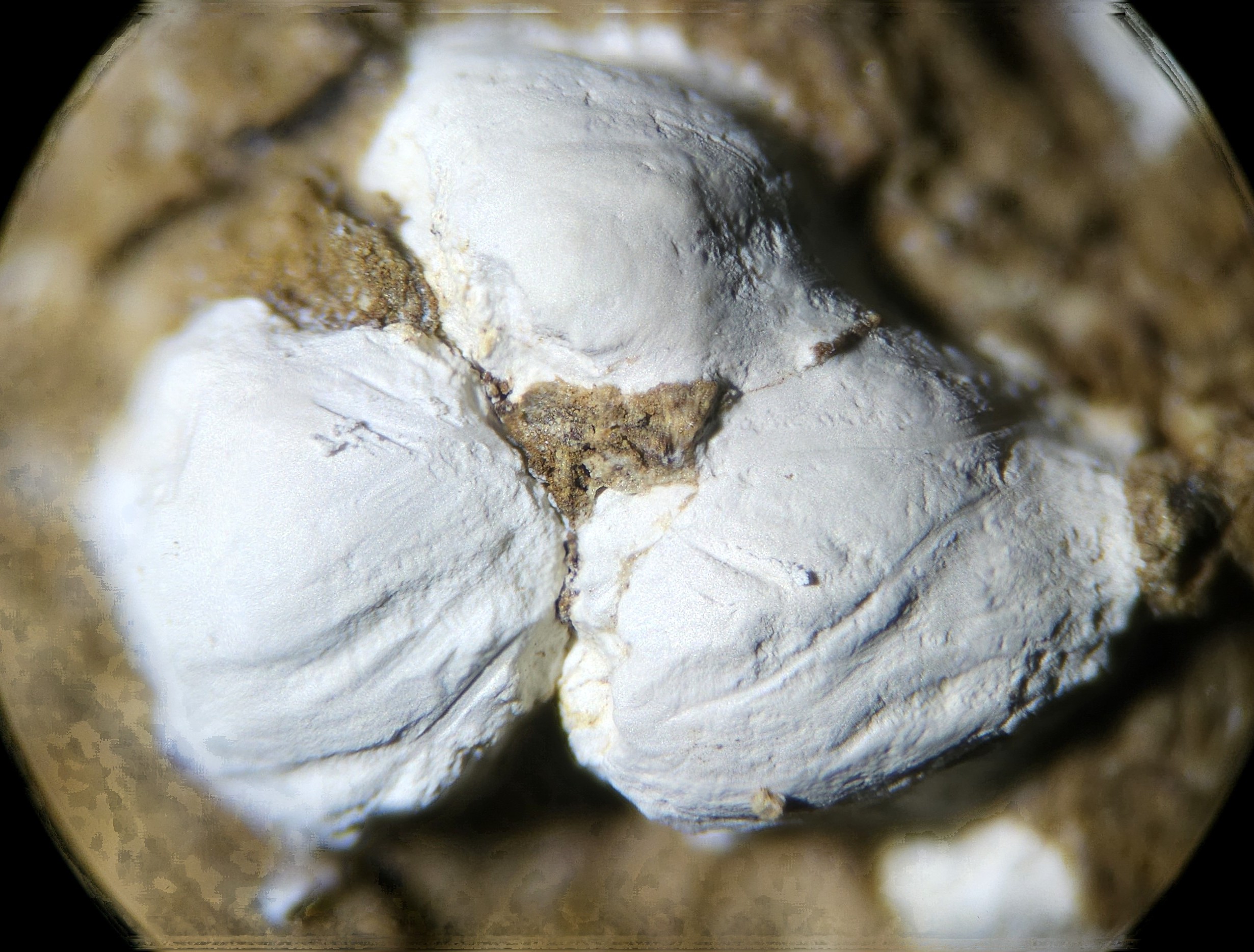
Hydrous iron phosphate, a rare secondary mineral forming characteristic, chalk-like and earthy aggregates.
Properties
- Mohs hardness
- 2.5
- Luster
- Dull, earthy
- Streak
- Yellowish brown
- Density
- 2.83
- Cleavage
- None
- Fracture
- Earthy
- Transparency
- Opaque
- Crystal system
- Triclinic
Diagnostic features
## Identification Tinticite is identified by its characteristic appearance – earthy, chalk-like, or clayey masses with low hardness. Key features also include its creamy-yellowish color, dull luster, and occurrence environment in oxidation zones of ore deposits, often in association with iron minerals. ## Distinguishing from Similar Minerals It can be confused with other earthy secondary minerals, such as evansite, strengite in earthy form, and also with clay minerals (e.g., kaolinite). It is distinguished from kaolinite by its lack of plasticity when wet (which should not be attempted on a collector's specimen). Definitive identification almost always requires chemical or X-ray diffraction (XRD) analysis. ## Crystal Forms Macroscopic crystals are not known. Tinticite forms microscopic, elongated or fibrous crystals that build compact, earthy or porous aggregates. Sometimes it forms small crusts or nodules with a radial structure.
Geological environment
## Genesis It is a secondary mineral, formed in the oxidation (weathering) zones of ore deposits. It forms as a result of the reaction of solutions rich in phosphorus (originating, for example, from the decomposition of apatite or organic matter, such as guano) with iron minerals. It forms in acidic to neutral environments. ## Mineral Associations It most often co-occurs with iron minerals such as goethite, hematite, and limonite. It is also accompanied by other secondary phosphates and sulfates, e.g., strengite, wardite, jarosite, wavellite, or crandallite. ## Localities The most important and type locality is the Tintic Standard Mine in Utah, USA. It is also known from the Iron Monarch quarry in South Australia, from caves in the Conselheiro Pena region in Brazil, and from several other places worldwide where similar geochemical conditions exist.
Rarity
Very rare
For collectors
## Quality Criteria The quality of tinticite specimens is assessed mainly by the richness and purity of the material on the rock matrix. The most valued specimens are those with well-developed, thick crusts or distinct nodules, contrasting with the substrate. Association with other rare secondary minerals and origin from a classic, type locality are also important. ## Popular Localities For collectors specializing in systematic mineralogy, specimens from the type locality – the Tintic Standard Mine in Utah – are most desirable. Material from Iron Monarch in Australia is also valued in the collector's market.
Care and storage
## Cleaning Tinticite specimens are very soft, porous, and fragile. They should only be cleaned dry, using a soft brush to remove dust. Low-pressure compressed air is permissible, but from a distance. ## What to Avoid Absolutely avoid contact with water and all cleaning fluids. The mineral is porous and can absorb water, leading to softening or disintegration. Protect it from impacts, vibrations, and abrasion. Ultrasonic cleaners are forbidden. ## Storage It is recommended to store specimens in closed, padded collector boxes to protect them from dust, moisture, and mechanical damage. It should not be displayed in areas with high humidity.