Senarmontite
Chemical formula: Sb<sup>3+</sup><sub>2</sub>O<sub>3</sub>
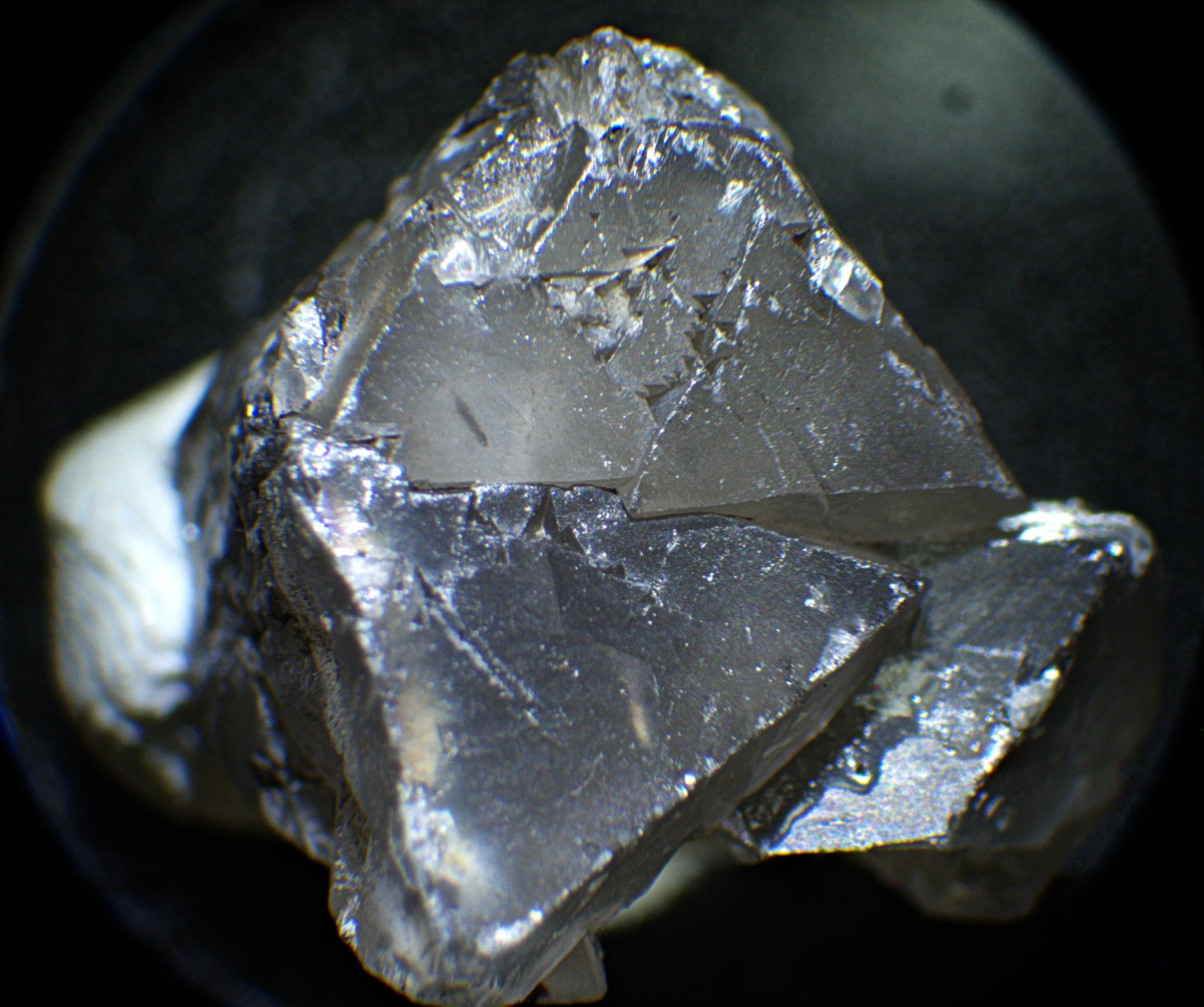
Senarmontite is a secondary antimony oxide, forming characteristic, lustrous crystals in the shape of regular octahedra.
Properties
- Mohs hardness
- 2-2.5
- Color
- Colourless to gray
- Luster
- Resinous to subadamantine
- Streak
- White
- Density
- 5.5
- Cleavage
- {111} in traces.
- Fracture
- Irregular/Uneven
- Transparency
- Transparent,Translucent
- Crystal system
- Isometric
Diagnostic features
## Identification The most important diagnostic feature of senarmontite is its characteristic crystal habit – it almost always occurs in the form of sharply terminated, regular octahedra. Other helpful indicators include low hardness (2-2.5 on the Mohs scale), high density, resinous luster, and co-occurrence with other antimony minerals, such as stibnite. ## Distinguishing from Similar Minerals Senarmontite is dimorphous with valentinite – both minerals have the same chemical formula (Sb₂O₃) but crystallize in different systems. Valentinite (orthorhombic system) forms tabular, bladed crystals or radial aggregates, which clearly distinguishes it from the octahedral crystals of senarmontite (isometric system). From other minerals of similar shape (e.g., some spinels, fluorite), it is primarily distinguished by its extreme softness. ## Crystal Forms The dominant and almost sole form of occurrence is simple or slightly modified octahedra. Crystals can be single or form druses and coatings. Less commonly, it is found in the form of granular aggregates or massive crusts.
Geological environment
## Genesis Senarmontite is a secondary mineral, formed in the oxidation (weathering) zones of ore deposits containing antimony. It forms as a result of the slow oxidation of primary antimony sulfides, mainly stibnite (Sb₂S₃), under conditions of low temperature and pressure. It is a typical mineral of the supergene zone. ## Mineral Associations It most often occurs in the immediate vicinity of minerals from which it formed, or which formed under similar conditions. Typical associated minerals include stibnite, valentinite (its polymorph), kermesite, stibiconite, cervantite, and native antimony. ## Localities The classic, world-renowned locality, from which exemplary specimens originate, is Djebel Hammimat in the Constantine Province, Algeria. Other important localities include the Srebrenica mine in Bosnia and Herzegovina, Příbram in the Czech Republic, the Cetine di Cotorniano mine in Tuscany (Italy), as well as the South Ham area in Quebec (Canada) and numerous places in Bolivia.
Rarity
Not very common
For collectors
## Quality Criteria The most highly valued by collectors are specimens with sharp, well-formed, transparent, and highly lustrous octahedral crystals. Groups of crystals embedded on a contrasting rock matrix, for example on stibnite, are particularly desirable. Crystal size is of great importance – specimens with crystals exceeding a few millimeters are already considered valuable. Purity (absence of mechanical damage and undesirable coatings) is crucial. ## Popular Localities The historical locality in Algeria (Djebel Hammimat) is considered the source of the world's best senarmontite specimens, from which large, classic crystals originate. High-quality specimens, often in the form of lustrous druses, have also been found in mines in Quebec (Canada) and Bosnia and Herzegovina.
Care and storage
## Cleaning Senarmontite is very soft and brittle, so it requires special care. To remove dust, it is best to use a soft brush or compressed air from a safe distance. If necessary, it can be rinsed in distilled water and then gently dried. Ultrasonic cleaners should be avoided, as they can cause cracks or complete destruction of the crystals. ## What to Avoid This mineral is sensitive to chemicals – it dissolves in hydrochloric acid. It should be protected from all acids and detergents. Due to its low hardness, it is easily scratched, so it should not be cleaned with hard brushes or cloths. Rapid temperature changes and direct, prolonged sun exposure should also be avoided. ## Storage Senarmontite specimens are best stored in separate, padded boxes to avoid contact with harder minerals that could damage them. It is important to protect it from dust, which can be difficult to remove from delicate crystal aggregates over time. Displaying it in closed display cases is a good solution.