Olivine / Peridot
Chemical formula: (Mg,Fe)₂SiO₄
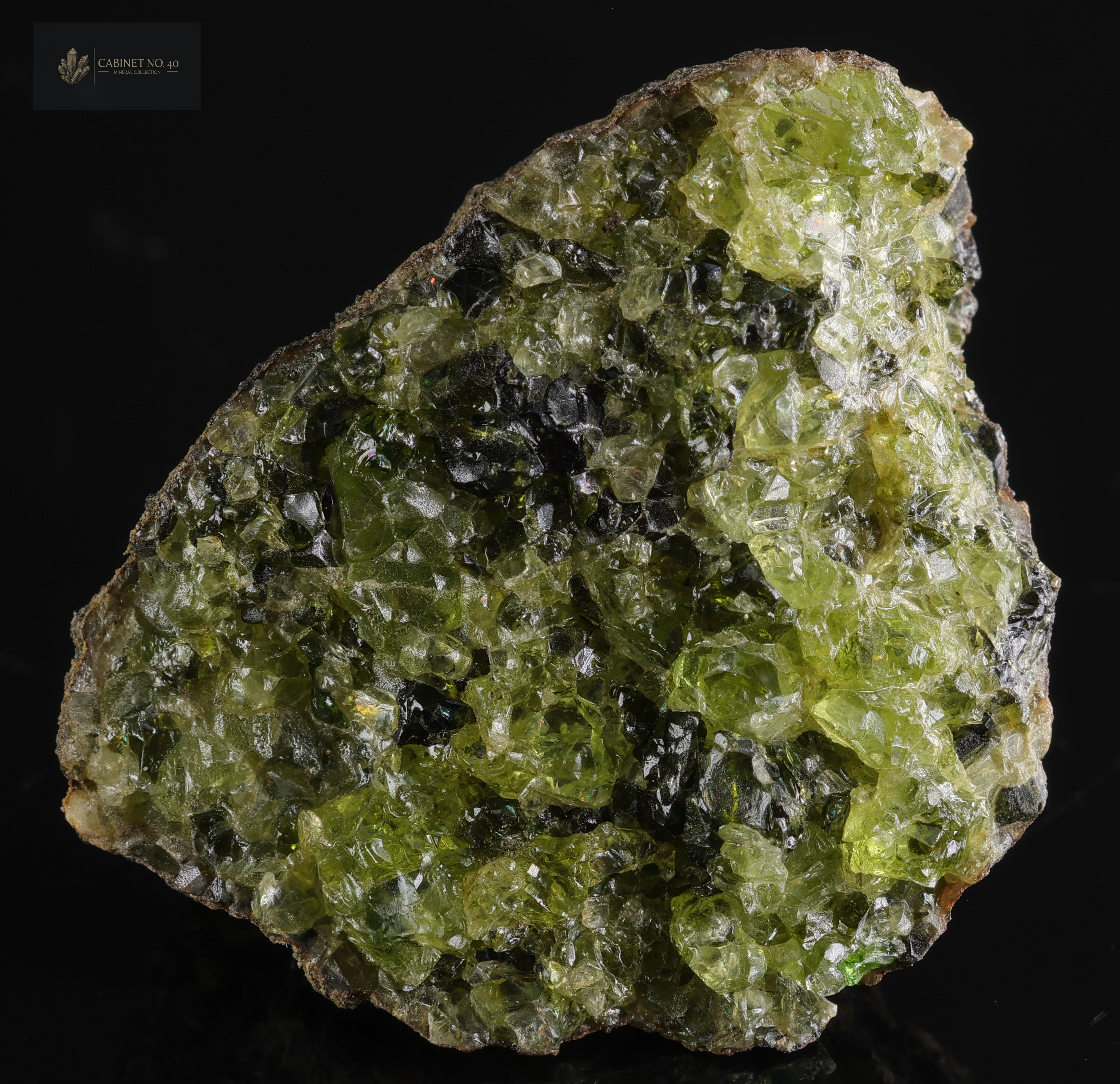
Olivine is a group of silicate minerals, commonly found in igneous and metamorphic rocks, typically characterized by a greenish color.
Properties
- Mohs hardness
- 6.5-7
- Luster
- Szklisty
- Streak
- Biała
- Density
- 3.2-4.3
- Cleavage
- Słaba
- Fracture
- Muszlowy
- Transparency
- Przezroczysty do przeświecającego
- Crystal system
- Rombowy
Diagnostic features
## Identification Olivine can be identified by its characteristic green color, vitreous luster, and conchoidal fracture. It often occurs as granular aggregates in igneous rocks. Its hardness (6.5-7 on the Mohs scale) allows it to scratch glass. ## Distinguishing from Similar Minerals Olivine is sometimes confused with garnet, epidote, or dioptase, which also occur in green shades. It differs from garnet by the lack of distinct cleavage and a different crystallization habit. It differs from epidote by the absence of epidote's characteristic prismatic habit. Dioptase is much softer and has a more intense, emerald green color. ## Crystal Forms Olivine most commonly occurs as granular aggregates, forming small, irregular grains in rocks. Well-formed, short-prismatic or tabular crystals with an orthorhombic habit are less common.
Geological environment
## Genesis Olivine is a mineral typical of ultramafic and mafic igneous rocks, such as peridotites, basalts, and gabbros. It forms at high temperatures and pressures in the Earth's mantle and is then brought to the surface by volcanic processes. It can also occur in metamorphic rocks, formed by the alteration of magnesium- and iron-rich rocks, and in meteorites. ## Mineral Associations Olivine often co-occurs with other minerals typical of igneous rocks, such as pyroxenes (e.g., augite), plagioclase, chromite, magnetite, and ilmenite. In metamorphic rocks, it can be associated with serpentine and talc. ## Localities Significant deposits of olivine, including the gem variety – peridot, are found in many places around the world. The most important include: Zabargad Island (Egypt), Arizona (USA), Pakistan, China, Vietnam, Australia, Brazil, and Norway. In Poland, olivine occurs in the basalts of Lower Silesia.
Rarity
Common
For collectors
## Quality Criteria For olivine collectors, the intensity and purity of color are most important – the more vivid, olive-green the color, the more valuable the specimen. Transparency and lack of inclusions are also important. Large, well-formed crystals are rare and highly prized. Specimens with visible inclusions of chromite or other minerals can also be interesting due to their scientific value. ## Market Prices The prices of olivine, especially the peridot variety, vary and depend on the quality, size, and origin of the specimen. Small, rough olivine grains are relatively inexpensive. High-quality, faceted peridots with intense color can fetch prices from tens to hundreds of dollars per carat, depending on size and clarity. ## Popular Localities The most prized peridot specimens come from Zabargad Island in Egypt, known for historical sources of this gem. Other popular and valued localities include the San Carlos Reservation in Arizona (USA), where large, clear crystals are found, and regions of Pakistan and China, which supply high-quality gem material.
Care and storage
## Cleaning Olivine, especially its peridot variety, is a relatively durable mineral but requires gentle cleaning. It is best to use a soft brush and lukewarm water with a small amount of mild soap. After washing, rinse the specimen thoroughly under running water and dry it with a soft cloth. ## What to Avoid Avoid contact of olivine with strong acids, which can damage its surface. This mineral is sensitive to sudden temperature changes, which can lead to cracks. Prolonged exposure to direct sunlight is not recommended, although it does not cause significant damage. Ultrasonic and steam cleaning methods, which can be too aggressive, should also be avoided. ## Storage Olivine specimens should ideally be stored separately from other, harder minerals to prevent scratches. Storage in soft pouches or display cases with soft lining, away from dust and excessive humidity, is ideal.