Mordenite
Chemical formula: (Na<sub>2</sub>,Ca,K<sub>2</sub>)<sub>4</sub>(Al<sub>8</sub>Si<sub>40</sub>)O<sub>96</sub>·28H<sub>2</sub>O
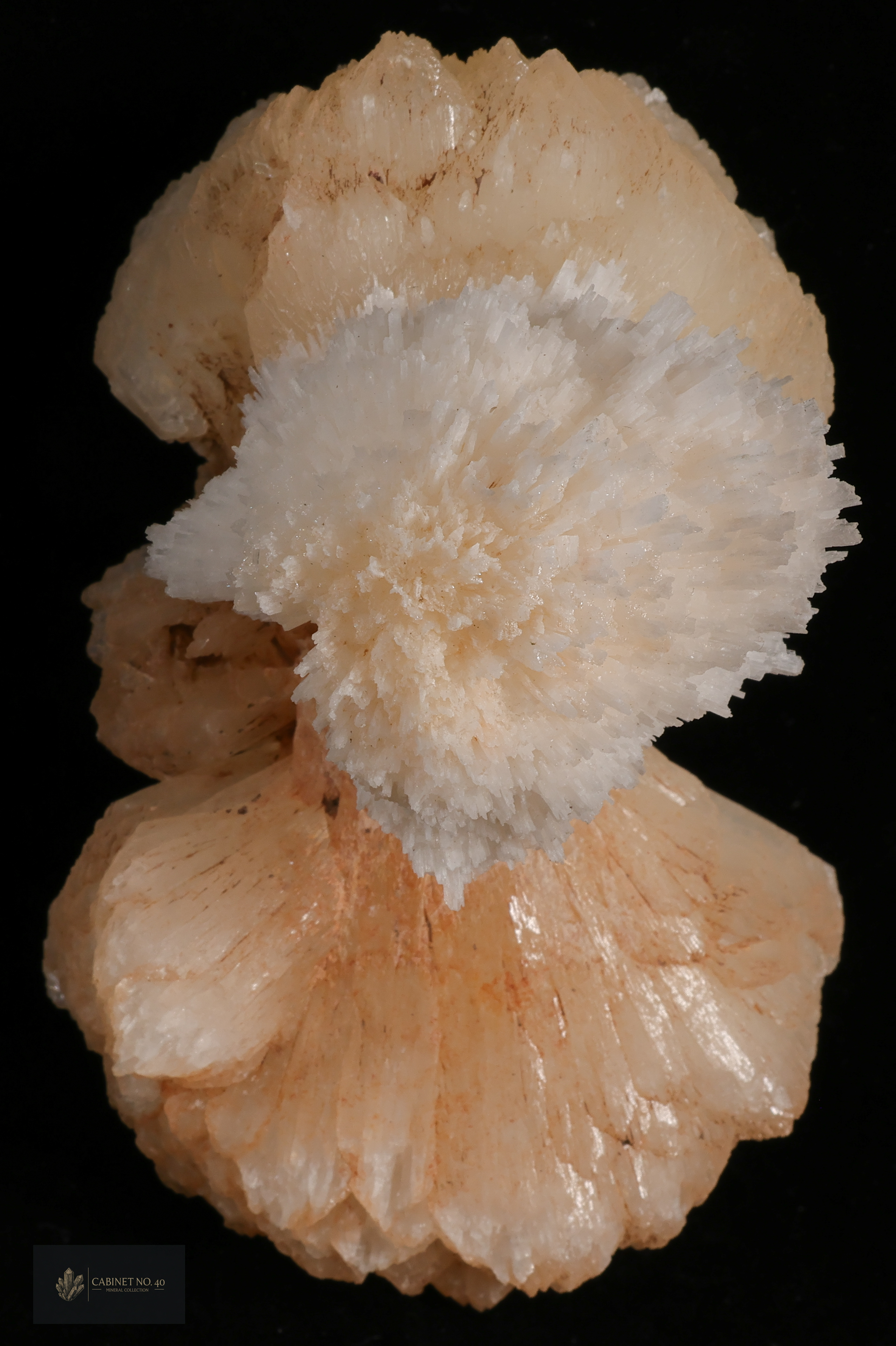
Mordenite is a mineral from the zeolite group, characterized by fibrous or radial aggregates, often forming spherical shapes.
Properties
- Mohs hardness
- 3-4
- Luster
- Szklisty do jedwabistego
- Streak
- White
- Density
- 2.12
- Cleavage
- Perfect on {100}; distinct on {010}.
- Fracture
- Nierówny
- Transparency
- Transparent,Translucent
- Crystal system
- Orthorhombic
Diagnostic features
## Identification Mordenite can be identified by its characteristic fibrous or radial habit, often forming spherical aggregates. White, yellowish, or pinkish color and vitreous to silky luster are also diagnostic features. A hardness of 3-4 on the Mohs scale allows it to be scratched by a steel tool. ## Distinguishing from Similar Minerals Mordenite is sometimes confused with other zeolites of similar habit, such as stilbite or heulandite. It can be distinguished from stilbite by the absence of pearly luster on cleavage planes, and from heulandite by differences in crystallographic system and chemical formula. Accurate differentiation often requires microscopic examination or X-ray diffraction. ## Crystal Forms Mordenite most commonly occurs as fibrous, radial, or spherical aggregates. Less frequently, it forms single, elongated crystals with a columnar or acicular habit. These aggregates can be compact or loose, forming delicate, fluffy shapes.
Geological environment
## Genesis Mordenite forms under low-temperature hydrothermal conditions, often in fractures and cavities of volcanic rocks such as basalts, andesites, and rhyolites. It is a secondary mineral, forming as a result of the alteration of volcanic glass or other silicate minerals. ## Mineral Associations Mordenite often co-occurs with other zeolites, such as heulandite, stilbite, laumontite, chabazite, as well as with calcite, opal, chalcedony, and quartz. ## Localities Known mordenite localities include Morden in Nova Scotia (Canada), Iceland, India (Deccan Traps), the United States (Oregon, Washington), Italy (Sardinia), and Japan.
Rarity
Common
For collectors
## Quality Criteria The most prized mordenite specimens are those with well-formed, spherical or radial aggregates with intense color and distinct luster. The purity of the mineral, absence of mechanical damage, and aesthetic arrangement on the matrix also influence its collector's value. Large, complete specimens are particularly sought after. ## Popular Localities Particularly valued mordenite specimens come from India, especially from the Deccan region, where they occur as beautiful, spherical aggregates in basalt cavities. Other popular localities include Iceland and Nova Scotia in Canada.
Care and storage
## Cleaning Gentle cleaning of mordenite can be performed using a soft brush and lukewarm water. For more stubborn dirt, distilled water can be used to avoid mineral deposits. After washing, the specimen should be gently dried with a soft cloth. ## What to Avoid Aggressive chemical agents should be avoided, as they can damage the delicate structure of the mineral. Mordenite is sensitive to high temperatures and sudden temperature changes, which can lead to cracks. Prolonged exposure to direct sunlight can cause color fading. High humidity is also not advisable, as it can affect the mineral's stability. ## Storage Mordenite specimens are best stored in a dry place, away from heat sources and direct sunlight. Delicate fibrous aggregates should be protected from mechanical damage, for example, by placing them in enclosed display cases or boxes with soft lining.