Minyulite
Chemical formula: KAl₂(PO₄)₂F·4H₂O
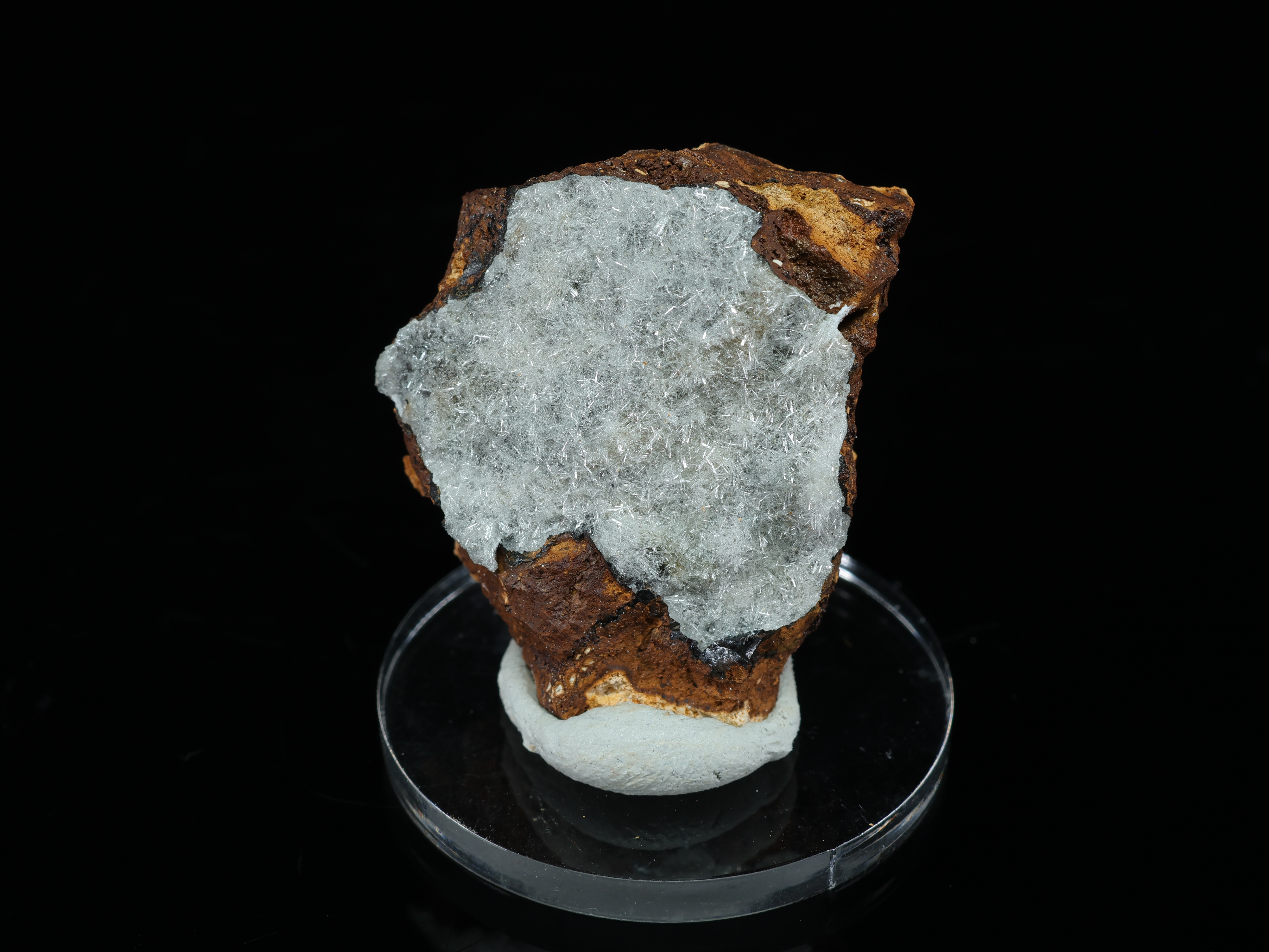
Minyulite is a hydrated potassium aluminum phosphate, forming characteristic radial aggregates composed of tiny, acicular crystals.
Properties
- Mohs hardness
- 3.5
- Color
- Colourless, white, pale pink, pale green, pale yellow; colourless in transmitted light.
- Luster
- Silky
- Streak
- White
- Density
- 0
- Cleavage
- Perfect on {010}
- Fracture
- Uneven
- Transparency
- Transparent
- Crystal system
- Orthorhombic
Diagnostic features
## Identification The most important diagnostic feature of minyulite is its characteristic habit in the form of radial, spherulitic, or fan-shaped aggregates composed of white, acicular crystals. The silky luster of these clusters is also very typical. Its occurrence in paragenesis with other secondary phosphate minerals is an additional clue. ## Distinguishing from Similar Minerals Minyulite is sometimes confused with wavellite, which also forms radial aggregates. However, wavellite is usually greenish and slightly harder (3.5-4 on the Mohs scale). Similar forms can also be created by some zeolites, such as thomsonite, but these occur in a different geological environment (mainly in gas vesicles in volcanic rocks). Final distinction often requires chemical analysis. ## Crystal Forms Minyulite crystallizes in the orthorhombic system, forming elongated, acicular or fibrous crystals. They almost always occur as radial clusters, forming spherical (spherulites), hemispherical, fan-shaped, or rosette-like forms.
Geological environment
## Genesis Minyulite is a secondary mineral. It forms as a result of the interaction of meteoric waters with phosphatic rocks (phosphorites) or guano deposits, in the presence of aluminum-rich rocks such as shales or claystones. It is a typical mineral of weathering zones. ## Mineral Associations It often co-occurs with other secondary phosphates, such as leucophosphite, variscite, wavellite, dufrenite, as well as minerals from the crandallite group and apatite. ## Localities The most important and classic locality, from which the best specimens originate, is the type locality – the area around Minyulo Well in Dandaragan, Western Australia. Significant finds also come from phosphorite mines in Gadsden County, Florida (USA). The mineral has also been found in Belgium (e.g., Richelle), Senegal, and several other places worldwide.
Rarity
Rare
For collectors
## Quality Criteria The most highly prized minyulite specimens are those that form large, well-formed, and undamaged spherulites or fans with an intense white color and silky luster. The attractiveness of a specimen is enhanced by a contrasting rock matrix on which the aggregates are embedded. Due to the fragility of the mineral, the absence of damage is a key factor influencing value. ## Popular Localities Specimens from the type locality in Western Australia are considered the best in the world. Very good quality minyulites, forming large, white spheres, also come from mines in Florida, USA.
Care and storage
## Cleaning Minyulite specimens are very delicate and fragile. For dust removal, it is best to use a soft brush or compressed air from a safe distance. If wet cleaning is necessary, use distilled water and immediately and gently dry the specimen. Ultrasonic cleaners should be avoided, as they can damage fragile aggregates. ## What to Avoid The mineral is sensitive to acids and other chemicals. As a hydrated mineral, it can be damaged (dehydrated) by high temperatures. It should be protected from impacts and contact with harder minerals that could scratch or crush it. ## Storage It is recommended to store minyulite specimens in separate, padded boxes to prevent mechanical damage. They should be protected from dust and direct, prolonged exposure to sunlight.