Hackmanite
Chemical formula: Na₈Al₆Si₆O₂₄Cl₂
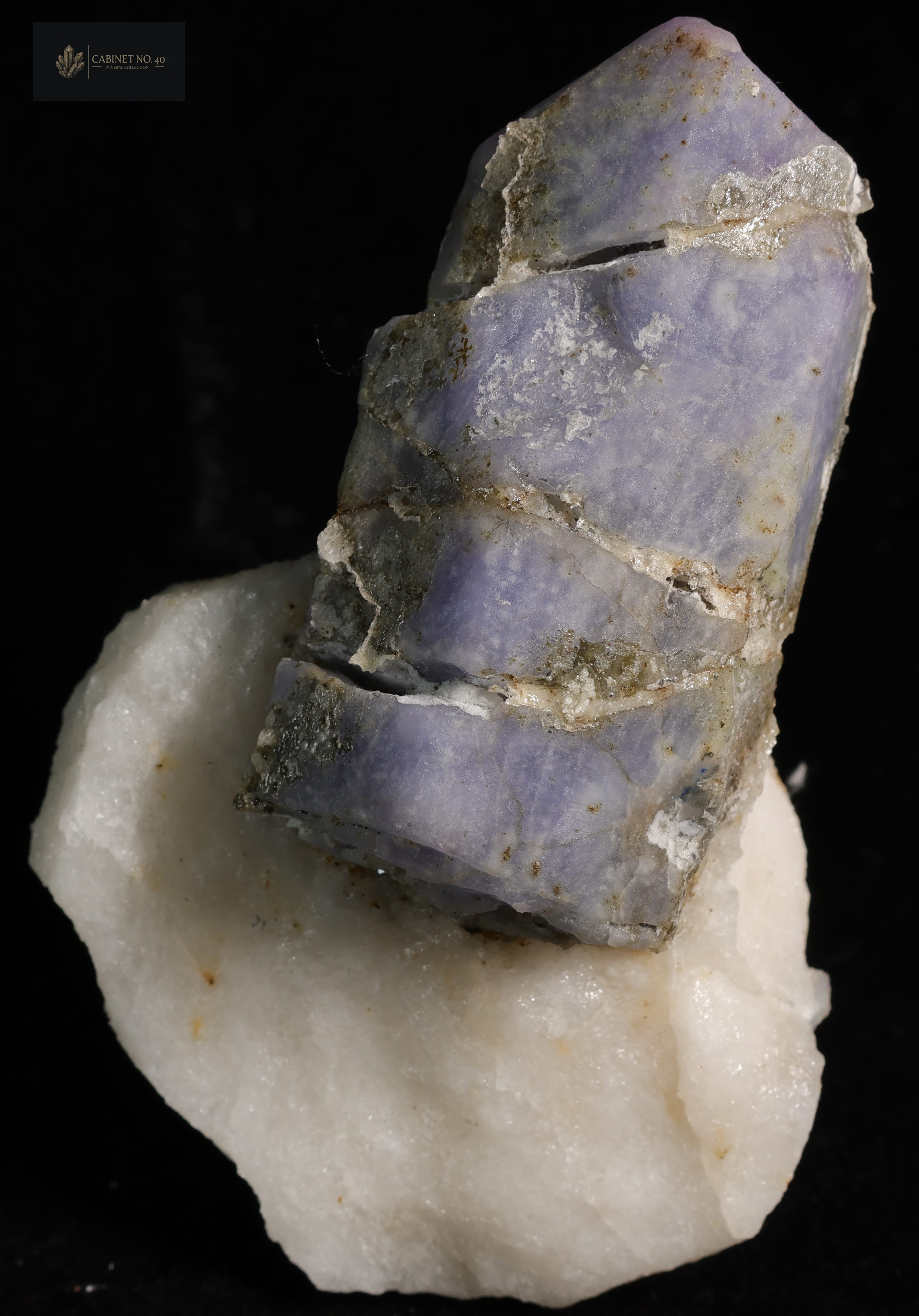
Hackmanite is a rare variety of sodalite, known for its tenebrescence, which is the ability to change color under UV light or sunlight.
Properties
- Mohs hardness
- 5.5-6
- Luster
- Vitreous
- Streak
- White
- Density
- 0
- Cleavage
- Poor/Indistinct
- Fracture
- Conchoidal to Uneven
- Transparency
- Transparent to Translucent
- Crystal system
- Cubic
Diagnostic features
## Identification Hackmanite is most easily identified by its characteristic tenebrescence – the ability to change color under UV radiation and then return to its original color in darkness. It usually occurs as massive aggregates or grains, often in alkaline rocks. ## Distinguishing from Similar Minerals It can be confused with other minerals of similar color, such as sodalite or fluorite. The key distinguishing feature is tenebrescence, which is not present in typical sodalite or fluorite. Fluorite is also significantly softer. ## Crystal Forms Hackmanite rarely forms well-developed crystals. It most commonly occurs as anhedral grains, massive aggregates, or intergrowths in igneous rocks.
Geological environment
## Genesis Hackmanite forms in alkaline igneous rocks, such as nepheline syenites and associated pegmatites. It forms under conditions of high sodium and chlorine activity. ## Mineral Associations It coexists with other alkaline minerals, such as nepheline, albite, microcline, aegirine, and other minerals from the sodalite group. ## Localities The most important hackmanite deposits are located on the Kola Peninsula in Russia, especially in the Khibiny Massif and Lovozero Tundras. Other known localities include Mont Saint-Hilaire in Canada, Greenland, and Afghanistan.
Rarity
Rare
For collectors
## Quality Criteria The most valued hackmanite specimens are those that exhibit strong and distinct tenebrescence, meaning an intense color change from light to deep pink, violet, or blue after UV irradiation. The size of the specimen and its aesthetics, including the absence of cracks and damage, are also important. ## Popular Localities The most sought-after specimens come from the Kola Peninsula in Russia, especially from the Khibiny and Lovozero Massifs. Specimens from Mont Saint-Hilaire in Canada are also prized for their quality and often associated rare minerals.
Care and storage
## Cleaning Hackmanite should be cleaned gently, using a soft cloth or brush and lukewarm water. A small amount of mild soap can be used, then the mineral should be thoroughly rinsed with clean water. Avoid vigorous scrubbing. ## What to Avoid The mineral is sensitive to prolonged exposure to sunlight, which can weaken or completely destroy its tenebrescence. Avoid contact with aggressive chemicals, acids, and bases, which can damage the mineral's surface. High temperatures can also negatively affect its properties. ## Storage Hackmanite is best stored in a dark place, away from direct sunlight and heat sources. For display, specimens can be exhibited for a short time, and then stored in a closed display case or box to preserve their ability to change color.