Gypsum
Chemical formula: CaS<sup>6+</sup>O<sub>4</sub>·2H<sub>2</sub>O
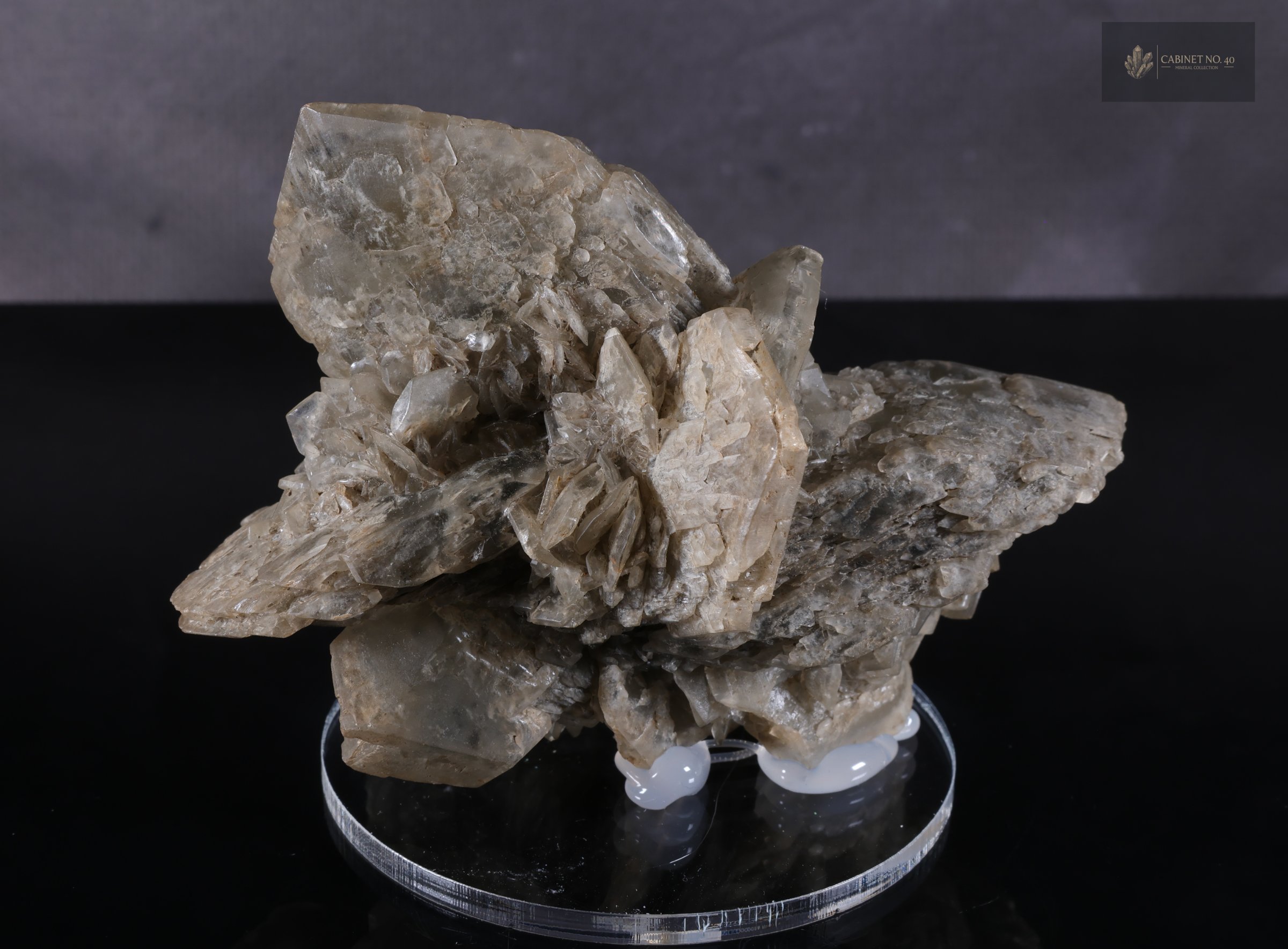
Gypsum is a common sulfate mineral, hydrated calcium sulfate, often forming well-developed crystals or massive aggregates.
Properties
- Mohs hardness
- 2
- Luster
- Vitreous, Pearly, Silky
- Streak
- White.
- Density
- 2.312
- Cleavage
- Perfect (eminent) and easy on {010}, almost micaceous in some samples; on {100} distinct, yielding a surface with a conchoidal fracture; on {011}, yielding a fibrous fracture {001}.
- Fracture
- Conchoidal
- Transparency
- Transparent,Translucent,Opaque
- Crystal system
- Monoclinic
Diagnostic features
## Identification Gypsum can be identified by its low hardness (2 on the Mohs scale), the ability to scratch it with a fingernail, and perfect cleavage in one direction, which allows it to be separated into thin, flexible sheets. A white streak is also characteristic. Transparent varieties, such as selenite, are easily recognizable by their clarity and crystal habit. ## Distinguishing from Similar Minerals Gypsum can be confused with calcite, however, calcite is harder (3 on the Mohs scale) and reacts with hydrochloric acid, which gypsum does not. Barite can also be similar, but it is much heavier and has different cleavage. Fibrous varieties of gypsum (satin spar) can be confused with asbestos, however, gypsum is much softer and does not have fibers as flexible and durable as asbestos. ## Crystal Forms Gypsum forms tabular, columnar, or acicular crystals. Twinning is common, especially "swallowtail" twins. Aggregates can be compact, granular, fibrous (satin spar), lamellar, and also rosette-shaped (desert roses).
Geological environment
## Genesis Gypsum forms mainly in evaporitic environments, i.e., as a result of the evaporation of saline marine or lake waters. It also forms in the oxidation zones of sulfide deposits, as a weathering product. It can occur in sedimentary rocks, such as limestones, marls, and shales. ## Mineral Associations Gypsum often co-occurs with other evaporite minerals, such as halite, anhydrite, calcite, dolomite, and also native sulfur. ## Localities Significant gypsum deposits are found worldwide. Important localities include: Spain (especially the famous selenite crystals from Naica in Mexico, although this is not Spain), USA (e.g., White Sands National Park in New Mexico), Italy, Germany, Poland (e.g., Nida Basin), and Russia.
Rarity
Very Common
For collectors
## Quality Criteria The most prized gypsum specimens are those with well-formed, transparent crystals, especially selenite varieties. The size of the crystals, their clarity, lack of mechanical damage, and attractive habit are also important. "Desert roses" are valued for their unique form. Specimens with rare inclusions or unusual colors may also be sought after. ## Popular Localities Among the most famous localities from which prized specimens originate are the Naica caves in Mexico, famous for their gigantic selenite crystals. Other important localities include desert areas where "desert roses" form, as well as deposits in Spain and the USA.
Care and storage
## Cleaning Gypsum specimens should be cleaned gently, using a soft brush or paintbrush, to remove dust. For heavier soiling, lukewarm distilled water can be used, but prolonged soaking should be avoided, as gypsum is water-soluble. ## What to Avoid Avoid using strong chemicals, acids, and bases, which can damage the mineral's surface. Gypsum is sensitive to changes in temperature and humidity, so it should not be exposed to sudden fluctuations of these factors. Prolonged exposure to direct sunlight can cause some colored varieties to fade. ## Storage Gypsum is best stored in a dry place, away from heat sources and direct sunlight. Specimens should be placed in separate boxes or on a soft pad to prevent scratches, as gypsum is a soft mineral.