Gearksutite
Chemical formula: CaAlF<sub>4</sub>(OH)·H<sub>2</sub>O
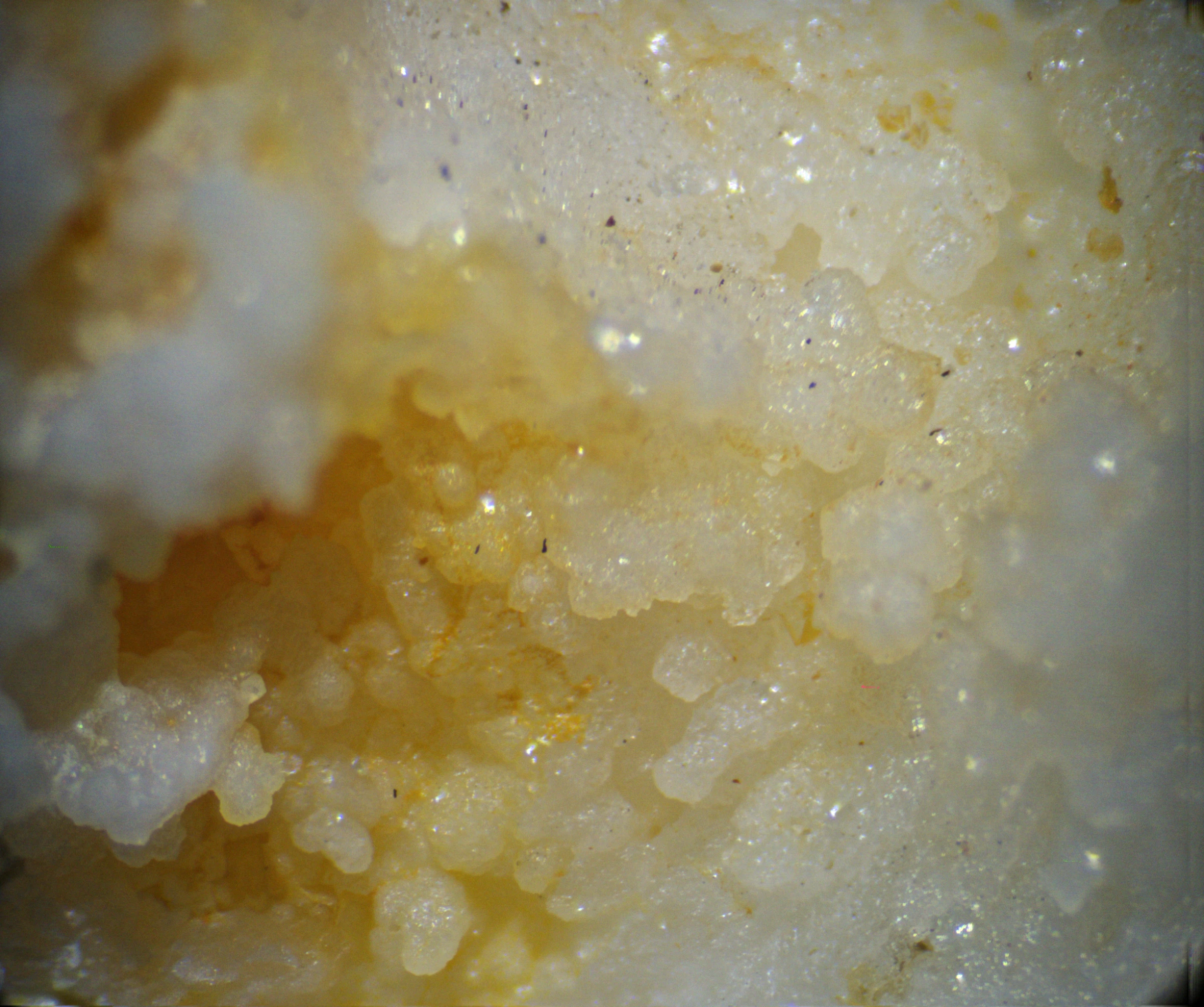
Gearksutite is a hydrated calcium aluminum fluoride, most commonly found as earthy, white masses and coatings.
Properties
- Mohs hardness
- 2
- Color
- white, pale rose, colourless (including in transmitted light)
- Luster
- Dull, earthy
- Streak
- white
- Density
- 2.768
- Cleavage
- On <mi>{1_10}</mi>.
- Fracture
- Uneven to earthy
- Transparency
- Transparent,Opaque
- Crystal system
- Triclinic
Diagnostic features
## Identification Gearksutite is most easily recognized by its characteristic appearance - white, earthy, or chalk-like masses. Key diagnostic features include very low hardness (about 2 on the Mohs scale), a white streak, and a specific occurrence environment, i.e., oxidation zones of cryolite deposits. To the touch, it often resembles clay. ## Distinguishing from Similar Minerals It can be confused with other white minerals with an earthy habit, such as kaolinite, gibbsite, or allophane. It is distinguished from kaolinite by its genesis and associated minerals (rare fluorides). Unlike clay minerals, gearksutite is not plastic when mixed with water. Reaction with acids can help distinguish it from some carbonates, but chemical tests are not recommended due to the possibility of damaging the sample. ## Crystal Forms The vast majority of specimens are in the form of compact, earthy, or powdery aggregates. Well-formed crystals are extremely rare and appear as microscopic, acicular or thin-bladed forms, often gathered in radial or tangled aggregates in small rock cavities.
Geological environment
## Genesis Gearksutite is a secondary mineral. It forms as a result of hydrothermal alteration or weathering of other aluminum and fluorine-rich minerals, primarily cryolite. It is most commonly found in nepheline-sodalite pegmatites, where it fills fissures and cavities. It can also form in low-temperature hydrothermal veins and as a cement in some sandstones. ## Mineral Associations This mineral typically co-occurs with other, often rare, fluorides. Its most common associations include: cryolite, pachnolite, thomsenolite, ralstonite, prosopite, chiolite, fluorite, and quartz. ## Localities The most important and historical occurrence of gearksutite is the unique cryolite deposit in Ivittuut, Greenland (type locality). Other known localities include the Pikes Peak region in Colorado (USA), where it forms small crystals, as well as the Ilmen Mountains in the Urals (Russia) and some localities in Kazakhstan and Italy.
Rarity
Not very common
For collectors
## Quality Criteria The quality of gearksutite specimens is primarily assessed based on its form of occurrence. Amorphous, earthy masses are valued the least. Specimens with visible, even microscopic, radial crystalline aggregates are valued much higher. The most desirable samples are those where gearksutite forms well-defined coatings or fillings in association with other rare fluorides from classic localities, such as Ivittuut or Pikes Peak. ## Popular Localities Classic, historical specimens come from the closed mine in Ivittuut, Greenland. Currently, samples from Colorado, USA, are mainly appearing on the collector's market, valued for the presence of microcrystals.
Care and storage
## Cleaning Gearksutite specimens are very delicate and soft. For dust removal, it is best to use a soft, dry brush. Wet cleaning should be avoided, as its porous, earthy aggregates can absorb water, leading to their disintegration. Ultrasonic cleaners are strictly prohibited. ## What to Avoid The mineral is sensitive to water, high temperatures (risk of dehydration), and all chemicals, especially acids. Due to its low hardness, it is susceptible to scratches and mechanical damage. It should be protected from falls and contact with harder minerals. ## Storage It is recommended to store specimens in separate, sealed boxes or display cases to protect them from dust, moisture, and damage. Display should be in stable conditions, away from direct sunlight and heat sources.