Ephesite
Chemical formula: NaLiAl<sub>2</sub>(Si<sub>2</sub>Al<sub>2</sub>)O<sub>10</sub>(OH)<sub>2</sub>
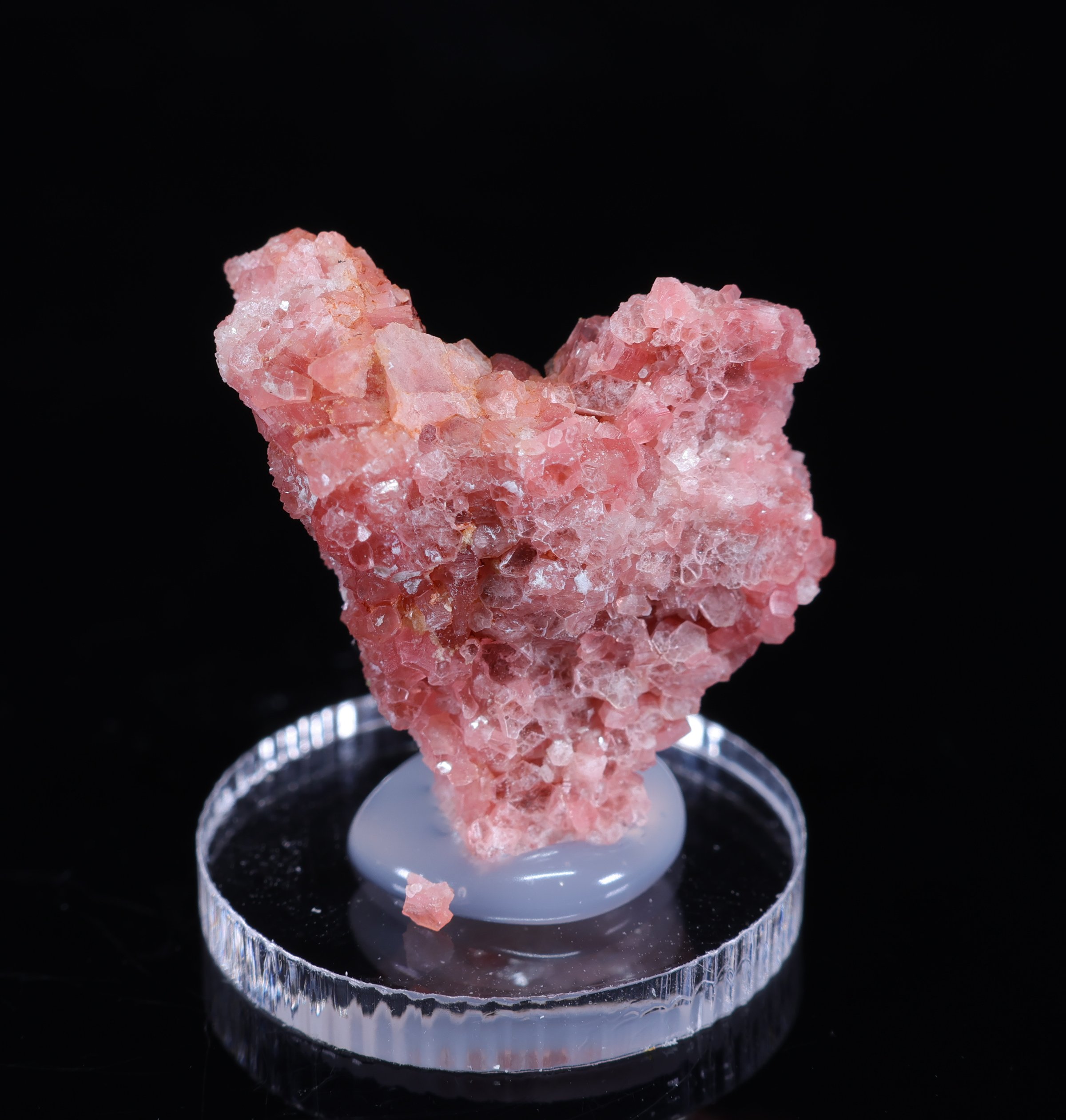
Ephesite is a rare mineral from the mica group, a sodium-lithium aluminosilicate, characterized by its pink color and platy habit.
Properties
- Mohs hardness
- 3.5-4.5
- Luster
- Perłowy
- Streak
- Biała
- Density
- 2.984
- Cleavage
- {001}
- Fracture
- Nierówny
- Transparency
- Translucent
- Crystal system
- Triclinic
Diagnostic features
## Identification Ephesite can be identified by its characteristic pink color, platy habit, and excellent cleavage, which allows the mineral to be easily split into thin lamellae. The pearly luster on cleavage surfaces is also a diagnostic feature. Its occurrence in association with other minerals typical of metamorphic rocks, such as kyanite or dumortierite, may also indicate ephesite. ## Distinguishing from Similar Minerals Ephesite can be confused with other micas, especially muscovite or lepidolite, due to similar habit and cleavage. It differs from muscovite by its pink color and the presence of lithium in its composition. From lepidolite, which is also pink and contains lithium, ephesite differs in chemical composition and crystallographic system. Accurate differentiation requires chemical analysis or X-ray diffraction. ## Crystal Forms Ephesite most often occurs as small, platy or scaly crystals, forming aggregates. Single, well-formed crystals, which are usually small, are less common. Ephesite aggregates often have a radial or fan-like habit.
Geological environment
## Genesis Ephesite is a secondary mineral, formed under conditions of regional metamorphism, especially in rocks rich in aluminum and lithium. It often occurs in crystalline schists, gneisses, and pegmatites. Its presence is an indicator of specific pressure and temperature conditions during metamorphic processes. ## Mineral Associations Ephesite often co-occurs with other metamorphic minerals, such as kyanite, dumortierite, tourmaline, muscovite, paragonite, and quartz. These associations are typical for rocks with a high degree of metamorphism. ## Localities The most important confirmed localities of ephesite include areas in Turkey (Ephesus, from which the name originates), as well as in Australia (e.g., Wodgina in Western Australia), where it occurs in pegmatites. Other localities include Brazil, Russia, and the United States, although specimens from these places are usually less significant.
Rarity
Very Rare
For collectors
## Quality Criteria The most valued ephesite specimens are those characterized by an intense, uniform pink color, well-formed platy crystals, and the absence of mechanical damage. Large, aesthetic aggregates with a distinct pearly luster are particularly sought after. The purity of the mineral and the absence of visible inclusions of other minerals are also important. ## Popular Localities The most prized ephesite specimens come from Turkey (Ephesus) and Australia, especially from the Wodgina region, where specimens with good crystallization and intense color are found.
Care and storage
## Cleaning Ephesite, due to its softness and excellent cleavage, requires gentle cleaning. It is best to use a soft brush or paintbrush to remove dust. For heavier soiling, lukewarm distilled water with a small amount of mild soap can be used, then rinse thoroughly and dry with a soft cloth. ## What to Avoid Avoid using aggressive chemical agents, such as acids or strong detergents, which can damage the mineral's surface. Ephesite is sensitive to high temperatures and sudden temperature changes, which can lead to cracks. Prolonged exposure to direct sunlight can cause color fading. It is also important to avoid excessive humidity, which can promote mineral degradation. ## Storage Ephesite should be stored in a dry and stable environment, away from direct sunlight and heat sources. It is best to place it in a closed display case or a box lined with soft material to protect it from dust and mechanical damage. Due to its softness, avoid contact with harder minerals that could scratch it.