Copper-bearing Austinite
Chemical formula: Ca(Zn,Cu)(AsO₄)(OH)
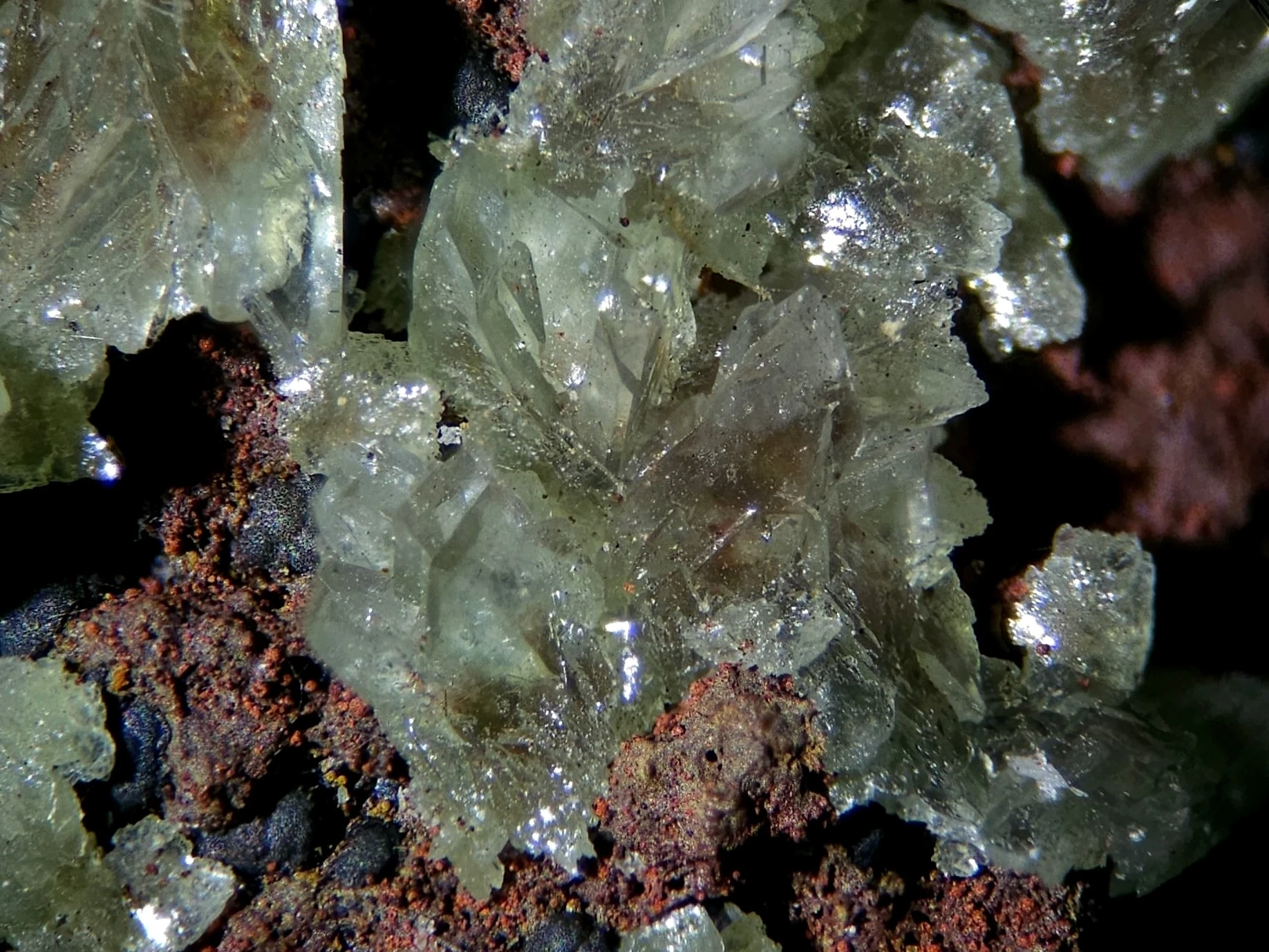
A copper-bearing variety of austinite, a zinc and calcium arsenate, forming characteristic acicular crystals with a color ranging from green to blue-green.
Properties
- Mohs hardness
- 4-4.5
- Luster
- Vitreous to silky
- Streak
- White to pale green
- Density
- 0
- Cleavage
- Good on {001} and {010}
- Fracture
- Uneven to conchoidal
- Transparency
- Transparent to translucent
- Crystal system
- Orthorhombic
Diagnostic features
## Identification Key diagnostic features include its green to blue-green color, acicular crystal habit forming radial or spherical aggregates, and its occurrence in paragenesis with other secondary minerals of the oxidation zone, especially arsenates. ## Distinguishing from Similar Minerals Cuproaustinite is most often confused with conichalcite (CaCu(AsO₄)(OH)). These minerals form a continuous solid solution and often co-occur. Definitive distinction requires chemical analysis (e.g., EDS), as their physical properties are almost identical. Typically, conichalcite has a more grass-green color, while cuproaustinite can be lighter or have a bluish tint, though this is not a rule. It is distinguished from cuprian adamite by the lack of fluorescence under UV light. It is distinguished from malachite by the lack of reaction (effervescence) with hydrochloric acid. ## Crystal Forms The most common forms are aggregates of acicular, elongated crystals that form fan-shaped, radial, or spherical aggregates. It also occurs as fine-grained crusts covering the host rock (matrix).
Geological environment
## Genesis It is a secondary mineral, forming in the oxidation zones (iron caps) of polymetallic ore deposits. It forms as a result of the weathering of primary minerals containing arsenic, zinc, and copper, such as sphalerite, tennantite, or enargite, in the presence of calcium-rich rocks. ## Mineral Associations It often co-occurs with other minerals of the oxidation zone, such as adamite (including its cuprian variety), conichalcite, olivenite, azurite, malachite, limonite, quartz, and calcite. ## Localities Among the most important and well-known localities for this variety are: - Gold Hill Mine, Tooele, Utah, USA - the type locality. - Tsumeb Mine, Namibia - known for the exceptional quality of many rare mineral specimens. - Ojuela Mine, Mapimí, Durango, Mexico - a classic locality for zinc and copper arsenates. - Kintore Mine, Broken Hill, New South Wales, Australia.
Rarity
Rare
For collectors
## Quality Criteria The most highly valued specimens are characterized by an intense, blue-green color, well-formed, lustrous crystals forming aesthetic, spherical or radial aggregates. The size of the clusters, their abundance on the rock matrix, and the absence of damage are also important. Contrasting combinations with other minerals, such as white calcite, significantly increase the attractiveness of the specimen. ## Popular Localities Specimens from the Tsumeb Mine in Namibia and the Ojuela Mine in Mexico are considered world-class and fetch the highest prices on the collector's market. Specimens from the type locality in Gold Hill, Utah, are also sought after by collectors specializing in systematic minerals.
Care and storage
## Cleaning Specimens should be cleaned very carefully, using a soft brush and distilled water. Ultrasonic cleaners should be avoided, as they can damage delicate crystal aggregates. ## What to Avoid The mineral is sensitive to acids and strong chemicals. Due to its relatively low hardness, it is susceptible to scratching. As an arsenate, it is toxic if ingested or if dust is inhaled – hands should be washed after each contact with a specimen. Heating should be avoided. ## Storage It is recommended to store specimens in closed boxes or display cases to protect them from dust and mechanical damage. Exposure to moisture and direct sunlight should be avoided.