Chalcedony
Chemical formula: SiO₂
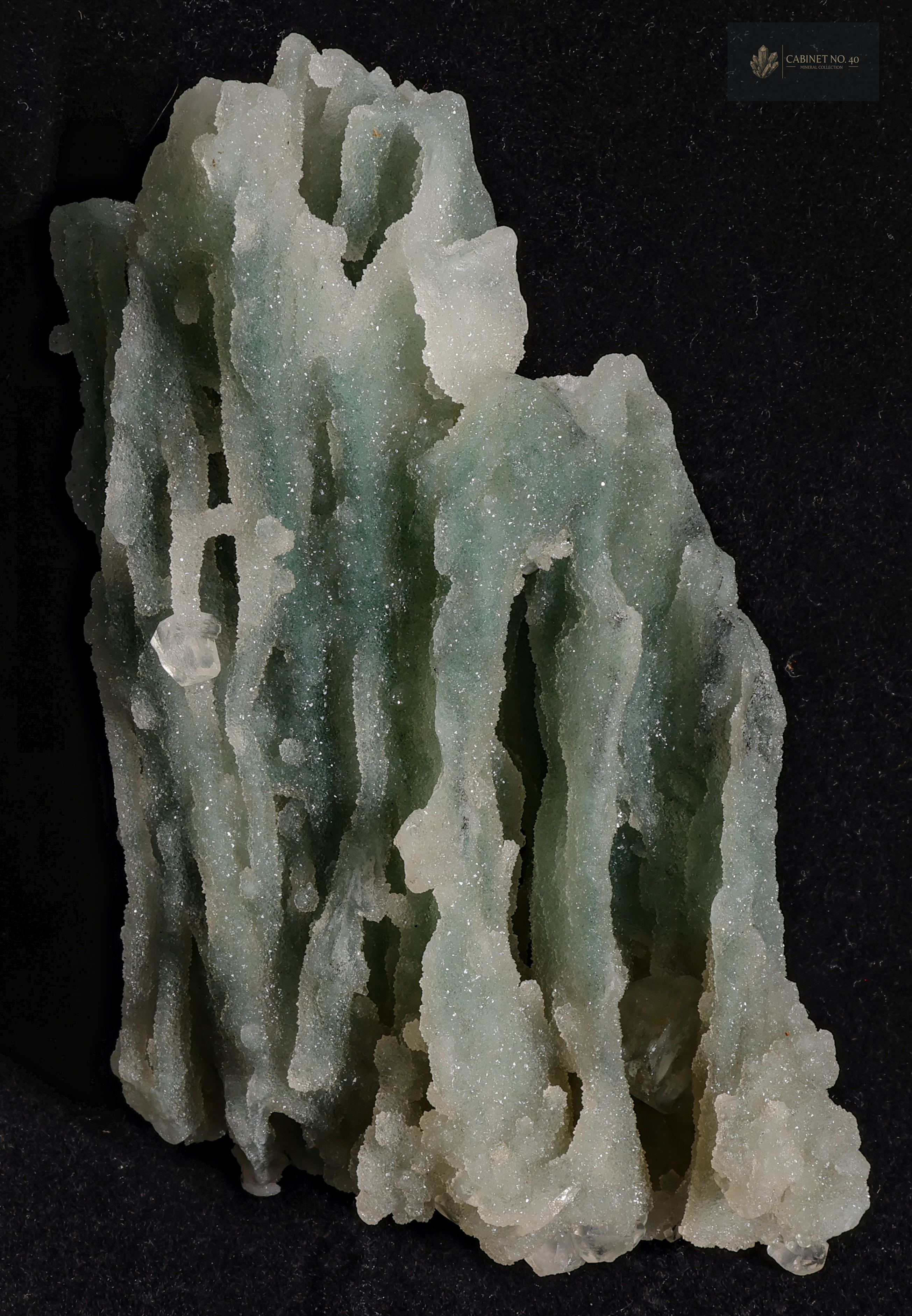
Chalcedony is a microcrystalline variety of quartz, characterized by a waxy luster and often occurring in botryoidal or reniform habits.
Properties
- Mohs hardness
- 6.5-7
- Color
- colorless, white, gray, blue, any color due to embedded minerals, multicolored specimen not uncommon.
- Luster
- Woskowy do matowego
- Streak
- White
- Density
- 2.6
- Cleavage
- Brak
- Fracture
- Conchoidal,Sub-Conchoidal
- Transparency
- Translucent
- Crystal system
- Trygonalny
Diagnostic features
## Identification Chalcedony can be identified by its characteristic waxy or dull luster, microcrystalline structure, and often reniform, botryoidal, or stalactitic habit. The fracture is conchoidal or uneven. It is hard, not scratchable with a steel blade. ## Distinguishing from Similar Minerals Chalcedony is sometimes confused with opal, which also occurs in similar forms and colors. However, opal is usually more brittle, has lower hardness (5.5-6.5 on the Mohs scale), and lower density. Additionally, opal often exhibits opalescence, which chalcedony does not possess. From other microcrystalline quartz varieties, such as jasper, chalcedony differs by its more uniform structure and often translucent nature. ## Crystal Forms Chalcedony does not form macroscopic crystals in the typical sense. Instead, it consists of microscopic quartz fibers that are arranged radially or parallel. It forms reniform, botryoidal, spherical, stalactitic aggregates, as well as incrustations and fissure fillings. It often occurs as nodules, concretions, or layered aggregates.
Geological environment
## Genesis Chalcedony forms at low temperatures, usually as a result of precipitation from silica solutions in cavities and fissures of volcanic rocks (e.g., basalts, andesites) and sedimentary rocks. It can also form in weathering zones and in hydrothermal deposits. Its formation process is often associated with volcanic and hydrothermal activity, where silica is released from decomposing minerals and then crystallizes in microcrystalline form. ## Mineral Associations Chalcedony often co-occurs with other varieties of quartz, such as amethyst, citrine, smoky quartz, as well as opal, calcite, zeolites, and other secondary minerals that crystallize in rock cavities. In some deposits, it may be associated with metal ore minerals. ## Localities Known chalcedony deposits occur worldwide. Important localities include Brazil (especially the states of Rio Grande do Sul and Minas Gerais), Uruguay, India (Deccan Traps), Madagascar, Namibia, the United States (Oregon, California, Arizona), Russia (Siberia), and Poland (Lower Silesia).
Rarity
Common
For collectors
## Quality Criteria Collectors value chalcedony for its color, transparency, luster, and interesting forms and patterns. High-quality specimens are characterized by intense, uniform color, absence of cracks and inclusions, and well-developed reniform or botryoidal forms. Banded varieties, such as agate or onyx, are prized for their distinct and contrasting layers. Large specimens with rare colors or unusual forms are particularly sought after. ## Popular Localities Among the most prized chalcedony localities are those that provide varieties with exceptional colors and patterns. Brazil and Uruguay are known for beautiful agates and amethysts (which often occur in geodes with chalcedony). India is famous for carnelian and agates. Chrysoprase, a valuable green variety, comes mainly from Australia (Queensland) and Poland (Ząbkowice Śląskie). High-quality blue chalcedony occurs in Namibia and Madagascar.
Care and storage
## Cleaning Chalcedony is a relatively hard mineral, but it should be handled gently. For cleaning, simply use a soft brush and lukewarm water with a small amount of mild soap. After washing, rinse the specimen thoroughly with clean water and dry with a soft cloth. ## What to Avoid Avoid using strong chemicals, acids, and solvents, which can damage the mineral's surface or alter its color. Chalcedony is sensitive to sudden temperature changes, which can lead to cracks. Prolonged exposure to direct sunlight can cause some varieties to fade, especially those with intense colors. It is also important to avoid impacts and scratches, despite its hardness. ## Storage Chalcedony is best stored in separate boxes or soft cloth pouches to prevent scratches from harder minerals. Specimens can be displayed in showcases away from direct sunlight and heat sources, which will help preserve their natural colors and luster.