Beryl
Chemical formula: Be<sub>3</sub>Al<sub>2</sub>(Si<sub>6</sub>O<sub>18</sub>)
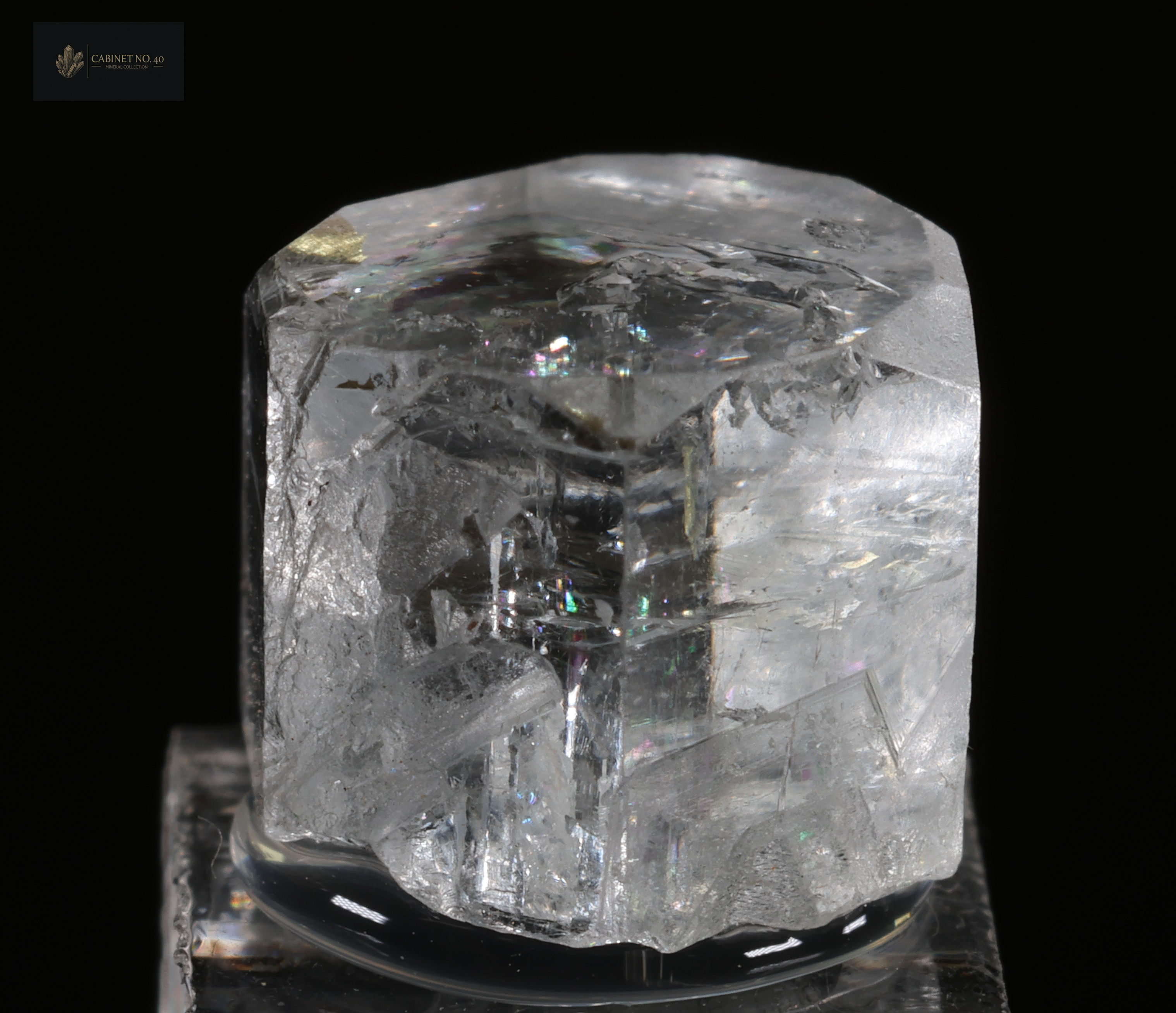
Beryl is a mineral belonging to the silicate group, valued for its diverse colored varieties, many of which are used as gemstones.
Properties
- Mohs hardness
- 7.5-8
- Luster
- Vitreous
- Streak
- White
- Density
- 2.63
- Cleavage
- {0001}
- Fracture
- Muszlowy
- Transparency
- Przezroczysty do przeświecającego
- Crystal system
- Hexagonal
Diagnostic features
## Identification Beryl can be identified by its hexagonal crystal habit, vitreous luster, and hardness. It often occurs as prisms with a hexagonal cross-section. Color is also an important diagnostic feature, though variable. The presence of characteristic inclusions, especially in emeralds, can aid in identification. ## Distinguishing from Similar Minerals Beryl can be confused with quartz, topaz, or tourmaline. It is distinguished from quartz by its higher hardness and lack of striations on the prism faces. It is distinguished from topaz by the lack of perfect cleavage. Beryl differs from tourmaline by the absence of a triangular crystal cross-section and the lack of striations on the prism faces. ## Crystal Forms Beryl most often forms prismatic crystals, often with a distinct hexagonal cross-section. Tabular crystals may also occur. Beryl aggregates can be massive or radial, although well-formed, single crystals are the most valuable.
Geological environment
## Genesis Beryl primarily forms in granitic pegmatites, where it crystallizes from hydrothermal solutions rich in beryllium and aluminum. It can also occur in metamorphic rocks, such as mica schists, and in greisens. The conditions for beryl formation require the presence of elements such as beryllium, aluminum, and silicon, as well as appropriate temperatures and pressures. ## Mineral Associations Beryl often co-occurs with quartz, feldspar, muscovite, biotite, topaz, tourmaline, fluorite, and cassiterite. In pegmatites, it can also be associated with other beryllium minerals. ## Localities Known beryl deposits are found in many places around the world. Important emerald localities include Colombia, Brazil, Russia (Urals), Zambia, and Zimbabwe. Aquamarines come from Brazil, Pakistan, Russia, and Nigeria. Morganites occur in Brazil, USA (California), and Madagascar. Heliodors are found in Brazil, Namibia, and Ukraine. Goshenites occur in many localities, often where other beryl varieties are found.
Rarity
Very Common
For collectors
## Quality Criteria The most important quality criteria for a beryl specimen are color, transparency, clarity, and crystal form. Intense and uniform color is particularly valued for emeralds, aquamarines, and morganites. High transparency and the absence of visible inclusions increase the value of the specimen. Well-formed, undamaged crystals with a distinct hexagonal habit are most sought after by collectors. Size also matters; large crystals are rarer and more valuable. ## Popular Localities The most prized beryl specimens come from Colombia (emeralds), Brazil (emeralds, aquamarines, heliodors, morganites), Pakistan (aquamarines), and Russia (emeralds, aquamarines).
Care and storage
## Cleaning Beryl can be cleaned using warm water with mild soap. A soft brush should be used to remove dirt from the crystal surface. After washing, the mineral should be thoroughly rinsed with clean water and dried with a soft cloth. ## What to Avoid Avoid cleaning beryl with ultrasonic cleaners, especially in the case of emeralds, which may contain inclusions and fractures that could be damaged. Also, avoid sudden temperature changes, which can lead to cracks. Beryl should not be exposed to prolonged strong sunlight, which can cause some varieties to fade. Contact with aggressive chemicals, such as acids or strong detergents, is not recommended. ## Storage Beryl specimens are best stored separately from other minerals to avoid scratches, due to its hardness. Ideal storage is in soft pouches or in boxes lined with soft material. Displaying the specimen should be in a place where it will not be exposed to direct sunlight or sudden temperature changes.