Veszelyite
Veszelyite is a rare copper-zinc phosphate mineral, characterized by its intense blue-green color and forming small, often well-formed crystals.
Description
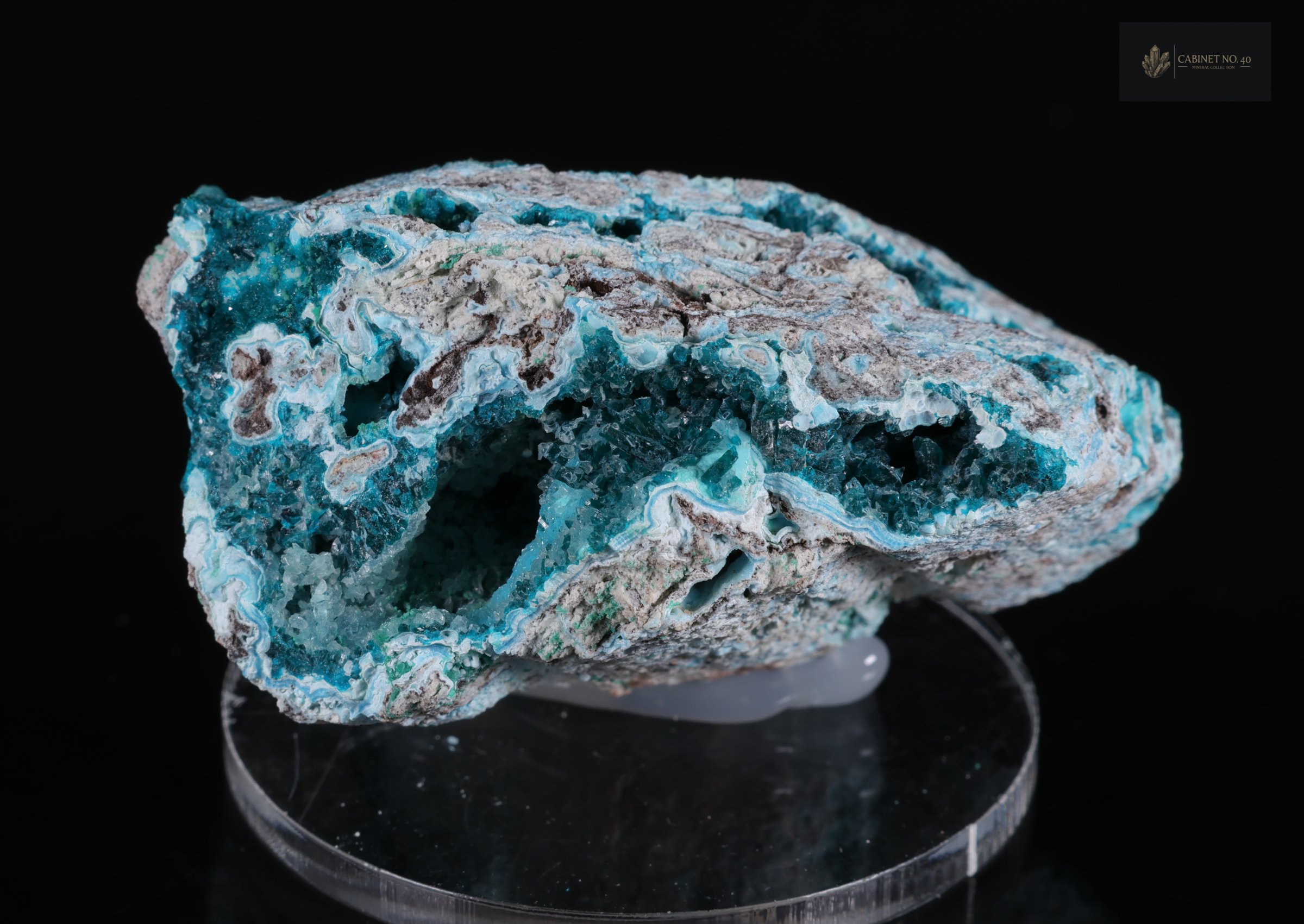
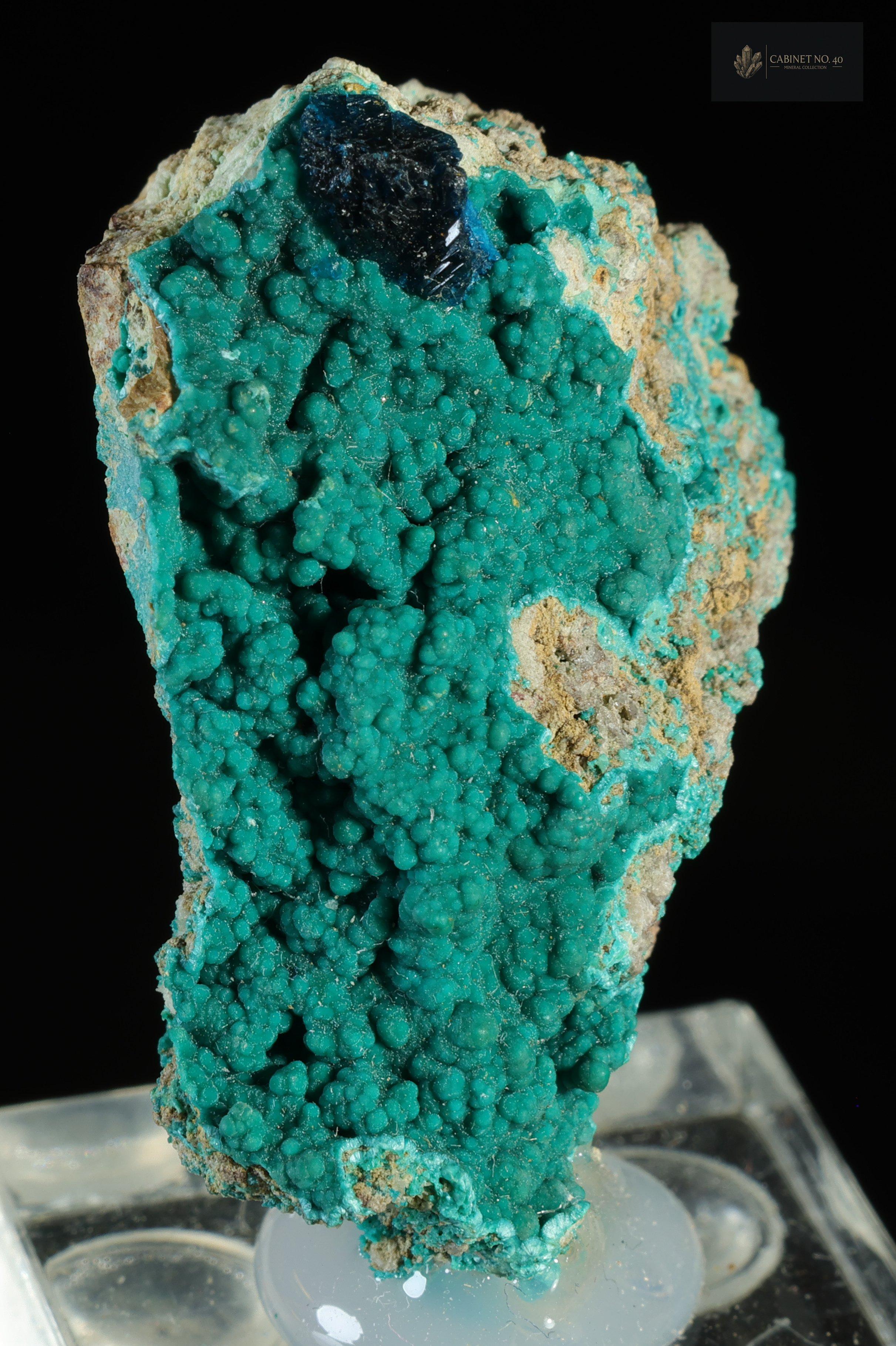
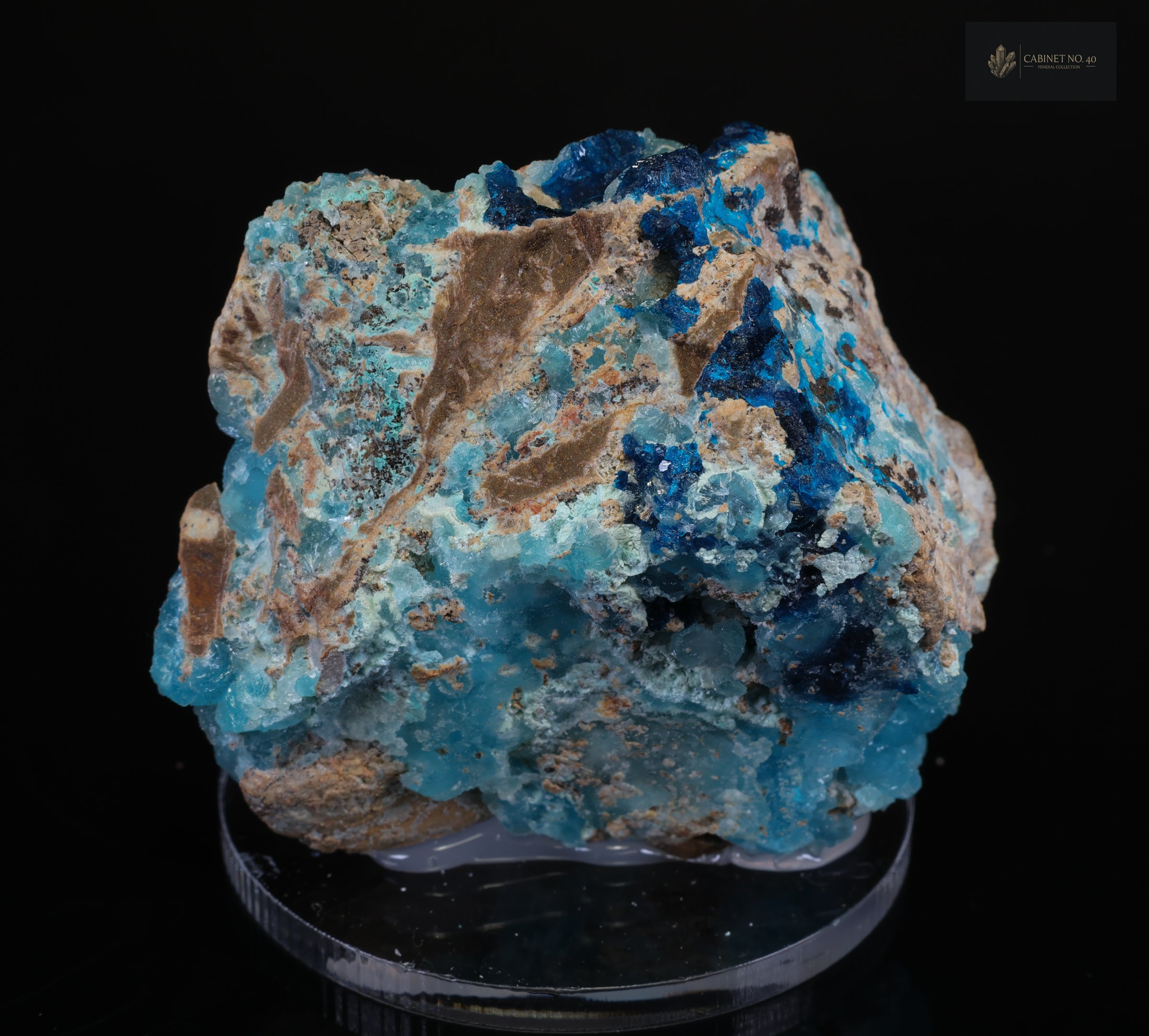
## Characteristics Veszelyite is a rare copper-zinc phosphate mineral. It typically occurs as small, well-formed crystals, often tabular or prismatic. The color of veszelyite ranges from intense blue, through blue-green, to green, making it attractive to collectors. Crystals are usually small, reaching a few millimeters in length, rarely larger. It often forms radial aggregates or coatings. ## Physical Properties This mineral has a Mohs hardness of 3.5-4, meaning it is relatively soft. It has a vitreous luster, and its specific gravity is approximately 3.4 g/cm³. Veszelyite is translucent, and its streak is greenish to white. It exhibits good cleavage in two directions. ## Colors and Varieties Veszelyite occurs in shades of green, blue, and blue-green. The color in transmitted light is greenish-blue. There are no specific color varieties or commercial names. ## History and Name The mineral was discovered and described in 1874. The name "veszelyite" comes from the name of the Hungarian mining engineer and mineralogist, Adolf Wezely (1832-1890), who first found this mineral in a mine in Banat, in present-day Romania. ## Uses Veszelyite has no industrial applications due to its rarity and small crystal size. It is valued exclusively as a collector's mineral.
Diagnostic features
## Identification Veszelyite can be identified by its characteristic blue-green color, vitreous luster, and typical crystal habit, which is often tabular or prismatic. Its occurrence in association with other copper and zinc minerals in the oxidation zones of deposits is also an important diagnostic clue. The mineral's streak is greenish to white. ## Distinguishing from Similar Minerals Veszelyite can be confused with other copper phosphate minerals, such as libethenite or pseudomalachite, as well as some zinc minerals. It is distinguished from libethenite and pseudomalachite by the presence of zinc in its chemical composition and often a different crystal habit. Precise differentiation requires chemical analysis or X-ray diffraction. ## Crystal Forms Veszelyite typically forms small, well-formed crystals with a tabular or prismatic habit. Twinning often occurs. Crystals can form radial aggregates, coatings, or small druses on the surfaces of other minerals.
Geological environment
## Genesis Veszelyite is a secondary mineral, forming in the oxidation zones of polymetallic deposits, especially those rich in copper and zinc. It forms as a result of hydrothermal processes, where phosphate-rich solutions react with primary minerals containing copper and zinc. ## Mineral Associations Veszelyite often co-occurs with other secondary minerals of the oxidation zone, such as azurite, malachite, chrysocolla, hemimorphite, smithsonite, as well as phosphate minerals like libethenite or pseudomalachite. It can also occur with quartz and limonite. ## Localities The most famous occurrences of veszelyite include Oravița in Banat (Romania), where it was discovered. Other important localities include the Clara mine in the Black Forest (Germany), mines in Tsumeb (Namibia), where high-quality crystals were found, and localities in Greece (Lavrion), USA (Arizona), and Chile.
Rarity
Rare
Shop › Veszelyite