Uvarovite
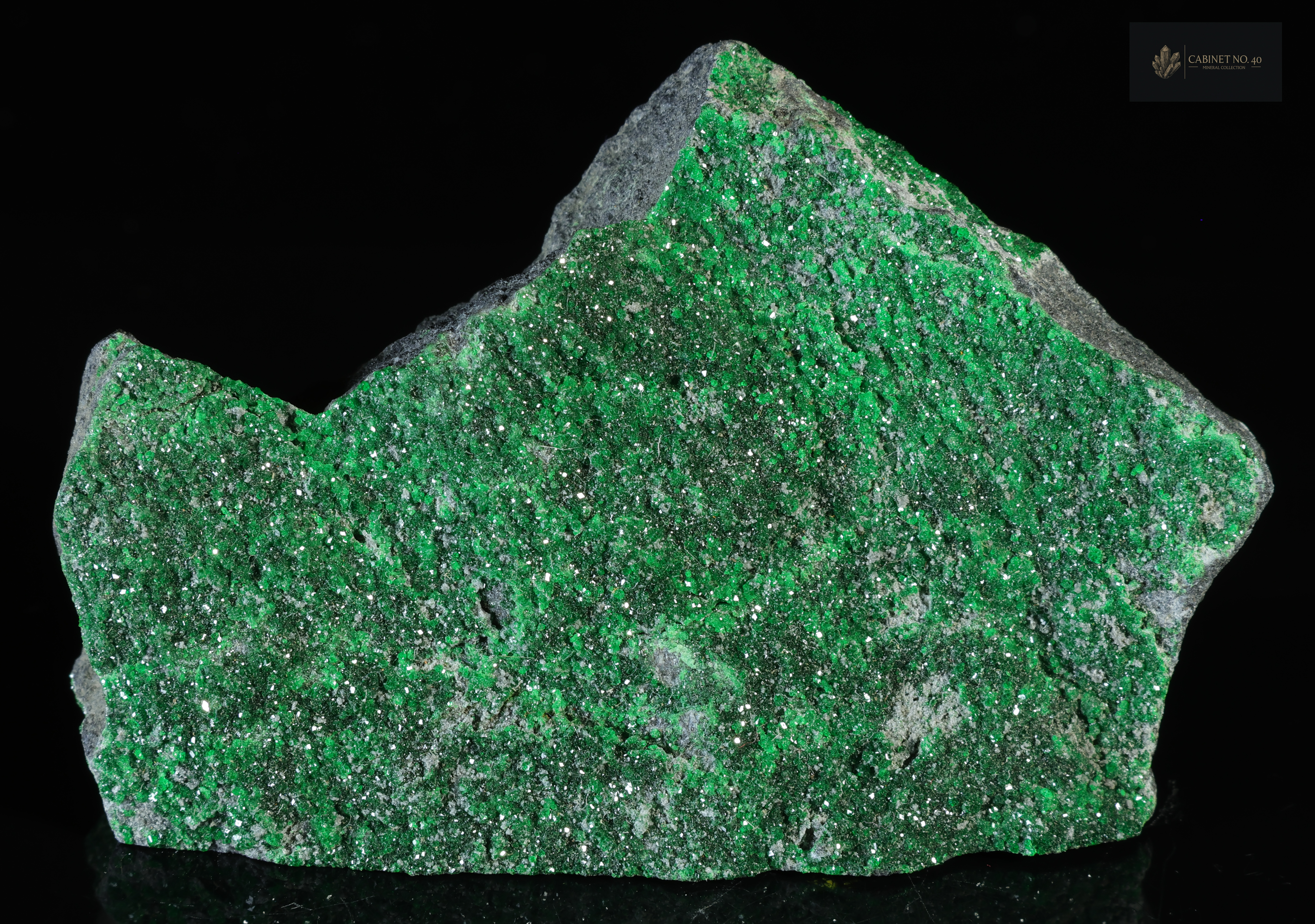
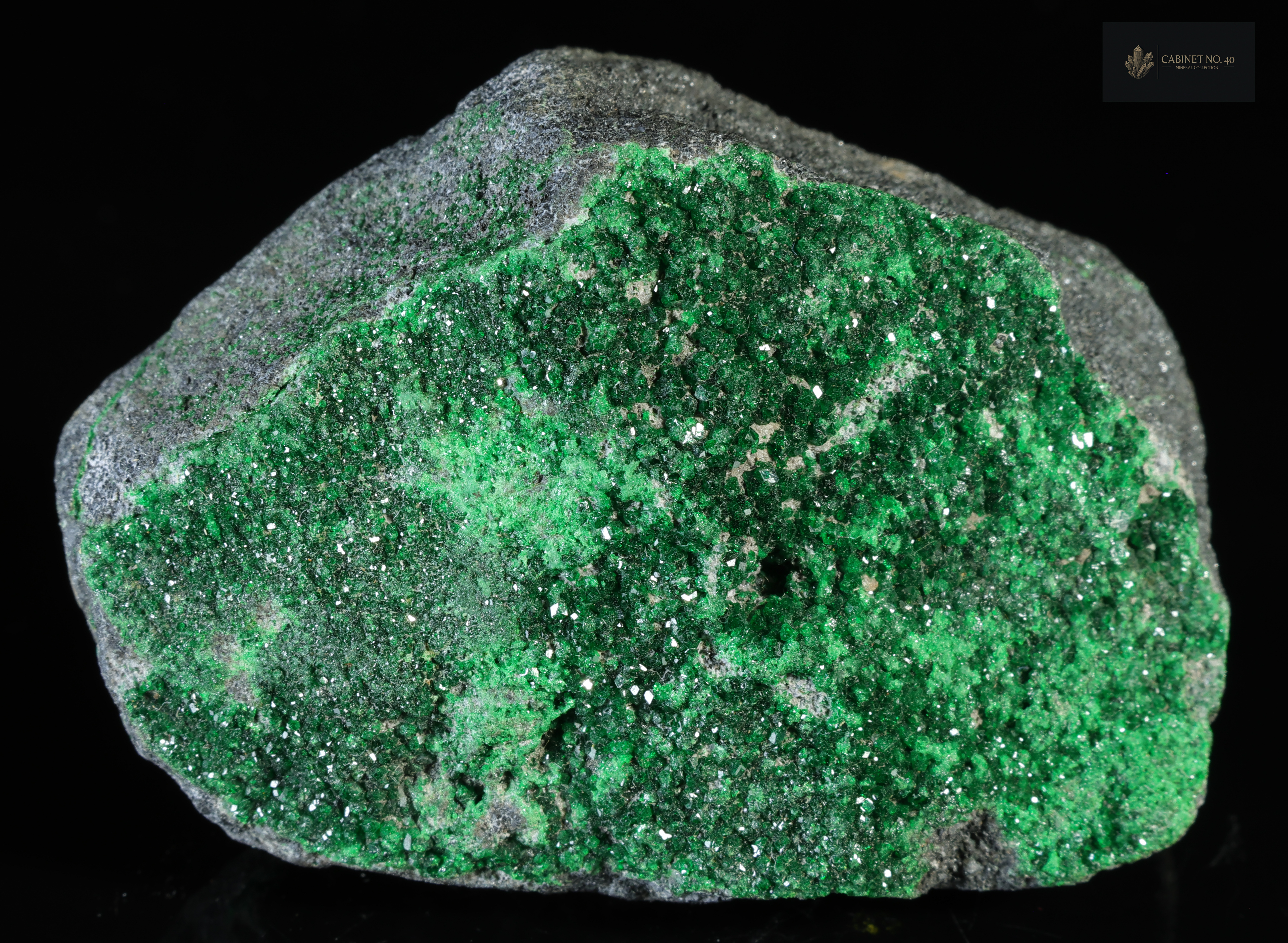
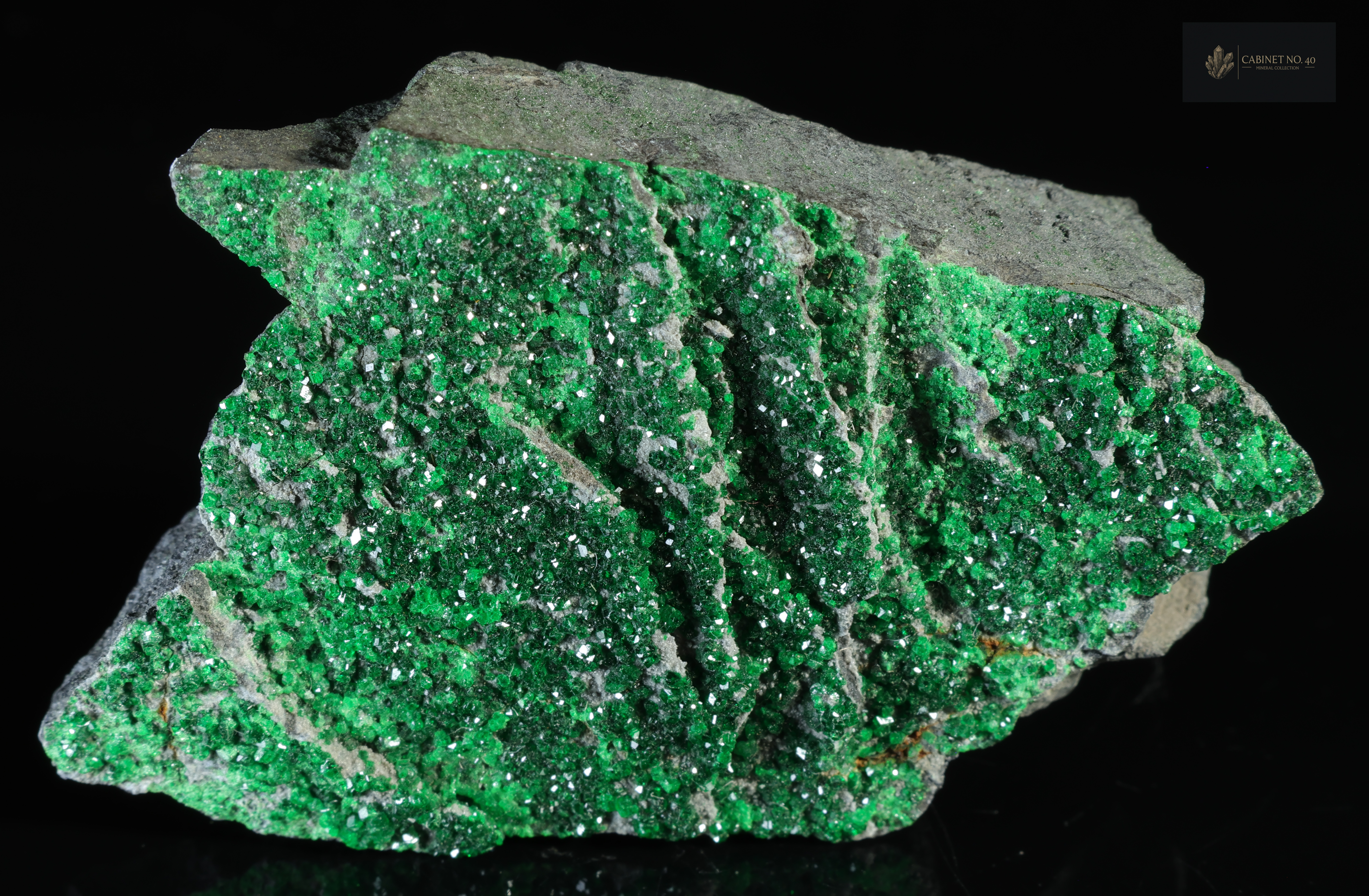
Uvarovite is a rare mineral from the garnet group, distinguished by its intense emerald-green color, resulting from the presence of chromium.
Description
## Characteristics Uvarovite is a mineral belonging to the garnet group, a calcium chromium silicate. Typical uvarovite specimens are characterized by a vivid, emerald-green color, which is its most recognizable feature. It usually occurs as small, well-formed crystals with a rhombic dodecahedral or trapezohedral habit, often forming coatings or crusts on rock surfaces. Crystals are typically small, rarely exceeding a few millimeters, but their intense color makes them very striking. ## Physical Properties Uvarovite has a Mohs hardness of 6.5-7, making it relatively scratch-resistant. It has a vitreous to resinous luster. The specific gravity of uvarovite is approximately 3.77 g/cm³. It is a transparent to translucent mineral. It does not exhibit cleavage, and its fracture is conchoidal to uneven. ## Colors and Varieties The dominant color of uvarovite is emerald-green, which can range from light to dark green, sometimes with a greenish-black tint. This color is caused by the presence of chromium in the mineral's structure. There are no significant color varieties or commercial names for uvarovite, beyond the general term chromium garnet. ## History and Name Uvarovite was discovered in 1832. The mineral is named after the Russian statesman and mineral collector, Count Sergey Semenovich Uvarov (1786-1855). It was first described based on specimens found in the Ural region of Russia. ## Uses Due to its rarity and generally small crystal sizes, uvarovite has no industrial applications. It is a prized collector's mineral, especially sought after for its intense, emerald-green color and well-formed crystals. It is sometimes used in jewelry to create small ornamental stones, but this is rare.
Diagnostic features
## Identification Uvarovite is relatively easy to identify due to its characteristic, intensely emerald-green color and typical crystal habit, which often form small, shiny coatings on rocks. The presence of chromium is key to its color. It often occurs in association with chromite. ## Distinguishing from similar minerals Uvarovite can be confused with other green garnets, such as demantoid (a variety of andradite) or grossular (a variety of tsavorite). However, uvarovite is distinguished by a more intense, pure emerald green, which is a result of the presence of chromium, not iron (as in demantoid) or vanadium (as in tsavorite). The streak of uvarovite is white, which can help distinguish it from other green minerals. ## Crystal forms Uvarovite crystallizes in the isometric system, most often forming well-developed rhombic dodecahedra or trapezohedra. Crystals are usually small, often forming druses or crusts on rock surfaces, less commonly occurring as single, larger specimens.
Geological environment
## Genesis Uvarovite forms in metamorphic rocks, especially in serpentinites and other ultramafic rocks that are rich in chromium. It forms as a result of metasomatic processes, where calcium and silicon-rich solutions react with chromium-bearing rocks. It often occurs in hydrothermal veins cutting through these rocks. ## Mineral associations Uvarovite often co-occurs with other chromium minerals, such as chromite, and with serpentine minerals, such as antigorite and chrysotile. It can also occur with diopside, calcite, and quartz. ## Localities The most important and well-known localities for uvarovite are in Russia, especially in the Ural region (e.g., Saranovskoe). Other significant occurrences include Finland (Outokumpu), Turkey, Canada (Quebec), United States (Oregon, California), and Greece (Corinthia).
Rarity
Rare
Shop › Uvarovite