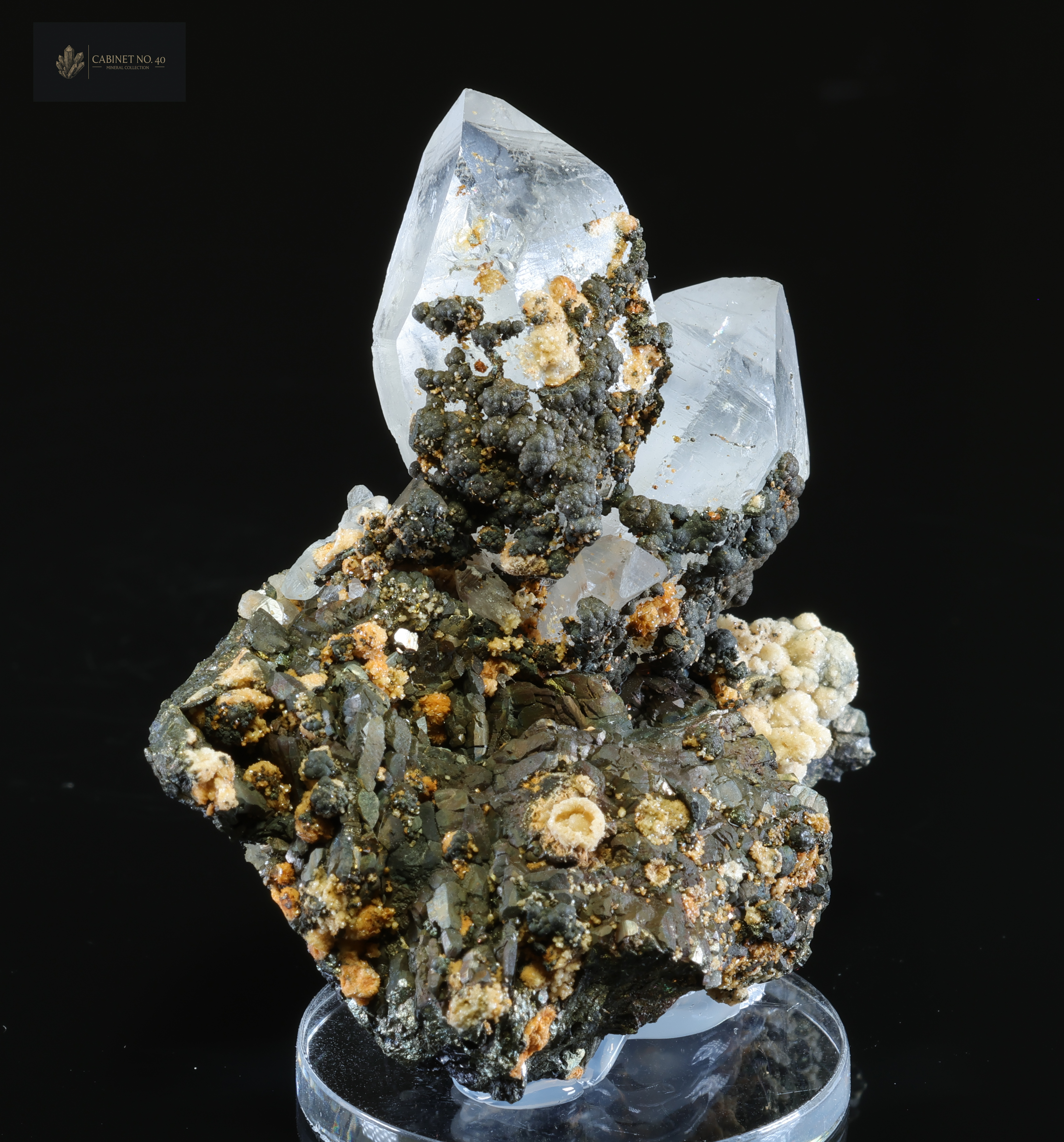
Marcasite
Marcasite is a sulfide mineral, polymorphic with pyrite, characterized by a lighter color and a different crystal structure.
Description
## Characteristics Marcasite is an iron sulfide, FeS₂, polymorphic with pyrite, meaning it has the same chemical composition but a different crystal structure. It occurs as tabular, columnar, or acicular crystals, often forming characteristic twins, such as "cockscombs" or radial aggregates. Fresh surfaces of marcasite are tin-white, which quickly darkens to pale brass-yellow upon oxidation. ## Physical Properties This mineral has a Mohs hardness of 6-6.5. It exhibits a metallic luster and a dark gray to black streak. It is opaque. The density of marcasite is 4.887 g/cm³. ## Colors and Varieties Marcasite is pale brass-yellow, and tin-white on fresh fractures. Over time, when exposed to air and moisture, its surface can tarnish and darken, and even decompose, forming iron sulfates. ## History and Name The name marcasite comes from the Arabic word "markaschita," which referred to pyrite and other minerals with a metallic luster. It was described as a distinct mineral in 1845, although it was known and used earlier, often confused with pyrite. ## Uses Marcasite has no significant industrial applications due to its chemical instability. It was used as an ornamental stone in jewelry, especially in the 19th century, but its tendency to decompose limited its popularity. Currently, it is mainly a collector's mineral.
Diagnostic features
## Identification Marcasite can be identified by its characteristic color (tin-white on fresh fractures, pale brass-yellow after oxidation), metallic luster, and specific crystal forms, such as "cockscombs" or radial aggregates. An important diagnostic feature is also its chemical instability and tendency to decompose. ## Distinguishing from Similar Minerals Marcasite is often confused with pyrite, with which it is polymorphic. The main difference is the crystallographic system (marcasite is orthorhombic, pyrite is isometric) and color – marcasite is usually lighter, more tin-white than the golden-yellow pyrite. Marcasite also tends to form different crystal habits and is much less chemically stable than pyrite. ## Crystal Forms Marcasite occurs as tabular, columnar, acicular crystals, often forming twins in the shape of "cockscombs" or radial, reniform aggregates. It can also form concretions with a radial structure.
Geological environment
## Genesis Marcasite forms in low-temperature environments, often under reducing conditions, in sedimentary rocks such as shales, marls, limestones, and also in coal. It also occurs in low-temperature hydrothermal veins. ## Mineral Associations Marcasite often co-occurs with pyrite, chalcopyrite, galena, sphalerite, fluorite, calcite, and quartz. ## Localities Known localities of marcasite include the Czech Republic (Kutná Hora), Germany (Freiberg), Great Britain (Dover), France, the United States (Illinois, Wisconsin), and Peru.
Rarity
Not very common
Shop › Marcasite