Wolframite
Chemical formula: (Fe,Mn)WO₄
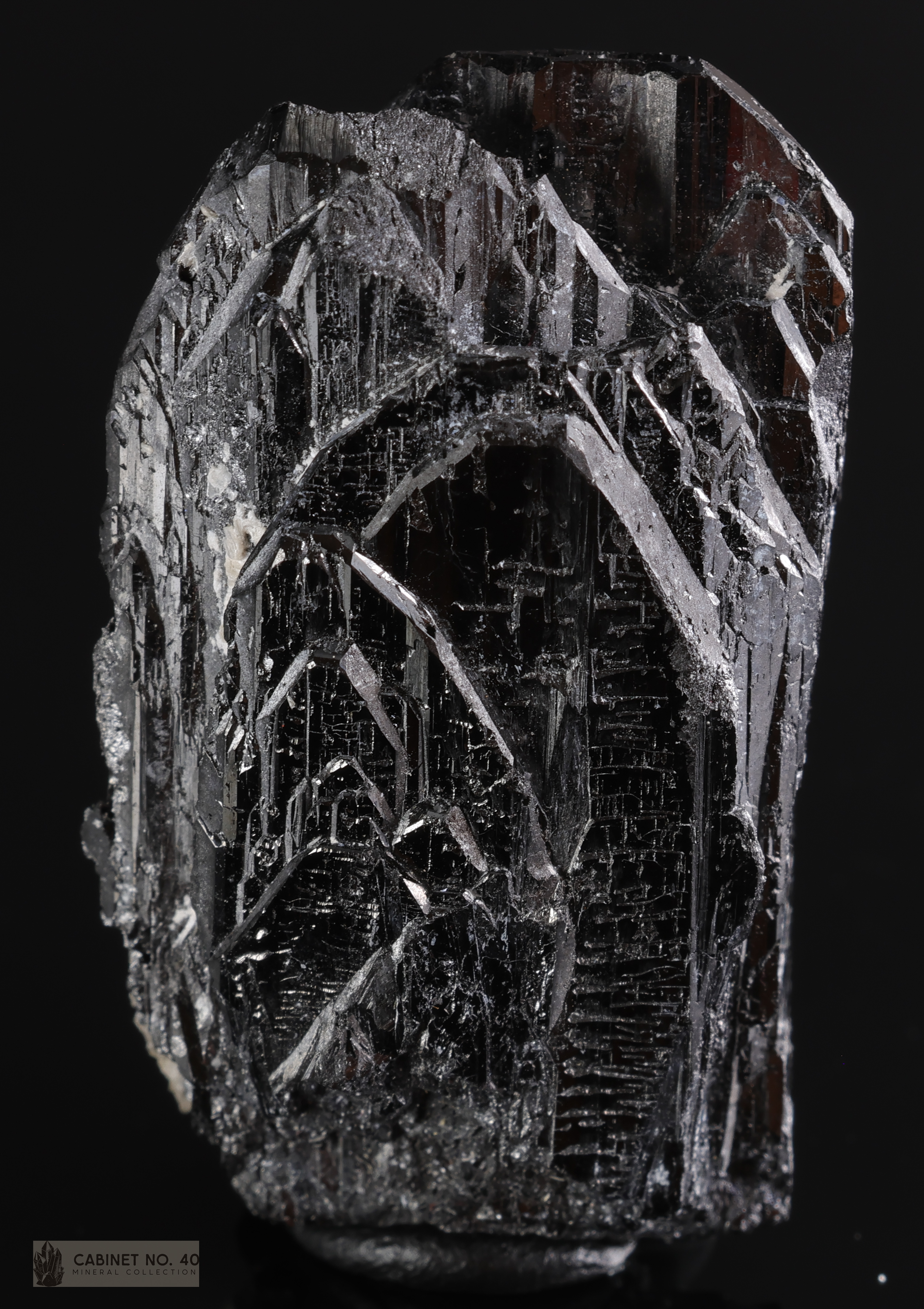
Wolframite is a mineral from the tungstate group, being the main source of tungsten, characterized by its dark color and significant density.
Properties
- Mohs hardness
- 4-4.5
- Luster
- Metaliczny do półmetalicznego
- Streak
- Czerwonobrunatna do czarnej
- Density
- 0
- Cleavage
- Doskonała wg {010}
- Fracture
- Nierówny do muszlowego
- Transparency
- Nieprzezroczysty
- Crystal system
- Jednoskośny
Diagnostic features
## Identification Wolframite can be identified by its dark, usually black color, metallic luster, and high density, which is noticeable when lifting the specimen. It also features perfect cleavage in one direction, often manifesting as flat, shiny surfaces on fractured specimens. ## Distinguishing from Similar Minerals Wolframite is sometimes confused with other dark, heavy minerals such as scheelite, magnetite, or hematite. It differs from scheelite by its lack of fluorescence under UV light and its dark color (scheelite is usually lighter). It differs from magnetite and hematite by its lack of magnetic properties (magnetite is strongly magnetic, hematite can be weakly magnetic after heating) and its cleavage. ## Crystal Forms Wolframite most commonly forms tabular or prismatic crystals, often elongated and flattened. Aggregates can be lamellar, granular, radial, or fibrous. Crystals can reach considerable sizes, forming impressive specimens.
Geological environment
## Genesis Wolframite primarily forms in high-temperature hydrothermal veins associated with granitic intrusions. It also occurs in greisens and pegmatites. It forms under conditions rich in silica and tungsten compounds, often in association with quartz. ## Mineral Associations Wolframite often co-occurs with quartz, cassiterite, topaz, fluorite, muscovite, bismuth, molybdenite, arsenopyrite, and pyrite. In some deposits, it is also accompanied by scheelite and apatite. ## Locations Significant wolframite deposits are found in China (especially Jiangxi and Hunan provinces), Portugal (Panasqueira), Bolivia (Tasna, Chorolque), Russia (Urals), South Korea, Myanmar, Australia, Canada, and the United States (Colorado, California).
Rarity
Not very common
For collectors
## Quality Criteria The most prized wolframite specimens are those with well-formed, large, and undamaged crystals of intense, uniform color and strong luster. Crystal clarity and the aesthetics of aggregates also influence collector value. Specimens with matrix, especially with associated minerals such as quartz or topaz, are often more desirable. ## Popular Localities Particularly prized wolframite specimens come from China, especially from Jiangxi province, where large, well-formed crystals occur. Portuguese Panasqueira deposits are also known for high-quality specimens, often with accompanying quartz and fluorite. Bolivia provides specimens with a characteristic habit.
Care and storage
## Cleaning Wolframite is a relatively hard but brittle mineral. For cleaning specimens, it is best to use a soft brush and lukewarm water. For heavier soiling, a mild soap can be used, followed by thoroughly rinsing the specimen with distilled water and drying with a soft cloth. ## What to Avoid Avoid using strong acids and bases, which can damage the mineral's surface. Due to its brittleness, wolframite is susceptible to impacts and falls. Prolonged exposure to direct sunlight is not recommended, although it does not cause significant color changes. ## Storage Wolframite specimens are best stored in separate containers or on a soft surface to prevent mechanical damage. Due to its weight, stable support should be provided for larger specimens. Storage in a place with stable temperature and humidity is advisable.