Weloganite
Chemical formula: Na<sub>2</sub>Sr<sub>3</sub>Zr<sup>4+</sup>(CO<sub>3</sub>)<sub>6</sub>·3H<sub>2</sub>O
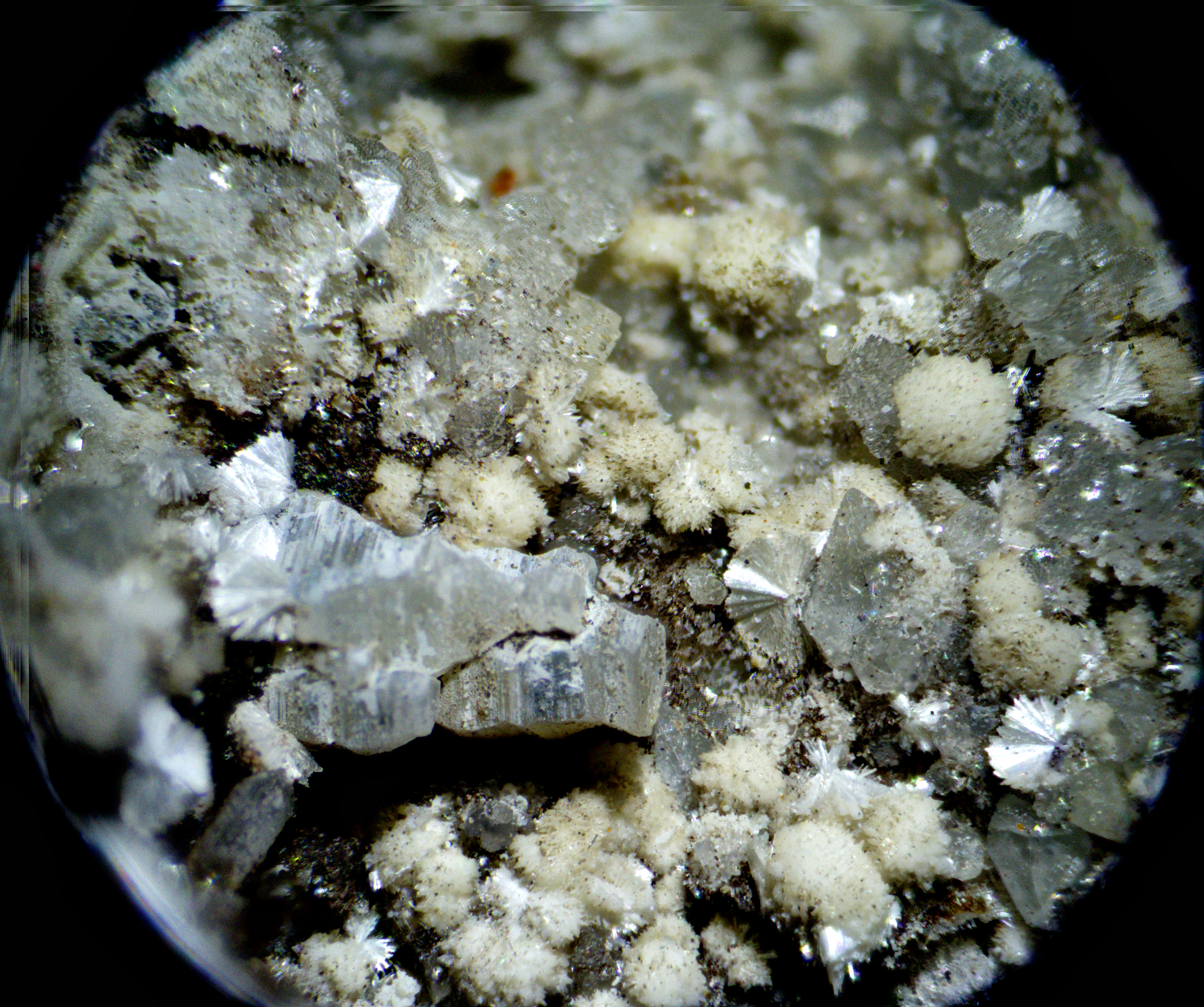
Weloganite is a rare sodium, strontium, and zirconium carbonate mineral, distinguished by its characteristic, often radial, yellow or amber-colored aggregates.
Properties
- Mohs hardness
- 3.5
- Luster
- Szklisty do jedwabistego
- Streak
- White
- Density
- 3.20
- Cleavage
- on pseudo{0001}
- Fracture
- Brak danych
- Transparency
- Translucent
- Crystal system
- Triclinic
Diagnostic features
## Identification Weloganite can be identified by its characteristic radial or fibrous aggregates, often spherical in habit, and its pale yellow to amber color. Its moderate hardness (3.5 on the Mohs scale) and vitreous luster are also diagnostic features. Occurrence in association with other carbonate minerals and alkaline rocks can be helpful in identification. ## Distinguishing from Similar Minerals Weloganite can be confused with some carbonate minerals, such as calcite or aragonite, especially in the case of similar aggregate forms. It differs from calcite by the absence of distinct cleavage and higher density. It differs from aragonite in chemical composition and crystallographic system. Color and specific radial aggregates are often key in distinguishing weloganite from other minerals. ## Crystal Forms Weloganite most commonly forms radial or fibrous aggregates, often spherical or hemispherical in habit. Crystals are usually columnar or acicular, although larger, well-formed single crystals are rare.
Geological environment
## Genesis Weloganite is a secondary mineral, formed under low-temperature hydrothermal conditions. It occurs in cavities and fissures in alkaline igneous rocks, especially carbonatites. Its genesis is associated with hydrothermal processes that lead to the precipitation of carbonates from solutions rich in strontium, sodium, and zirconium. ## Mineral Associations Weloganite often co-occurs with other carbonate minerals, such as calcite, strontianite, and also with zeolite minerals. It can also be found in association with zirconium minerals and other rare earth element minerals, characteristic of alkaline environments. ## Localities The most important and well-known locality for weloganite is the Francon Quarry, Montreal, Quebec, Canada. This is also its discovery site and the main source of well-formed specimens.
Rarity
Very Rare
For collectors
## Quality Criteria The most prized weloganite specimens are those characterized by well-formed, radial aggregates with an intense, uniform pale yellow or amber color. The purity of the mineral, absence of mechanical damage, and presence on a matrix that enhances its aesthetics are also important. Larger aggregates and distinct crystals are more desired by collectors. ## Popular Localities The Francon Quarry in Montreal, Quebec, Canada, is the most known and valued source of weloganite. Specimens from this locality are sought after for their quality and aesthetics.
Care and storage
## Cleaning Weloganite is a relatively soft mineral, so it should be cleaned gently. A soft brush or paintbrush is sufficient to remove dust and minor dirt. For heavier soiling, lukewarm distilled water and mild soap can be used, applying the solution with a soft cloth. After washing, rinse the mineral thoroughly with clean distilled water and dry with a soft cloth, avoiding rubbing. ## What to Avoid Avoid using strong chemicals, acids, and solvents, which can damage the surface of weloganite or alter its color. The mineral is sensitive to high temperatures, so it should not be exposed to direct sunlight for extended periods or to sudden temperature changes. Weloganite contains water in its structure, so prolonged exposure to very dry environments, which could lead to dehydration and cracking, should be avoided. It should also not be subjected to impacts and scratches due to its moderate hardness. ## Storage Weloganite is best stored in enclosed display cases or boxes lined with soft material to protect it from dust and mechanical damage. Maintaining stable temperature and humidity is important. Weloganite specimens, especially those with delicate, radial aggregates, should be displayed in a way that minimizes the risk of accidental damage.