Variscite
Chemical formula: AlPO<sub>4</sub>·2H<sub>2</sub>O
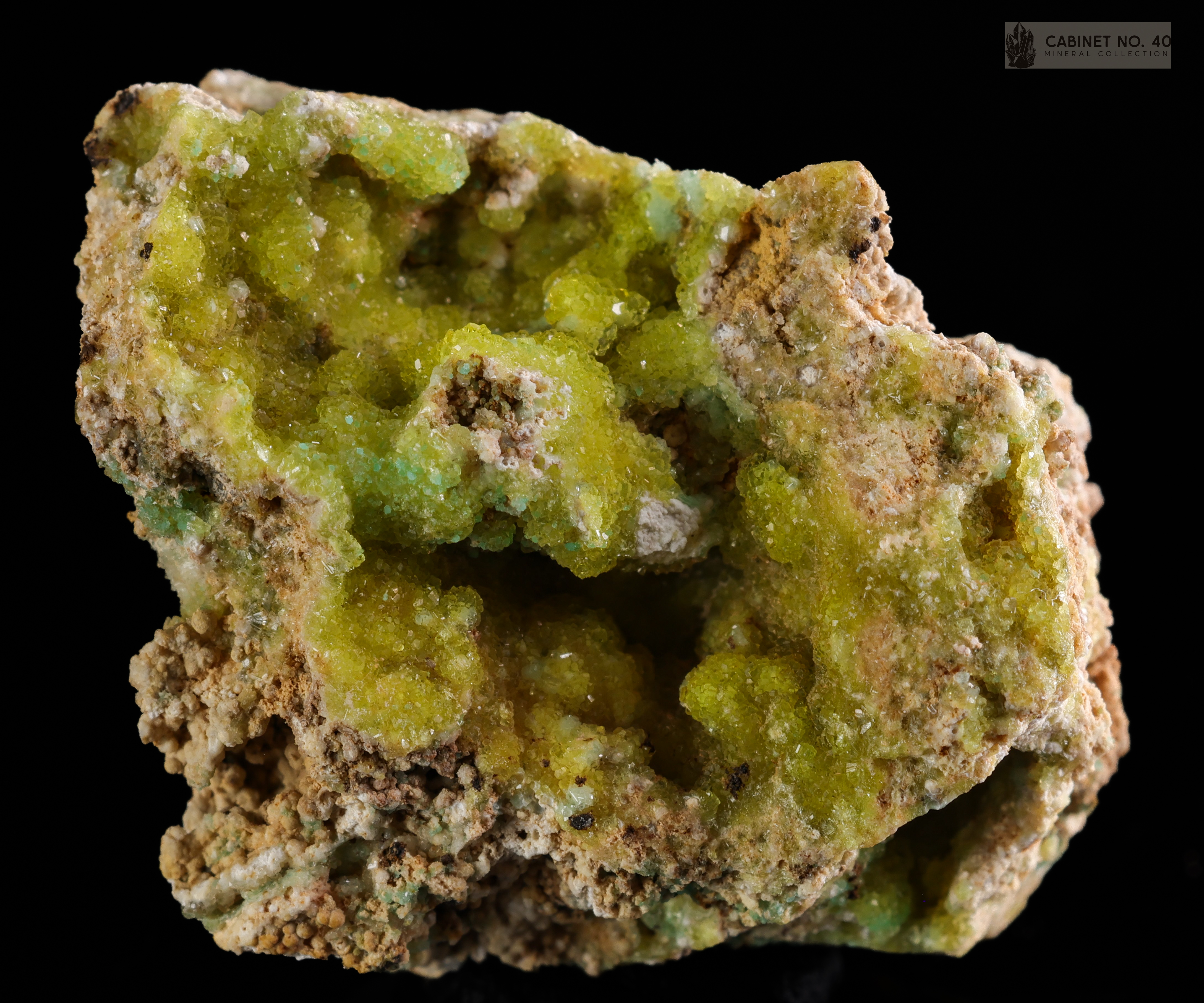
Variscite is a hydrated aluminum phosphate, prized by collectors for its attractive green colors, often resembling turquoise.
Properties
- Mohs hardness
- 3.5-4.5
- Luster
- Waxy
- Streak
- White
- Density
- 2.57
- Cleavage
- Good on {010}, poor on {001}.
- Fracture
- Nierówny do muszlowego
- Transparency
- Transparent,Translucent
- Crystal system
- Orthorhombic
Diagnostic features
## Identification Variscite can be identified by its characteristic green color, often with a bluish tint, and waxy luster. It typically occurs as massive, reniform, or botryoidal aggregates. Its Mohs hardness (3.5-4.5) is helpful in distinguishing it from similar minerals. ## Distinguishing from Similar Minerals Variscite is often confused with turquoise due to its similar color. They can be distinguished based on hardness (turquoise is slightly harder, 5-6 on the Mohs scale) and density. Another similar mineral is chrysocolla, which is usually softer and has a more vitreous luster. Variscite is also similar to jadeite, but jadeite is much harder. ## Crystal Forms Variscite rarely forms well-developed crystals. It most commonly occurs as massive, reniform, globular, or botryoidal aggregates. Crystals, if present, are usually small and have a dipyramidal or prismatic habit.
Geological environment
## Genesis Variscite is a secondary mineral that forms in the oxidation zones of phosphate deposits, often in aluminum-rich rocks such as aluminous shales or breccias. It forms as a result of reactions between phosphate-rich solutions and aluminum minerals under low temperature and pressure conditions. ## Mineral Associations Variscite often co-occurs with other phosphate minerals, such as strengite, phosphosiderite, as well as with quartz, chalcedony, limonite, and other secondary minerals. ## Localities Known variscite deposits occur in many places around the world. Key localities include: Utah and Nevada in the United States (especially the Lucin and Fairfield mines in Utah), Australia (Queensland), Germany (Vogtland), Brazil, Austria, Czech Republic, and Poland (near Jordanów Śląski).
Rarity
Uncommon
For collectors
## Quality Criteria The most prized variscite specimens are characterized by an intense, uniform green color, without visible inclusions or fractures. Specimens with a waxy luster and those that exhibit attractive patterns or veins, often with matrix, are highly valued. Large, well-formed aggregates or rare, distinct crystals also increase collectible value. ## Popular Localities Specimens of variscite from the Lucin and Fairfield mines in Utah, USA, known for their beautiful, intensely green colors, are particularly sought after by collectors. Specimens from Australia, which often exhibit interesting patterns, are also valued.
Care and storage
## Cleaning To clean variscite, use a soft cloth or brush and lukewarm water. Mild soap can be used, followed by thorough rinsing with clean water. After washing, dry it to prevent water spots. ## What to Avoid Variscite is sensitive to acids, which can damage it or alter its color. Avoid contact with aggressive cleaning agents, household chemicals, and perfumes. Due to its hardness, it is susceptible to scratches, so protect it from contact with harder minerals. Prolonged exposure to direct sunlight can cause color fading. ## Storage Variscite specimens are best stored separately from other, harder minerals to prevent scratches. Ideal storage is in a soft pouch or a padded compartment within a box. Avoid areas with significant temperature and humidity fluctuations.