Ulexite
Chemical formula: NaCaB<sub>5</sub>O<sub>6</sub>(OH)<sub>6</sub>·5H<sub>2</sub>O
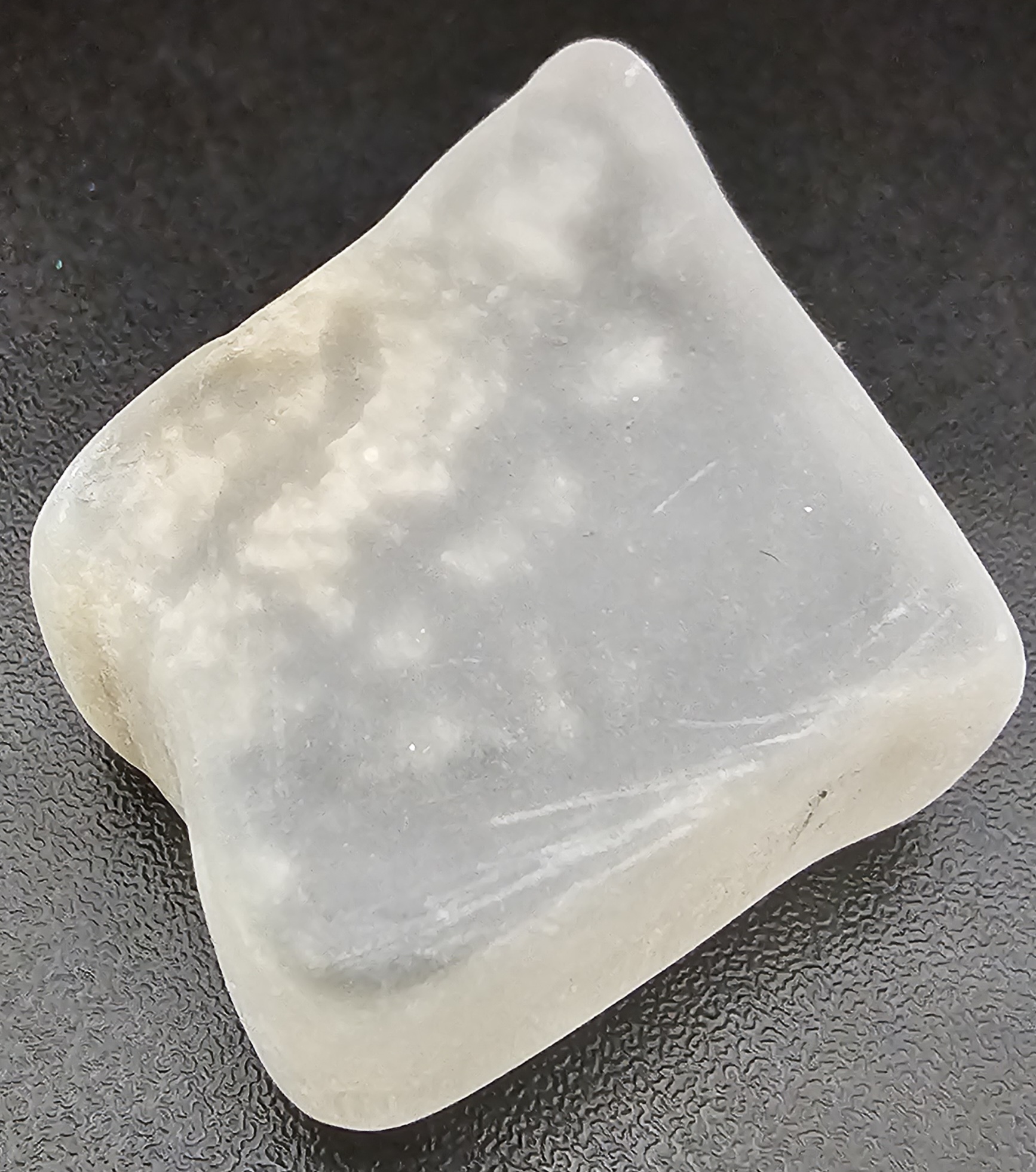
Ulexite is a hydrated sodium calcium borate, known for its characteristic fibrous aggregates that exhibit the "television stone" effect.
Properties
- Mohs hardness
- 2.5
- Luster
- Silky, Vitreous
- Streak
- Biała
- Density
- 1.955
- Cleavage
- Perfect on {010}; on <mi>{11_0}</mi> good; on {110} poor.
- Fracture
- Nierówny
- Transparency
- Transparent
- Crystal system
- Triclinic
Diagnostic features
## Identification Ulexite can be identified by its characteristic fibrous habit and its ability to transmit light, creating the "television stone" effect. This is a diagnostic feature that allows it to be easily distinguished from other minerals. It is soft and easily scratched with a fingernail. ## Distinguishing from Similar Minerals Ulexite can be confused with gypsum due to the similar appearance of fibrous aggregates and low hardness. However, gypsum does not exhibit the light transmission effect. Similarly, some forms of asbestos may have a fibrous appearance, but they do not possess the optical properties of ulexite and are much more mechanically durable. ## Crystal Forms Ulexite most commonly occurs as compact, fibrous aggregates, in which individual fibers are arranged in parallel. Less frequently, it forms acicular or platy crystals.
Geological environment
## Genesis Ulexite forms in evaporitic environments, i.e., as a result of the evaporation of saline lake or lagoon waters rich in borates. It often occurs in arid regions where these processes are intense. It forms in sedimentary borate deposits, often in association with other boron minerals. ## Mineral Associations Ulexite often co-occurs with other borate minerals such as borax, colemanite, kernite, and with gypsum and halite. It can also be found in association with clays and other sedimentary minerals. ## Localities Significant deposits of ulexite are found in the United States (California, especially Death Valley), Turkey (Bigadiç region), Argentina (Salta province), and Chile.
Rarity
Uncommon
For collectors
## Quality Criteria The most prized ulexite specimens are those that exhibit a clear "television stone" effect, i.e., the ability to transmit light. Color purity (colorless or white), absence of cracks and mechanical damage, and specimen size are also important. Large, well-formed fibrous aggregates are more desirable. ## Popular Localities The most prized ulexite specimens come from California, USA, especially from the Death Valley area, and from Turkey, where large borate deposits occur.
Care and storage
## Cleaning Ulexite is a delicate mineral, so it requires careful cleaning. It is best to use a soft, dry cloth or brush to remove dust. For heavier soiling, the specimen can be gently wiped with a damp cloth, avoiding prolonged contact with water. ## What to Avoid Avoid using any chemical agents, including detergents and solvents, which can damage the mineral's surface. Ulexite is sensitive to moisture, so it should not be stored in areas with high humidity. Prolonged exposure to direct sunlight can also negatively affect its appearance. Due to its low hardness, it should be protected from scratches and impacts. ## Storage Ulexite should be stored in a dry place, away from heat sources and direct sunlight. It is best to place it in a closed display case or a box lined with soft material to prevent dust accumulation and mechanical damage. Due to its delicacy, individual storage of specimens is recommended.