Tiger's Eye
Chemical formula: SiO₂
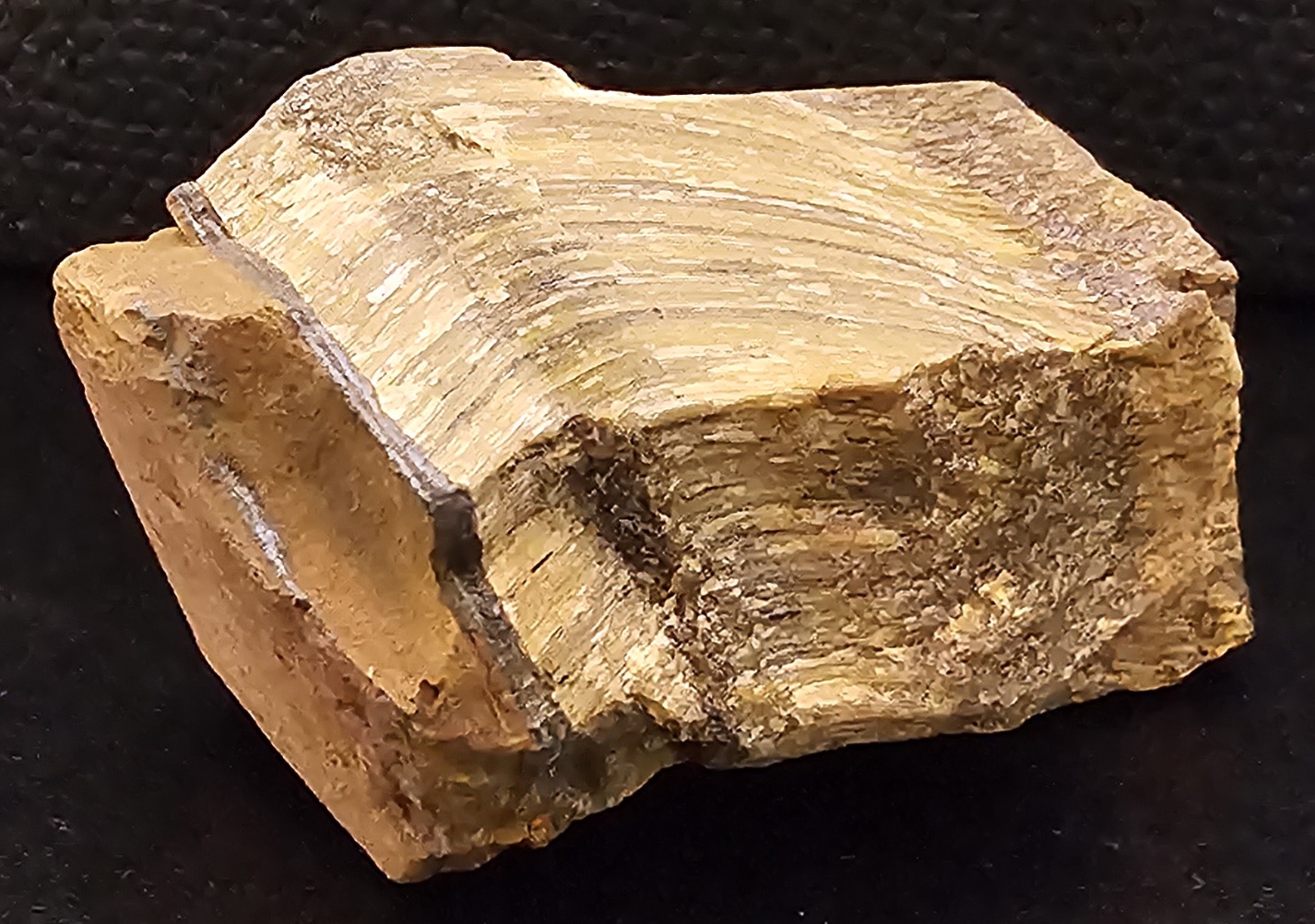
Tiger's Eye is a variety of quartz characterized by a silky luster and a cat's eye effect, created by fibrous crocidolite inclusions.
Properties
- Mohs hardness
- 7
- Luster
- Vitreous
- Streak
- Biała
- Density
- 0
- Cleavage
- Brak
- Fracture
- Muszlowy
- Transparency
- Nieprzezroczysty do przeświecającego
- Crystal system
- Trigonal
Diagnostic features
## Identification Tiger's Eye can be identified by its characteristic cat's eye effect, which is visible as a movable, bright streak of light on the stone's surface. The golden-brown color with banding is also a diagnostic feature. A hardness of 7 on the Mohs scale distinguishes it from many other minerals. ## Distinguishing from Similar Minerals It can be confused with other minerals exhibiting a cat's eye effect, such as chrysoberyl or tourmaline, but Tiger's Eye has a lower hardness than chrysoberyl and a different color. Varieties such as Hawk's Eye (blue) and Ox's Eye (red) are closely related but differ in color. ## Crystal Forms Tiger's Eye usually occurs in massive forms, often with a fibrous structure. It rarely forms well-developed crystals, as it is a quartz pseudomorph after crocidolite.
Geological environment
## Genesis Tiger's Eye forms as a result of pseudomorphism, where quartz replaces the fibrous mineral crocidolite (amphibole asbestos), retaining its original structure. This process occurs under hydrothermal conditions, where silica-rich solutions penetrate rocks containing crocidolite, gradually replacing it. The crocidolite fibers, which have been oxidized, give Tiger's Eye its characteristic colors. ## Mineral Associations Tiger's Eye often co-occurs with other quartz minerals, as well as with the minerals from which it formed, i.e., crocidolite. It can also be found in association with other parent rock minerals, such as hematite or limonite. ## Localities The most important deposits of Tiger's Eye are found in South Africa, especially in the Northern Cape Province. Other significant occurrences include Australia, India, Myanmar, Namibia, USA, and Canada.
Rarity
Very Rare
For collectors
## Quality Criteria The most prized specimens of Tiger's Eye are characterized by a clear and sharp cat's eye effect, intense, uniform color, and the absence of visible inclusions or cracks. Large sizes and attractive cuts also increase collectible value. ## Popular Localities The most prized specimens come from South Africa, where high-quality deposits are found.
Care and storage
## Cleaning To clean Tiger's Eye, it is best to use a soft cloth and lukewarm water with a small amount of mild soap. After washing, rinse the stone thoroughly with clean water and dry it. A soft brush can also be used to remove dirt from crevices. ## What to Avoid Avoid contact of Tiger's Eye with strong chemicals, such as acids or bases, which can damage the stone's surface. High temperatures and sudden temperature changes can cause cracks. Prolonged exposure to intense sunlight can lead to color fading. Ultrasonic and steam cleaning methods are not recommended, as they can damage the mineral's structure. ## Storage Tiger's Eye should be stored separately from harder minerals to avoid scratches. It is best to wrap it in a soft cloth or place it in a separate pouch or box. Store in a dry place, away from direct sunlight and heat sources.