Tuperssuatsiait
Chemical formula: Na₂(Fe³⁺,Mn²⁺)₃Si₈O₂₀(OH)₂ · 4H₂O
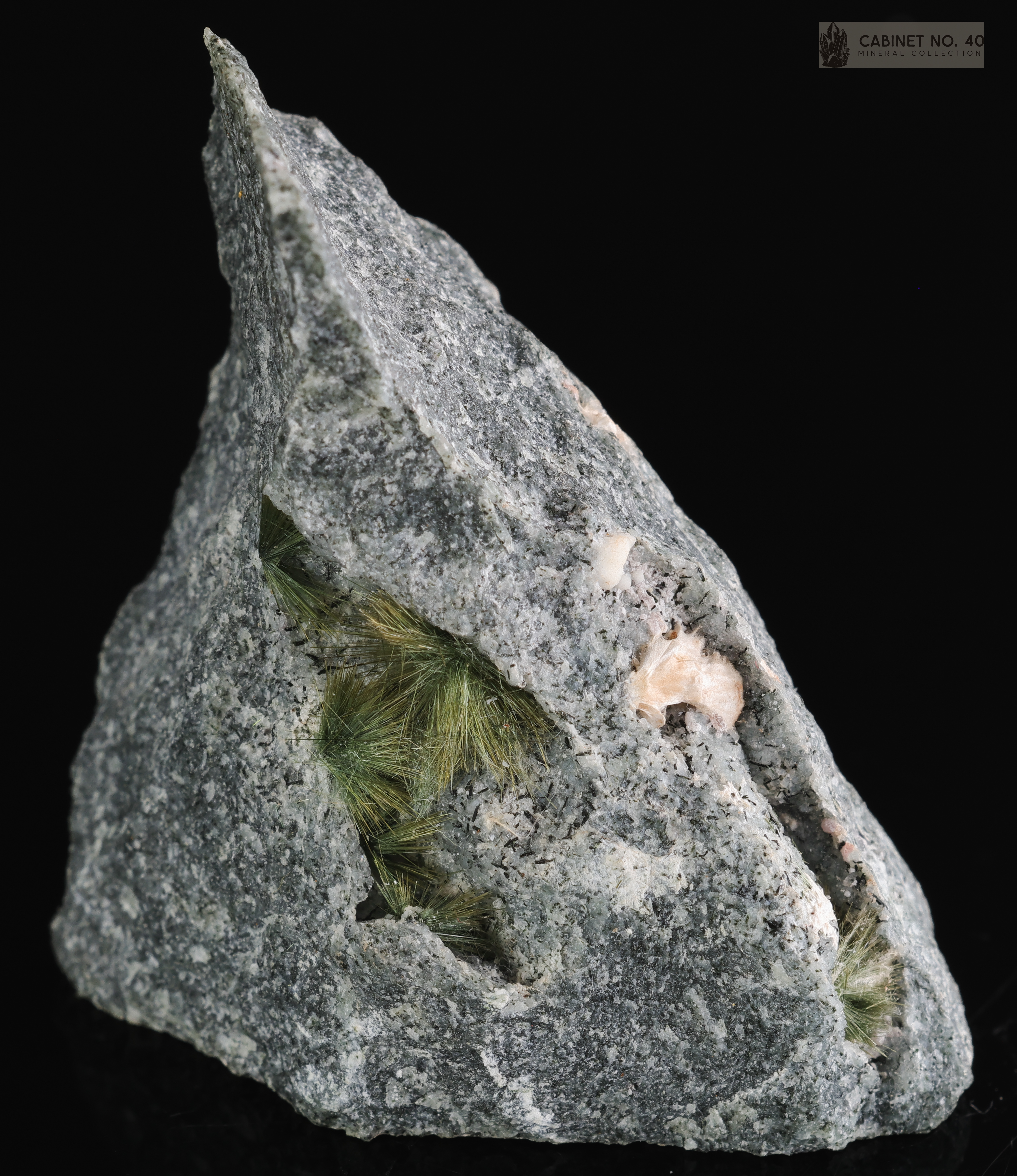
Tuperssuatsiait is a rare sodium, iron, and manganese silicate mineral, characterized by variable color and often occurring as fibrous or lamellar aggregates.
Properties
- Mohs hardness
- 3-4
- Luster
- Szklisty do jedwabistego
- Streak
- Brownish yellow
- Density
- 2.465
- Cleavage
- Good on the {100}
- Fracture
- Nierówny
- Transparency
- Transparent
- Crystal system
- Monoclinic
Diagnostic features
## Identification Tuperssuatsiait can be identified by its characteristic fibrous or lamellar habit, variable color (from golden to reddish-brown), and vitreous to silky luster. The transparency of the mineral and its relatively low hardness (3-4 on the Mohs scale) are also helpful in identification. A brownish-yellow streak is a diagnostic feature. ## Distinguishing from Similar Minerals Due to its rarity and specific characteristics, tuperssuatsiait is rarely confused with common minerals. However, its fibrous habit and color may be superficially similar to some amphiboles or zeolites. Differences in hardness, density, cleavage, and streak allow it to be distinguished from these minerals. Chemical analysis is the ultimate method for confirming its identity. ## Crystal Forms Tuperssuatsiait most often occurs as fibrous or lamellar aggregates. Crystals are usually small, elongated, often forming radial or fan-shaped clusters. Single, well-formed crystals are less common, but they retain a monoclinic crystallographic system.
Geological environment
## Genesis Tuperssuatsiait forms under specific hydrothermal conditions, typically in alkaline pegmatites or alkaline volcanic rocks. Its presence is associated with metasomatic processes, where solutions rich in sodium, iron, and manganese react with existing minerals, leading to the crystallization of tuperssuatsiait. It occurs in low-temperature hydrothermal veins. ## Mineral Associations Tuperssuatsiait often co-occurs with other alkaline and rare minerals, such as eudialyte, arfvedsonite, aegirine, microcline, natrolite, and analcime. These associations indicate its connection to alkaline intrusive complexes. ## Localities The most important and original locality for tuperssuatsiait is Tuperssuatsiait in the Ilimaussaq complex in southwestern Greenland. This is also the only confirmed and significant occurrence of this mineral in the world.
Rarity
Very Rare
For collectors
## Quality Criteria The most prized tuperssuatsiait specimens are those with intense, uniform color (especially golden-yellow or reddish-brown), well-formed fibrous or lamellar aggregates, and high transparency. Large, aesthetic clusters with a radial habit are particularly sought after. The purity of the mineral and the absence of visible damage also contribute to its collector's value. ## Popular Localities The only known and popular locality from which tuperssuatsiait specimens originate is the Ilimaussaq complex in Greenland. Specimens from this locality are highly valued due to their rarity and distinctive appearance.
Care and storage
## Cleaning Tuperssuatsiait specimens should be cleaned gently, using a soft brush and lukewarm water. For more stubborn dirt, distilled water can be used. Avoid vigorous rubbing, especially for delicate, fibrous aggregates. ## What to Avoid The mineral is relatively soft, so contact with harder objects that could scratch it should be avoided. It should not be exposed to strong acids or bases, which can damage its chemical structure. Prolonged exposure to direct sunlight can potentially affect the intensity of its color, so it is recommended to store it in a place sheltered from the sun. Sudden temperature changes should also be avoided. ## Storage Tuperssuatsiait is best stored in closed display cases or boxes, away from dust and moisture. Delicate fibrous specimens may require additional protection, e.g., in soft cotton wool or special containers, to prevent mechanical damage. Display should take into account its transparency and luster to fully appreciate its aesthetics.