Tugtupite
Chemical formula: Na<sub>4</sub>BeAlSi<sub>4</sub>O<sub>12</sub>Cl
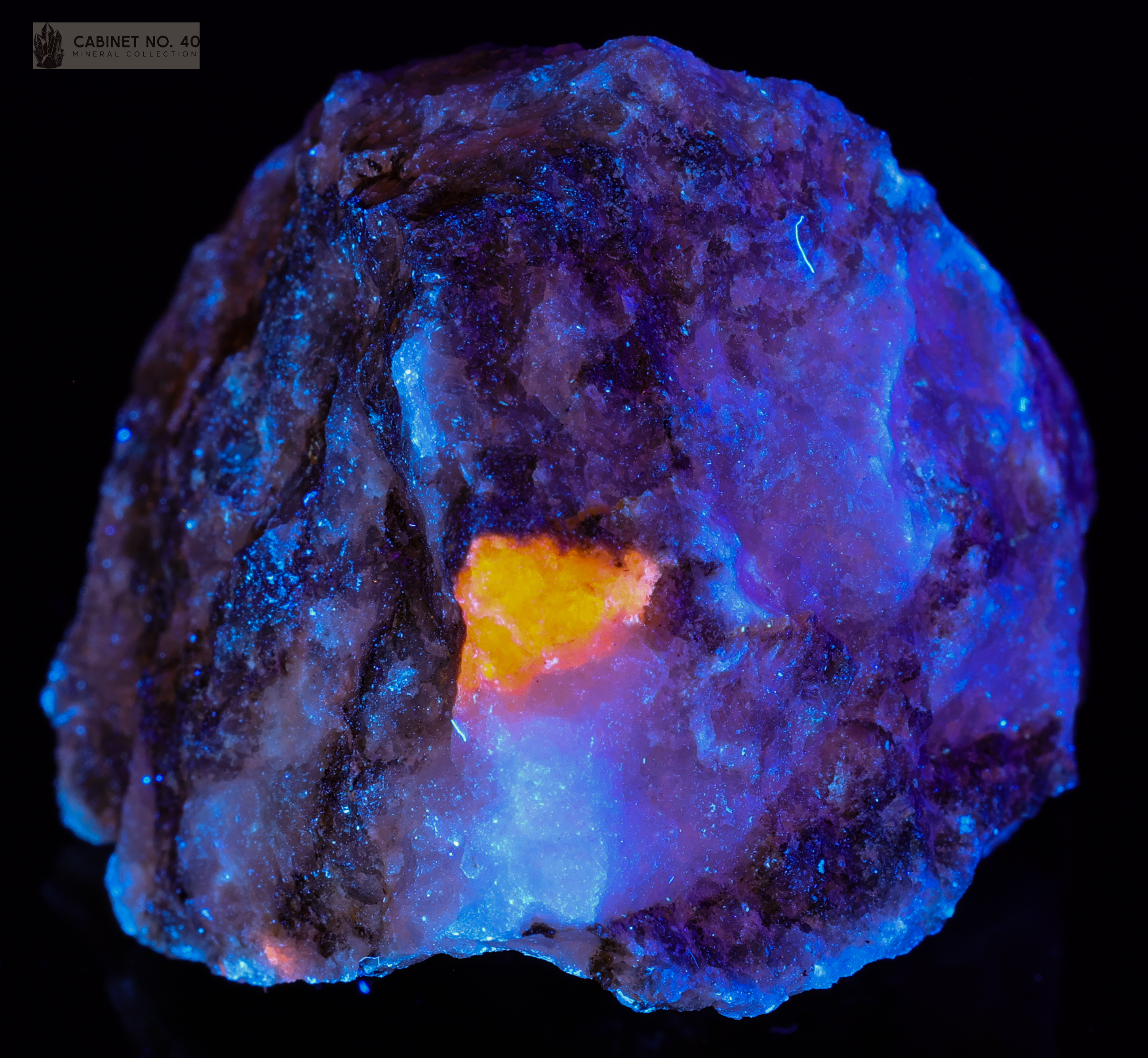
Tugtupite is a rare silicate mineral characterized by its intense red color and strong fluorescence.
Properties
- Mohs hardness
- 4
- Luster
- Szklisty
- Streak
- white
- Density
- 2.33
- Cleavage
- On {101}; on {110} fair.
- Fracture
- Muszlowy do nierównego
- Transparency
- Translucent
- Crystal system
- Tetragonal
Diagnostic features
## Identification Tugtupite can be identified by its characteristic, intense red or pink color and vitreous luster. A key diagnostic feature is its strong fluorescence under UV light, often in orange or red hues. Its low hardness (4 on the Mohs scale) also aids in identification. ## Distinguishing from Similar Minerals Tugtupite can be confused with rhodonite or rhodochrosite due to similar color. However, tugtupite differs from them by its lower hardness, distinct fluorescence, and tetragonal crystal system. Rhodonite is harder (5.5-6.5), and rhodochrosite has a hardness of 3.5-4 and often exhibits characteristic banding. ## Crystal Forms Tugtupite most commonly occurs as massive, granular aggregates. Less frequently, it forms small, tetragonal crystals, which can be isometric or prismatic. These crystals are usually poorly formed and embedded in the rock matrix.
Geological environment
## Genesis Tugtupite forms in alkaline intrusive complexes, particularly in pegmatites and hydrothermal veins cutting nepheline syenites. It is a secondary mineral, forming in the late stages of magma crystallization, under conditions rich in sodium, beryllium, aluminum, and chlorine. ## Mineral Associations Tugtupite often co-occurs with other alkaline minerals such as eudialyte, analcime, natrolite, arfvedsonite, aegirine, nepheline, and albite. It can also be found in association with fluorite and calcite. ## Localities The most important and well-known locality for tugtupite is the Ilimaussaq intrusive complex in southwestern Greenland, where it was discovered. Other less significant occurrences have been reported in Russia (Kola Peninsula) and Canada (Mont Saint-Hilaire in Quebec).
Rarity
Very Rare
For collectors
## Quality Criteria The most prized tugtupite specimens are those with an intense, uniform raspberry-red or pink color. Strong and distinct fluorescence under UV light is also important. Large, well-formed crystals are rare and highly sought after, but most specimens are massive aggregates. Clarity and lack of inclusions also influence collector value. ## Popular Localities The most sought-after tugtupite specimens come from the Ilimaussaq complex in Greenland, which is the primary and most abundant source of this mineral.
Care and storage
## Cleaning Tugtupite should be cleaned gently, using a soft cloth or brush. Lukewarm water with a small amount of mild soap can be used, followed by thorough rinsing with clean water. After washing, the specimen should be dried, preferably air-dried or with a soft cloth. ## What to Avoid Avoid using strong chemicals, acids, and bases, which can damage the mineral's surface. Tugtupite is sensitive to high temperatures and prolonged exposure to intense sunlight, which can cause color fading. It should also be protected from sudden temperature changes. ## Storage Tugtupite specimens are best stored in enclosed display cases or boxes, away from direct sunlight and heat sources. It is advisable to store it separately from harder minerals to avoid scratches. Due to its fluorescence, it is worth displaying it in conditions that allow observation of this property, e.g., under a UV lamp.