Topaz
Chemical formula: Al<sub>2</sub>SiO<sub>4</sub>F<sub>2</sub>
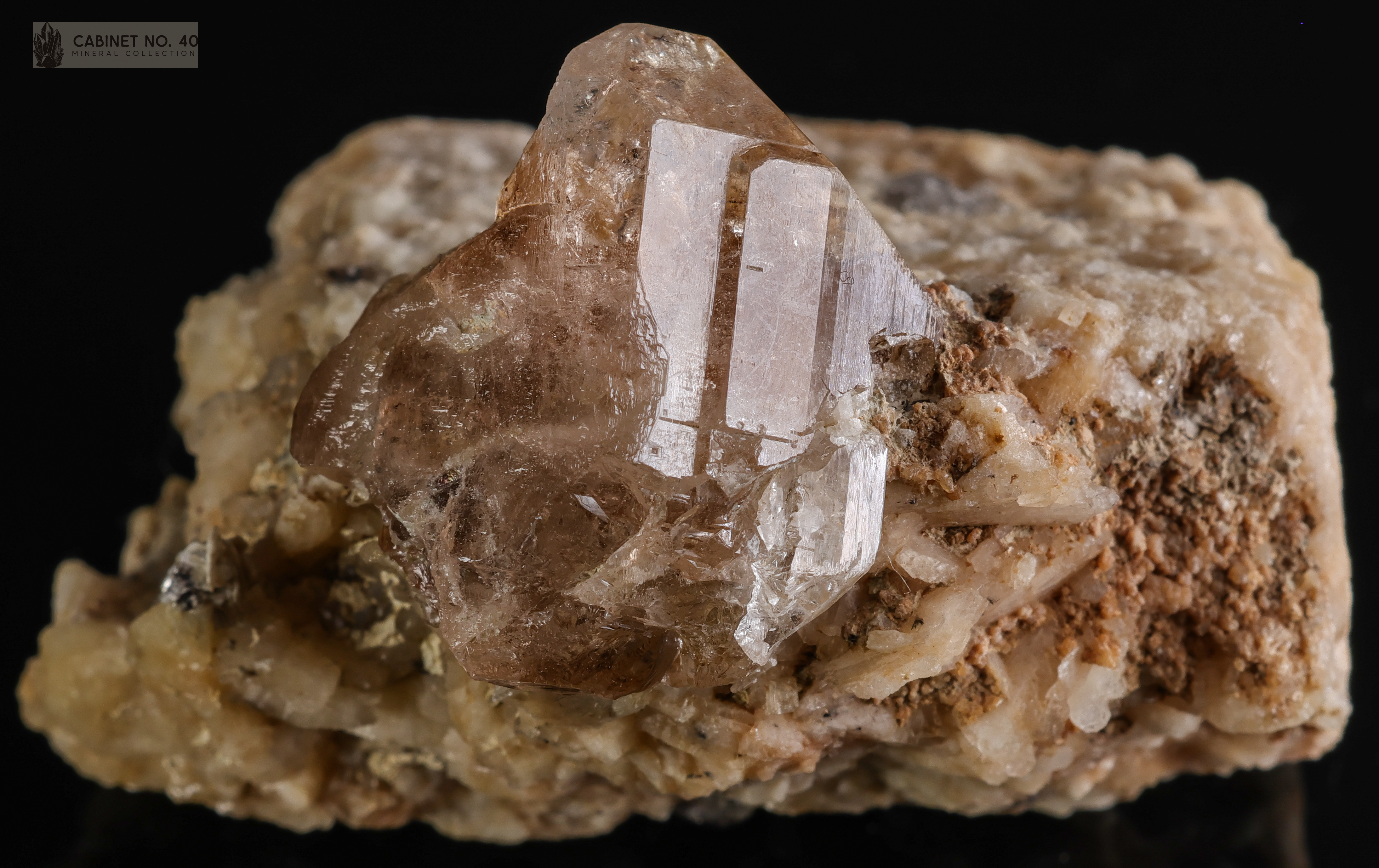
Topaz is a mineral from the silicate group, valued in jewelry for its hardness and wide range of colors, occurring in crystals with a distinct prismatic habit.
Properties
- Mohs hardness
- 8
- Luster
- Vitreous
- Streak
- White
- Density
- 3.4
- Cleavage
- (001)
- Fracture
- Muszlowy do nierównego
- Transparency
- Transparent,Translucent
- Crystal system
- Orthorhombic
Diagnostic features
## Identification Topaz can be identified by its hardness (8 on the Mohs scale), vitreous luster, and characteristic prismatic crystal habit, often with distinct striations on the side faces. Perfect cleavage in one direction is also an important diagnostic feature. ## Distinguishing from Similar Minerals Topaz is sometimes confused with quartz, beryl (aquamarine, heliodor), or citrine. It is distinguished from quartz by its greater hardness and perfect cleavage. From beryl, it can be distinguished by its higher density and different cleavage. Hardness testing and observation of cleavage are key to distinguishing topaz from similar minerals. ## Crystal Forms Topaz most commonly forms prismatic, columnar crystals with a rhombic cross-section, terminated by pyramids or bipyramids. Tabular crystals also frequently occur. Topaz aggregates are usually granular or massive.
Geological environment
## Genesis Topaz forms mainly in acidic igneous rocks, such as pegmatites and rhyolites, where it crystallizes from hydrothermal solutions rich in fluorine. It also occurs in quartz veins and in cavities and geodes in metamorphic and igneous rocks. It can also be found in alluvial deposits as a secondary mineral resistant to weathering. ## Mineral Associations Topaz often co-occurs with quartz, feldspar, muscovite, fluorite, cassiterite, wolframite, and beryl. ## Localities Known topaz deposits are found in Brazil (Minas Gerais), Russia (Urals), Pakistan, Afghanistan, Sri Lanka, USA (Utah, New Hampshire), Mexico, Japan, Australia, and Namibia.
Rarity
Very Common
For collectors
## Quality Criteria The most prized topaz specimens are those with intense, natural colors, high transparency, and clarity. Large, well-formed crystals with a distinct habit and without fractures are particularly sought after. Specimens on matrix, showcasing the natural growth environment, also increase collectible value. ## Popular Localities Brazil, especially the state of Minas Gerais, is known for producing high-quality topazes, including rare Imperial Topaz varieties. Pakistan and Afghanistan supply beautiful, often pink and purple topazes. The Russian Urals are a historical source of large crystals.
Care and storage
## Cleaning Topaz can be cleaned gently using warm water with mild soap and a soft brush. After washing, it should be thoroughly rinsed with clean water and dried with a soft cloth. An ultrasonic cleaner can also be used, but with caution, especially for specimens with inclusions or fractures. ## What to Avoid Avoid sudden changes in temperature, which can cause fractures. Topaz is sensitive to strong impacts due to its perfect cleavage. Some color varieties of topaz, especially those that have undergone heat treatment or irradiation, may fade with prolonged exposure to sunlight. Avoid contact with aggressive chemicals and acids. ## Storage Topaz is best stored separately from other, harder minerals to avoid scratches. A soft pouch, bag, or a separate compartment in a mineral box is ideal. Storing it in a place with a constant temperature and away from direct sunlight will help preserve its color and integrity.