Thomsonite
Chemical formula: (Na,Ca)₂Al₂Si₄O₁₂·6H₂O
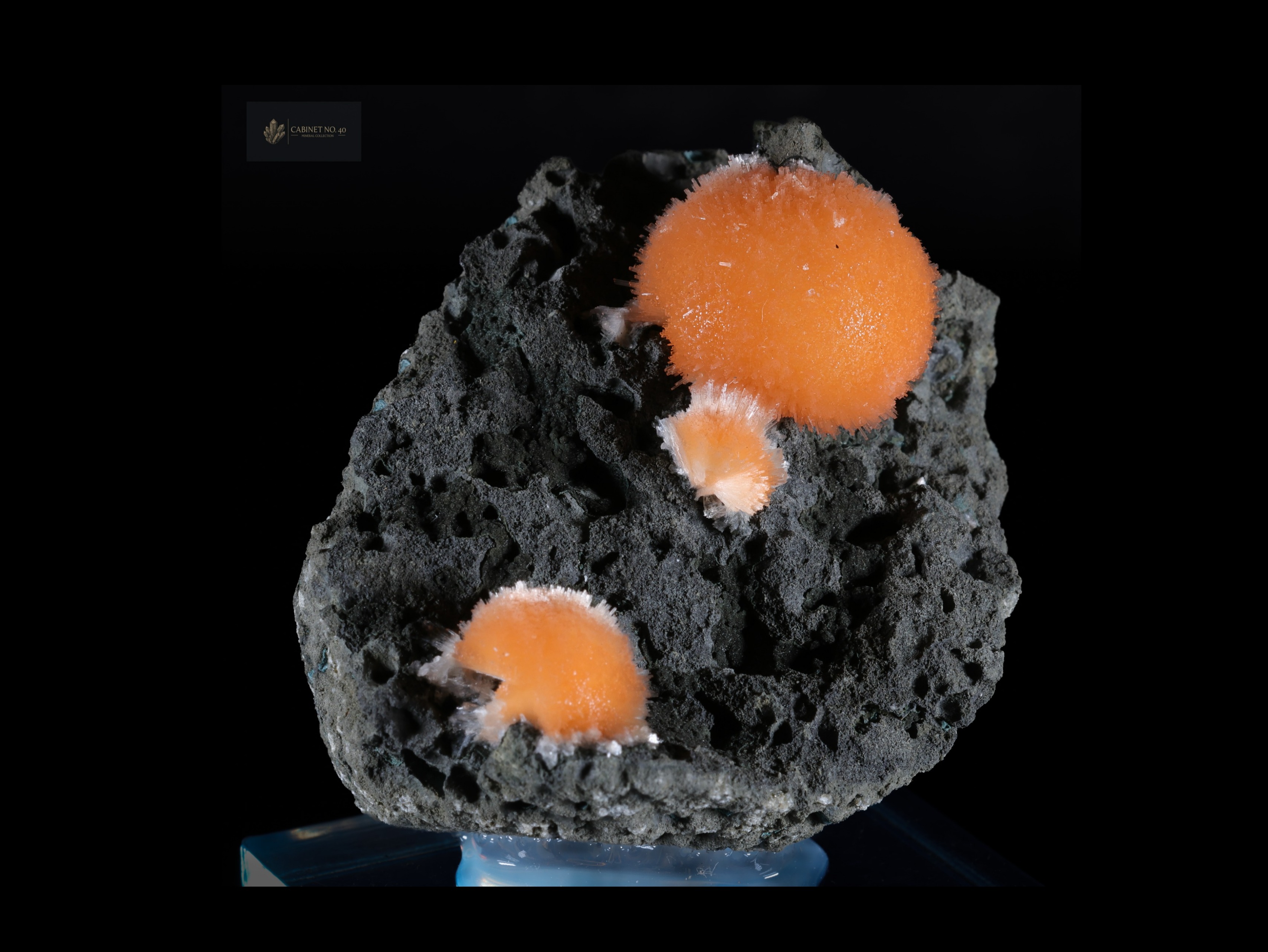
Thomsonite is a rare mineral from the zeolite group, characterized by radial or fibrous aggregates and variable color.
Properties
- Mohs hardness
- 5-5.5
- Luster
- Szklisty do perłowego
- Streak
- Biała
- Density
- 2.3-2.4
- Cleavage
- Doskonała wg {010}
- Fracture
- Nierówny
- Transparency
- Przezroczysty do przeświecającego
- Crystal system
- Rombowy
Diagnostic features
## Identification Thomsonite can be identified by its characteristic radial, fibrous, or lamellar aggregates, often forming spherical concretions. Vitreous to pearly luster and a Mohs hardness of 5-5.5 are also helpful in identification. Occurrence in cavities of basalts and other volcanic rocks is typical. ## Distinguishing from Similar Minerals Thomsonite is sometimes confused with other zeolites, such as stilbite or heulandite, which also form radial aggregates. It is distinguished from stilbite by the absence of characteristic sheaf-like crystals. It differs from heulandite in chemical composition and often a more compact habit. X-ray or chemical analysis is often necessary for unambiguous identification. ## Crystal Forms Thomsonite crystals are rare, usually columnar or tabular in habit. Twinning is common. However, the most common forms are radial, fibrous, lamellar aggregates, forming spherical or reniform concretions, as well as massive forms.
Geological environment
## Genesis Thomsonite forms under low-temperature hydrothermal conditions, most commonly in fractures and cavities of volcanic rocks, such as basalts, andesites, and rhyolites. It is a secondary mineral, forming as a result of the alteration of primary silicate minerals by solutions rich in sodium, calcium, and aluminum. ## Mineral Associations Thomsonite often co-occurs with other zeolites, such as chabazite, heulandite, stilbite, analcime, natrolite. It can also occur in association with calcite, apophyllite, prehnite, and quartz. ## Localities Known localities for thomsonite include India (especially in the Deccan region), the Faroe Islands, Iceland, Scotland (Kilpatrick Hills), the United States (Oregon, Colorado, Michigan), Canada (Nova Scotia), and Russia (Kola Peninsula).
Rarity
Not very common
For collectors
## Quality Criteria The most prized thomsonite specimens are characterized by well-formed, radial or spherical aggregates with intense and uniform color. Large, complete, and undamaged concretions are particularly sought after. Transparency and luster also contribute to the specimen's attractiveness. The purity of the mineral, absence of cracks and mechanical damage, increases its collector's value. ## Market Prices The prices of thomsonite vary and depend on the size, quality, and aesthetics of the specimen. Small, typical specimens can cost from several dozen to over a hundred Polish zlotys. Larger, well-formed, and aesthetic specimens, especially those from rare localities, can fetch prices from several hundred to even several thousand Polish zlotys. ## Popular Localities The most prized thomsonite specimens come from India, especially from the Deccan region, where beautiful pink and white concretions are found. Other popular localities include the Faroe Islands and Iceland, known for well-formed crystals and aggregates.
Care and storage
## Cleaning Thomsonite is a relatively delicate mineral, so it should be cleaned carefully. It is best to use a soft brush or paintbrush to remove dust. For heavier soiling, the specimen can be gently rinsed with distilled water at room temperature. Strong rubbing should be avoided. ## What to Avoid The mineral is sensitive to acids, which can damage it. Contact with chemicals, including detergents, should be avoided. High temperatures and sudden temperature changes can also negatively affect the structure of thomsonite. Prolonged exposure to direct sunlight can cause some colored varieties to fade. ## Storage Thomsonite is best stored in closed display cases or boxes, away from dust and moisture. It is advisable to place it in a location with stable temperature and away from direct light. Delicate specimens, especially those with thin radial aggregates, should be protected from mechanical damage.