Tanzanite
Chemical formula: Ca₂Al₃(SiO₄)₃(OH)
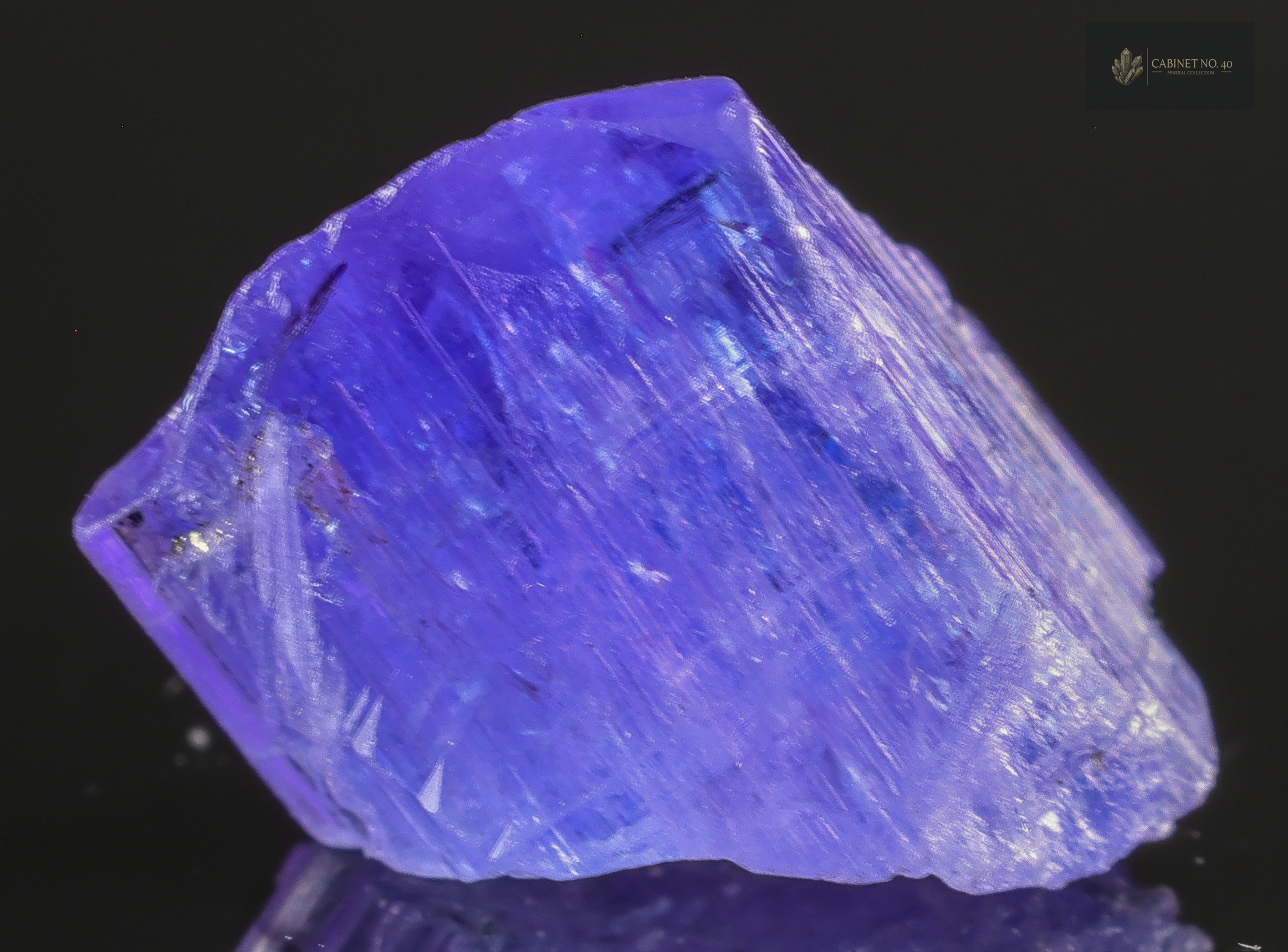
Tanzanite is a blue-violet variety of zoisite, prized in jewelry for its unique pleochroism and intense color.
Properties
- Mohs hardness
- 6-7
- Luster
- Szklisty
- Streak
- Biała
- Density
- 0
- Cleavage
- Doskonała wg {010}
- Fracture
- Nierówny do muszlowego
- Transparency
- Przezroczysty do przeświecającego
- Crystal system
- Rombowy
Diagnostic features
## Identification Tanzanite can be identified by its characteristic blue-violet color and strong pleochroism, which manifests as a color change depending on the viewing angle. It often exhibits three colors: blue, violet, and reddish. Its hardness on the Mohs scale is 6-7. ## Distinguishing from Similar Minerals Tanzanite can be confused with sapphire, ametrine, or iolite. It differs from sapphire by its lower hardness and stronger pleochroism. Ametrine is quartz, which has a different crystal structure and lacks pleochroism. Iolite also exhibits pleochroism, but its colors are usually less intense and more grayish than in tanzanite. ## Crystal Forms Tanzanite occurs as elongated, prismatic, or tabular crystals. It often forms granular or massive aggregates.
Geological environment
## Genesis Tanzanite forms under conditions of regional and contact metamorphism, in calcium-rich rocks such as marbles and calc-silicate rocks. It occurs in hydrothermal deposits, where solutions rich in trace elements, such as vanadium, contribute to its characteristic coloration. ## Mineral Associations Tanzanite often co-occurs with minerals such as graphite, pyrite, quartz, prehnite, calcite, and diopside. ## Locations The only known commercial source of tanzanite is the Merelani Hills area in northern Tanzania, near the city of Arusha. These deposits are located at the foot of Mount Kilimanjaro.
Rarity
Very Rare
For collectors
## Quality Criteria The most important quality criteria for tanzanite are the intensity and saturation of color, clarity, and absence of inclusions. Stones with a deep, vivid blue-violet color are most highly valued. Large, clean specimens with excellent cuts are particularly sought after. ## Market Prices Tanzanite prices vary widely and depend on many factors, such as color, clarity, cut, and carat weight. The highest quality, large stones command significantly higher prices per carat. Smaller specimens with less intense color are more affordable. ## Popular Localities All commercial tanzanites originate from a single region in Tanzania, the Merelani Hills. Specimens from this location are prized for their unique properties and beauty.
Care and storage
## Cleaning Tanzanite should be cleaned gently, using warm water with mild soap and a soft brush. After washing, the stone should be thoroughly rinsed with clean water to remove any soap residue, then dried with a soft cloth. ## What to Avoid Avoid cleaning tanzanite in ultrasonic cleaners and steam cleaners, as they can damage the stone or weaken its setting. Tanzanite is sensitive to sudden temperature changes, strong impacts, and contact with chemicals such as acids or solvents. Prolonged exposure to direct sunlight can also negatively affect its color. ## Storage Tanzanite should be stored separately from other gemstones and jewelry to prevent scratching. It is best to store it in a soft pouch or a separate compartment in a jewelry box, in a dry and cool place, away from sources of light and heat.