Sapphire
Chemical formula: Al₂O₃
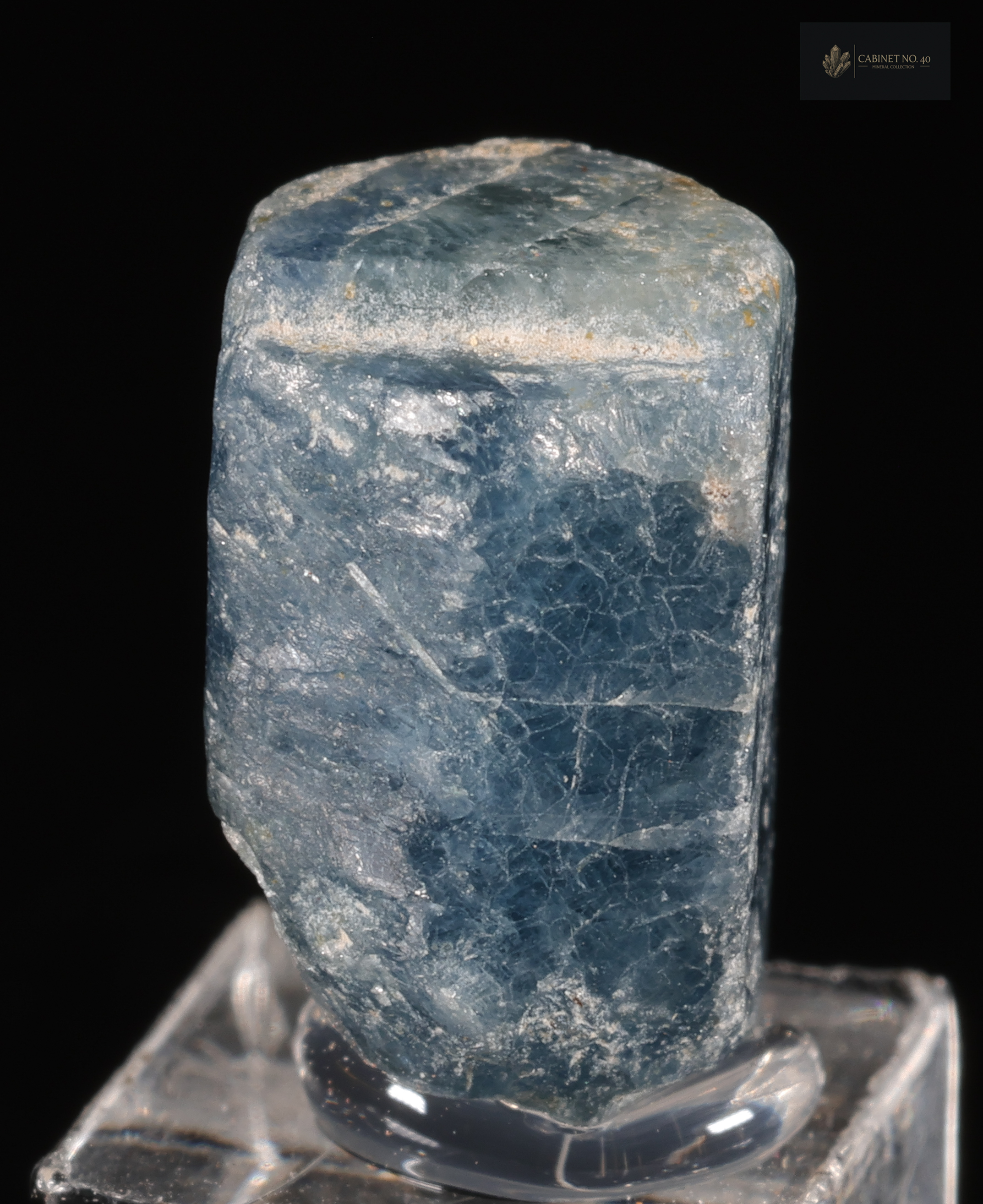
Sapphire is a variety of corundum, an aluminum oxide, prized in jewelry for its intense blue coloration, although it also occurs in other colors.
Properties
- Mohs hardness
- 9
- Luster
- Szklisty
- Streak
- Biała
- Density
- 3.95-4.03
- Cleavage
- Brak
- Fracture
- Muszlowy do nierównego
- Transparency
- Przezroczysty do przeświecającego
- Crystal system
- Trigonalny
Diagnostic features
## Identification Sapphire can be identified by its high hardness (it scratches most minerals except diamond), vitreous luster, and characteristic coloration. It often exhibits pleochroism, which is a change in color depending on the viewing angle. Occurrence in the form of hexagonal prisms is also a diagnostic feature. ## Distinguishing from Similar Minerals Sapphire can be confused with other blue minerals, such as tanzanite, spinel, benitoite, or kyanite. It is distinguished from tanzanite by its higher hardness and lack of distinct cleavage. Spinel has a different crystal structure (isometric) and usually does not exhibit pleochroism. Kyanite has lower hardness and distinct cleavage. ## Crystal Forms Sapphire crystallizes in the trigonal system, most often forming hexagonal prisms, often terminated by pyramids. Aggregates can be granular or massive. Barrel-shaped crystals also occur.
Geological environment
## Genesis Sapphire forms in igneous rocks, such as pegmatites and basalts, and in metamorphic rocks, such as marbles and gneisses. It can also occur in alluvial secondary deposits, where it is mined from river sediments. ## Mineral Associations Sapphire often co-occurs with other minerals, such as garnet, spinel, zircon, rutile, muscovite, biotite, and feldspar. ## Locations The most important sapphire deposits are found in Sri Lanka, Burma (Myanmar), Thailand, Australia, Madagascar, Tanzania, the United States (Montana), and Kashmir (India), from where some of the most prized, velvety blue sapphires originate.
Rarity
Not very common
For collectors
## Quality Criteria The most important quality criteria for sapphires are color, clarity, cut, and carat weight. The most desirable sapphires have an intense, deep, velvety blue color, without visible inclusions. Clarity is assessed under a 10x loupe. A well-executed cut maximizes the stone's brilliance and color. Larger, high-quality stones are significantly more valuable. ## Popular Localities The most prized sapphires come from Kashmir, Burma (Myanmar), and Sri Lanka. Kashmir sapphires are known for their unique, velvety blue hue. Sri Lankan sapphires are characterized by a wide range of colors, and Burma produces stones with an intense, pure blue color.
Care and storage
## Cleaning Sapphires can be cleaned with warm water and mild soap and a soft brush. Ultrasonic and steam cleaners can also be used, but caution should be exercised with specimens that have fractures or inclusions. ## What to Avoid Avoid contact of sapphires with strong chemicals, such as acids or bleaches, which can damage the stone's surface. Although sapphire is very hard, strong impacts can cause it to crack. Temperature changes do not negatively affect sapphires. ## Storage Sapphires should be stored separately from other gemstones and jewelry to avoid scratching, both on the sapphire and on other, less hard materials. It is best to store them in soft pouches or separate compartments in a jewelry box.