Stolzite
Chemical formula: Pb<sup>2+</sup>W<sup>6+</sup>O<sub>4</sub>
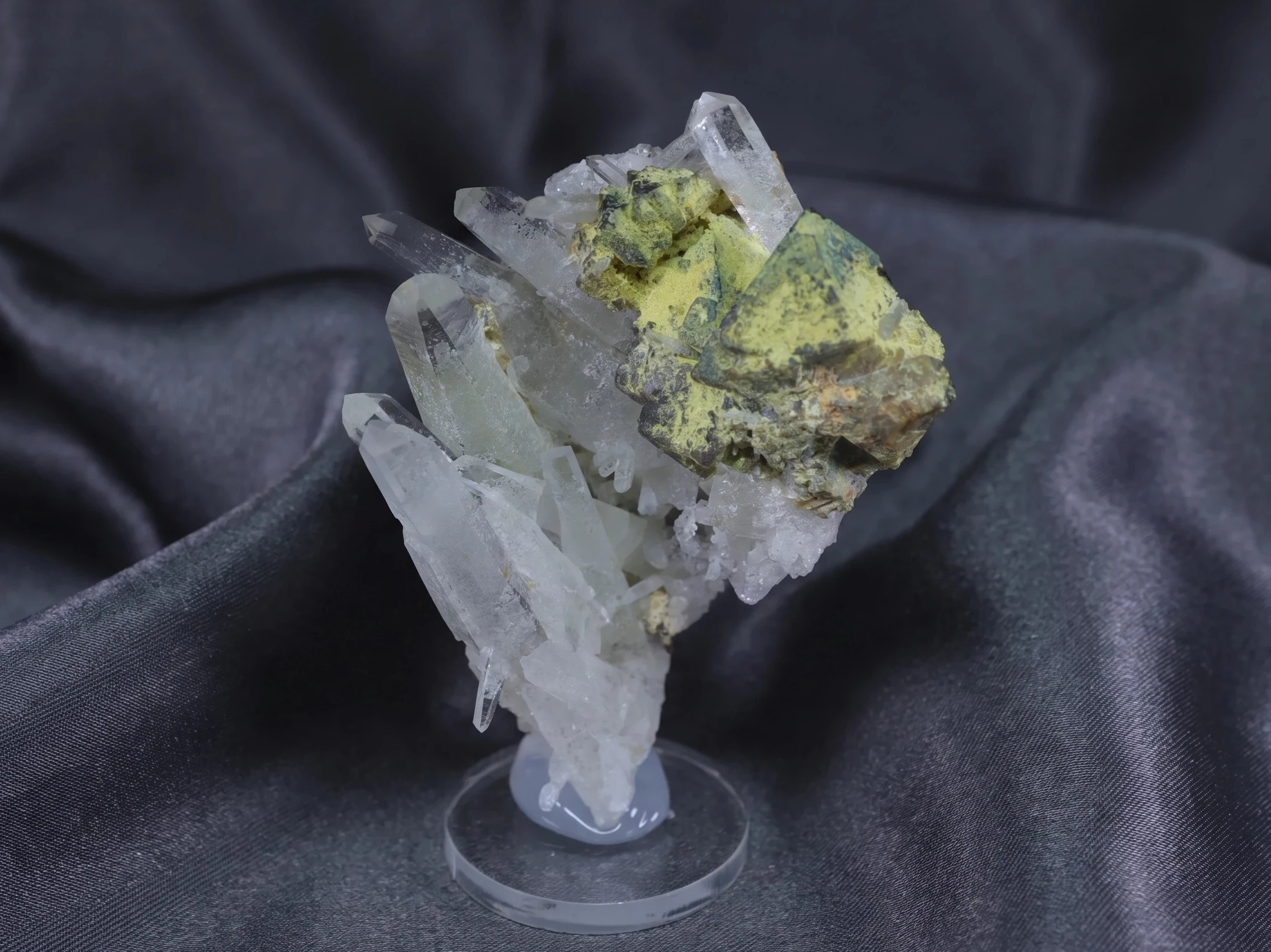
Stolzite is a rare lead and tungsten mineral, characterized by its tetragonal crystallographic system and high density.
Properties
- Mohs hardness
- 2.5-3
- Luster
- Diamentowy do żywicznego
- Streak
- White
- Density
- 8.34
- Cleavage
- Imperfect on {001}; indistinct on {011}
- Fracture
- Muszlowy
- Transparency
- Transparent,Translucent
- Crystal system
- Tetragonal
Diagnostic features
## Identification Stolzite can be identified by its characteristic tetragonal crystal habit, high density, and adamantine to resinous luster. The color, although variable, often takes on brown and yellow hues. A hardness test (2.5-3 on the Mohs scale) can aid in identification, as can its white streak. ## Distinguishing from Similar Minerals Stolzite can be confused with some minerals of similar color and luster, such as wulfenite (PbMoO₄) or pyromorphite (Pb₅(PO₄)₃Cl). It is primarily distinguished from wulfenite by its chemical composition (tungsten instead of molybdenum) and often a different crystal habit (wulfenite often forms thin, tabular crystals). Stolzite differs from pyromorphite in its crystallographic system (pyromorphite is hexagonal) and chemical composition (phosphate instead of tungstate). High density is a common feature for many lead minerals, but in combination with other properties, it helps in identifying stolzite. ## Crystal Forms Stolzite crystallizes in the tetragonal system, most often forming bipyramidal crystals, less commonly tabular. Crystals are usually small but well-formed. It can also occur as granular aggregates.
Geological environment
## Genesis Stolzite is a secondary mineral, forming in the oxidation zones of lead deposits, where tungsten-bearing solutions interact with lead minerals. It often occurs in parageneses with other secondary lead minerals. ## Mineral Associations Stolzite often co-occurs with other secondary minerals, such as cerussite (PbCO₃), anglesite (PbSO₄), wulfenite (PbMoO₄), pyromorphite (Pb₅(PO₄)₃Cl), and with iron and manganese oxide minerals. ## Localities Known localities for stolzite include mines in Zinnwald (Cínovec) in the Ore Mountains (Czech Republic/Germany), Broken Hill in New South Wales (Australia), Tiger in Arizona (USA), Tsumeb in Namibia, and in the Karkonosze Mountains region (Poland).
Rarity
Uncommon
For collectors
## Quality Criteria The most prized stolzite specimens are those with well-formed, large, and transparent crystals of intense and uniform color. The absence of mechanical damage, cracks, or inclusions of other minerals also increases its collector's value. Specimens with aesthetic associations with other secondary minerals are particularly sought after. ## Popular Localities The most prized stolzite specimens come from historical localities such as Zinnwald (Cínovec), Broken Hill, and Tsumeb, where some of the best-formed and most aesthetic crystals have been found.
Care and storage
## Cleaning Stolzite is a relatively soft mineral, so it should be handled with care. For cleaning, it is best to use a soft brush and lukewarm water. The specimen can be gently rinsed under running water and then dried with a soft cloth. Avoid strong rubbing, which could scratch the mineral's surface. ## What to Avoid Avoid using aggressive chemical agents, such as acids or bases, which can damage the surface of stolzite. This mineral is sensitive to high temperatures and sudden temperature changes, which can lead to cracks. Prolonged exposure to direct sunlight can cause some specimens to fade in color. Due to its lead content, avoid contact with food and wash hands after handling the mineral. ## Storage Stolzite is best stored in enclosed display cases or boxes, away from dust and contaminants. Due to its softness, it is recommended to store it separately from harder minerals to avoid scratches. Stable temperature and moderate humidity are optimal for preserving the specimen in good condition.