Stellerite
Chemical formula: Ca<sub>4</sub>(Si<sub>28</sub>Al<sub>8</sub>)O<sub>72</sub>·28H<sub>2</sub>O
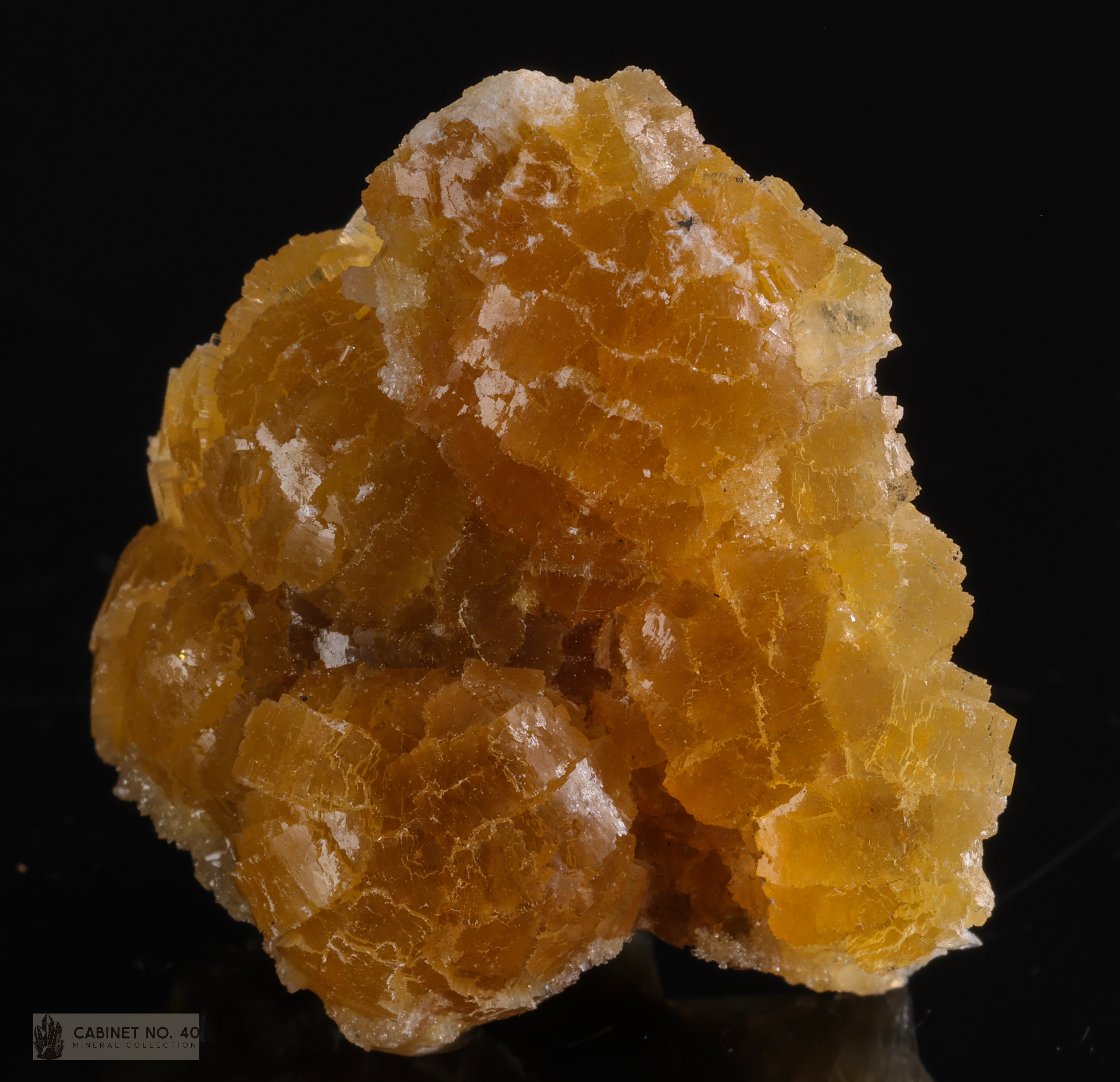
Stellerite is a zeolite group mineral characterized by radial or spherical crystal aggregates, often white, pink, or orange in color.
Properties
- Mohs hardness
- 4.5
- Luster
- Perłowy
- Streak
- Biała
- Density
- 2.13
- Cleavage
- on {010}
- Fracture
- Nierówny
- Transparency
- Transparent
- Crystal system
- Orthorhombic
Diagnostic features
## Identification Stellerite can be identified by its characteristic radial or spherical crystal aggregates, often with a pearly luster. Its relatively low hardness (4.5 on the Mohs scale) and transparency to translucency are also helpful in identification. The color, although variable, is often white, pink, or orange. ## Distinguishing from Similar Minerals Stellerite can be confused with other zeolites, such as stilbite or heulandite, which also form similar aggregates and have comparable physical properties. Differences often lie in subtle crystal forms and chemical composition details, which require specialized analysis. It differs from stilbite by the absence of characteristic sheaf-like crystals. ## Crystal Forms Stellerite most commonly occurs as radial, spherical, or fan-shaped aggregates. Individual, tabular crystals are less common.
Geological environment
## Genesis Stellerite is a secondary mineral, forming in low-temperature hydrothermal processes. It occurs mainly in fractures and cavities in volcanic rocks, especially basalts, andesites, and rhyolites. It also forms as a result of the alteration of other volcanic minerals. ## Mineral Associations Stellerite often co-occurs with other zeolites, such as stilbite, heulandite, chabazite, as well as calcite, apophyllite, and quartz. It can also be found in association with chalcedony and opal. ## Localities Known stellerite localities include India (Deccan Traps), Iceland, Russia (Siberia), the United States (Oregon, Washington), Canada (Nova Scotia), and Australia.
Rarity
Uncommon
For collectors
## Quality Criteria The most prized stellerite specimens are those that exhibit well-formed, aesthetic aggregates of radial or spherical crystals. The intensity and uniformity of color, as well as transparency and luster, are important. Large, complete, and undamaged specimens are particularly sought after. ## Popular Localities The most valued stellerite specimens come from India, especially from the Deccan region, where they occur in cavities in basalts. Other important localities include Iceland and some regions of the United States.
Care and storage
## Cleaning Stellerite is a relatively soft mineral and therefore requires gentle cleaning. It is best to use a soft brush and lukewarm distilled water. Avoid vigorous rubbing to prevent damage to the crystal surfaces. ## What to Avoid The mineral is sensitive to acids, which can dissolve it. Avoid contact with chemicals, including detergents. Prolonged exposure to direct sunlight can cause some colored varieties to fade. High temperatures can also negatively affect the mineral's structure. ## Storage Stellerite should be stored in a dry place, away from direct sunlight and heat sources. It is best to place it in a closed display case or box to protect it from dust and mechanical damage. Due to its fragility, it should be handled with care.