Native Silver
Chemical formula: Ag
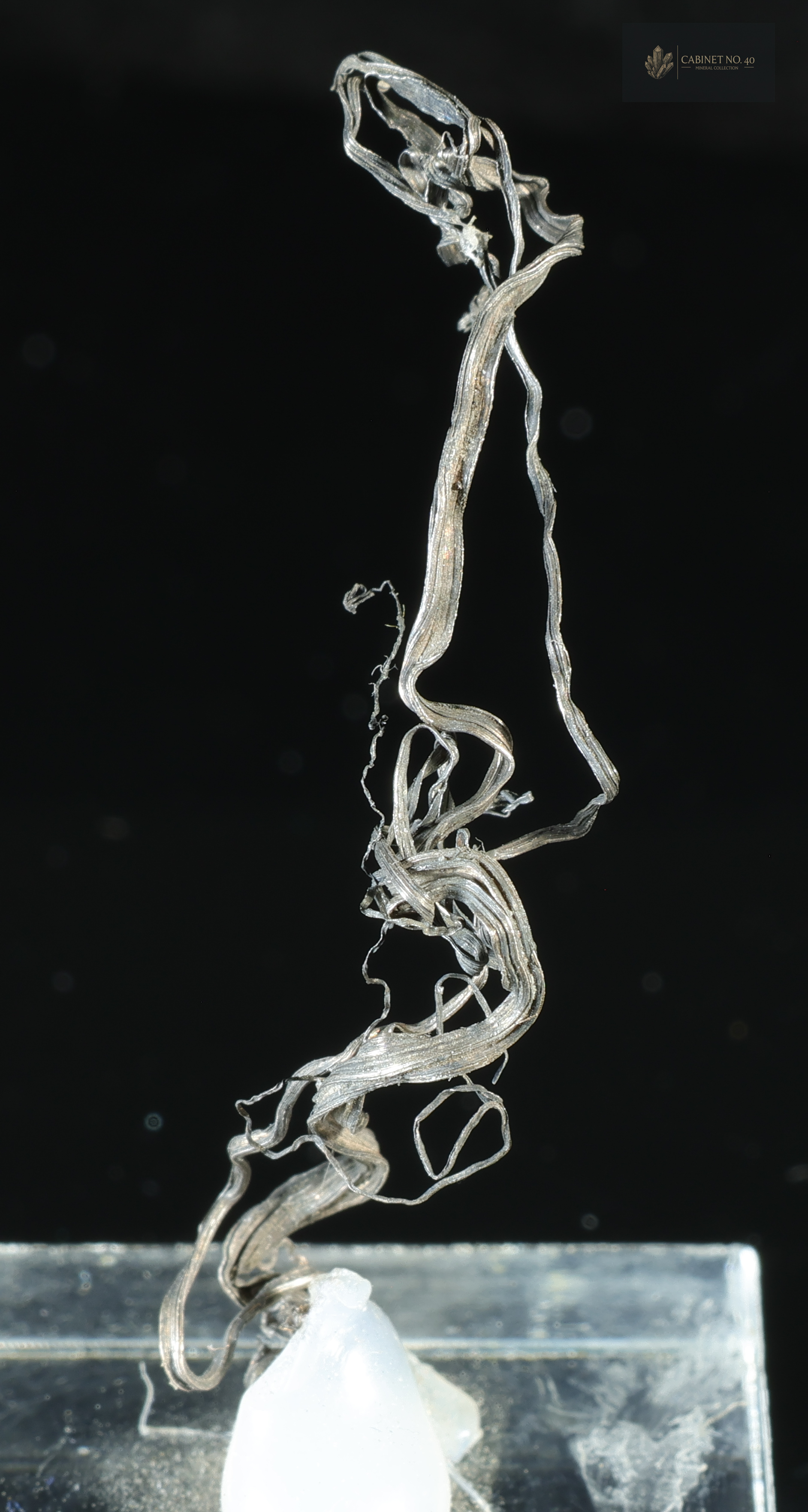
Native silver is a mineral composed of pure silver, occurring naturally as dendrites, flakes, wires, or grains. It is characterized by a metallic luster and a silvery-white color that darkens over time.
Properties
- Mohs hardness
- 2.5-3
- Luster
- Metallic
- Streak
- Silver white
- Density
- 10.1
- Cleavage
- None
- Fracture
- Haczykowaty
- Transparency
- Opaque
- Crystal system
- Isometric
Diagnostic features
## Identification Native silver can be identified by its characteristic metallic luster, silvery-white color (often with tarnish), low hardness, and high density. It often occurs in wire-like, flaky, or dendritic forms, which is helpful for identification. It is malleable and ductile, meaning it can be bent and flattened without breaking. ## Distinguishing from Similar Minerals Native silver can be confused with other native metals, such as platinum or copper, but it differs from them in color and density. Native copper has a reddish color, and platinum is lighter and much harder. It can also be confused with some silver sulfides, such as argentite, but sulfides are brittle and do not exhibit malleability. ## Crystal Forms Native silver crystallizes in the isometric system. It most commonly occurs as dendrites, which are branched, tree-like forms, and as wires, which can be straight, twisted, or tangled. Flakes, grains, and irregular nuggets are also found.
Geological environment
## Genesis Native silver forms in low-temperature hydrothermal veins, often associated with metasomatic processes. It also forms in the oxidation and cementation zones of ore deposits, where silver compounds are reduced. It can occur in sedimentary, volcanic, and metamorphic rocks. ## Mineral Associations Native silver often co-occurs with other silver minerals, such as argentite, proustite, pyrargyrite, as well as with other native metals, e.g., native copper. It can also be found in association with quartz, calcite, barite, and various metal sulfides, such as galena and chalcopyrite. ## Localities Known localities of native silver are found in various parts of the world. Historically important were the deposits in Kongsberg, Norway, where large wire-like specimens were found. Other significant localities include Freiberg, Germany, Batopilas, Mexico, as well as some regions of the United States (e.g., Michigan, Colorado) and Canada.
Rarity
Very Common
For collectors
## Quality Criteria The most prized native silver specimens are those with well-formed wire-like or dendritic shapes that are large, dense, and aesthetically arranged. Surface purity, absence of tarnish, and mechanical damage are also important. Specimens with distinct crystals, though rare, are also highly sought after. ## Popular Localities The most sought-after native silver specimens come from historical localities such as Kongsberg, Norway, known for its beautiful wires and dendrites. Other valued sources include Batopilas, Mexico, where large and spectacular forms were found, and Freiberg, Germany.
Care and storage
## Cleaning Native silver is a soft mineral and therefore requires gentle cleaning. A soft brush or bristle brush can be used to remove dust. For heavier soiling, distilled water with a small amount of mild soap can be used, then rinsed thoroughly and dried with a soft cloth. Strong rubbing should be avoided. ## What to Avoid Contact of native silver with chemical substances, especially acids and sulfur compounds, which can cause tarnishing and blackening of the surface, should be avoided. Exposure to direct sunlight and high humidity also promotes oxidation processes and tarnish formation. High temperatures can damage the specimen. ## Storage Native silver specimens are best stored in airtight containers or display cases to limit air and moisture access. Special bags or boxes made of sulfur-free materials can also be used to help prevent tarnishing. Storage in a place with stable temperature and low humidity is recommended.