Rosasite
Chemical formula: Cu<sup>2+</sup>Zn<sup>2+</sup>CO<sub>3</sub>(OH)<sub>2</sub>
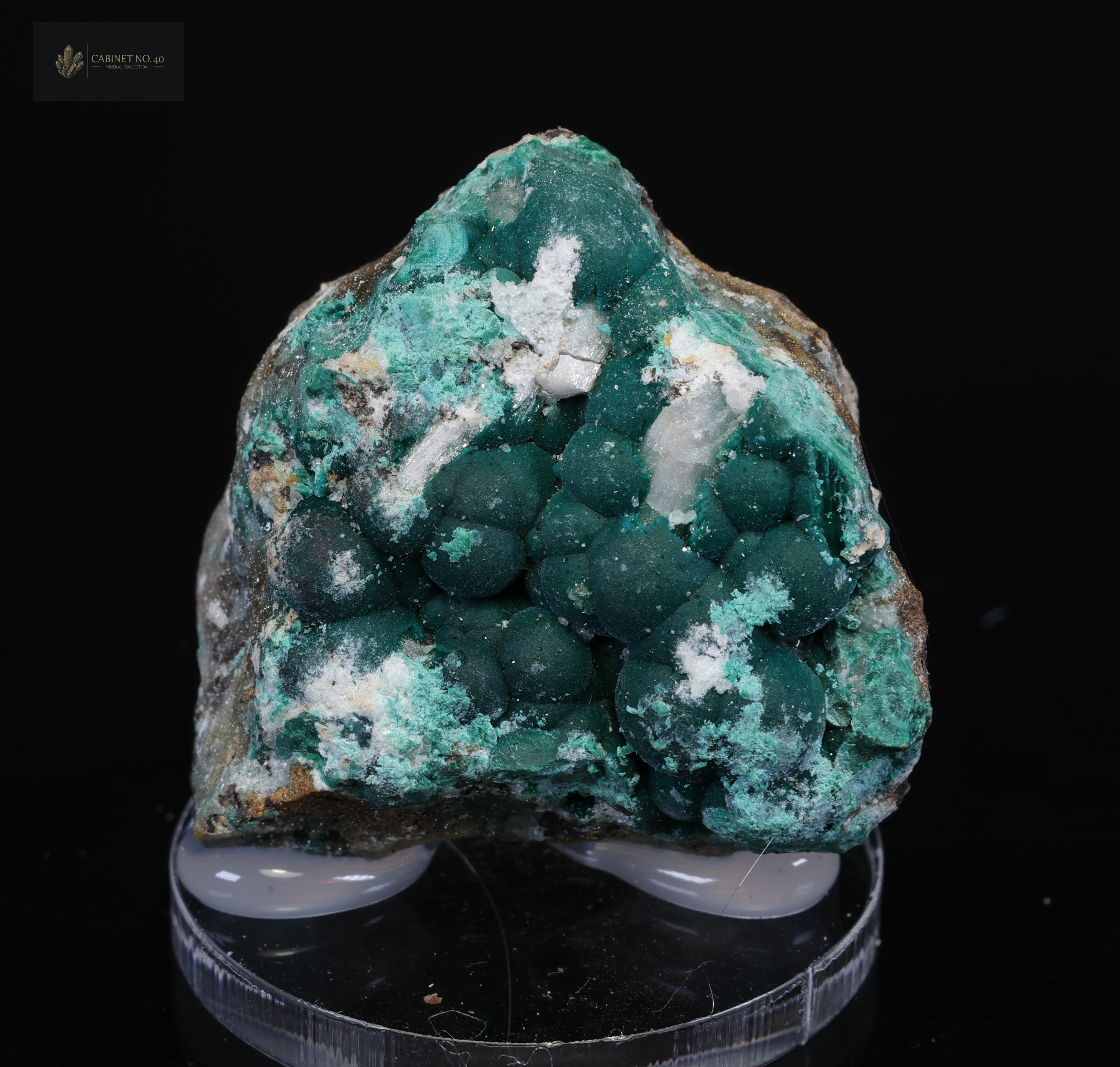
Rosasite is a rare, secondary copper and zinc mineral from the carbonate group, characterized by an attractive blue-green color and radial aggregates.
Properties
- Mohs hardness
- 4.5
- Luster
- Szklisty do jedwabistego
- Streak
- Light blue
- Density
- 4
- Cleavage
- In two directions at right angles.
- Fracture
- Nierówny
- Transparency
- Translucent
- Crystal system
- Monoclinic
Diagnostic features
## Identification Rosasite can be identified by its characteristic blue-green color, radial or spherical aggregates, and vitreous or silky luster. It often occurs in the oxidation zones of copper and zinc deposits, which is an additional clue. ## Distinguishing from Similar Minerals Rosasite can be confused with other secondary copper minerals, such as azurite or malachite. It differs from azurite by its lighter, more greenish color and lack of distinct crystals. It differs from malachite in its shade of green and structure, as malachite often forms concentric bands. The streak of rosasite is light blue, which helps distinguish it from other minerals. ## Crystal Forms Rosasite most often occurs as radial, fibrous, or spherical aggregates, forming reniform masses. Single, small crystals are rarer.
Geological environment
## Genesis Rosasite is a secondary mineral, formed in the oxidation zones of copper and zinc ore deposits. It forms as a result of chemical reactions between groundwater and primary minerals containing copper and zinc, in a carbonate-rich environment. ## Mineral Associations Rosasite often co-occurs with other secondary copper and zinc minerals, such as malachite, azurite, hemimorphite, smithsonite, aurichalcite, as well as calcite and quartz. ## Localities The most important rosasite localities include the Rosas mine in Sardinia, Italy, where it was discovered. Other known occurrences include Tsumeb in Namibia, Broken Hill in Australia, and some deposits in the United States (e.g., Arizona, New Mexico) and Mexico.
Rarity
Common
For collectors
## Quality Criteria The most prized rosasite specimens are characterized by an intense, uniform color (most often blue or blue-green), well-formed radial or spherical aggregates, and a lack of mechanical damage. The size of the specimen and its aesthetic arrangement on the matrix also influence its collector's value. ## Popular Localities The most sought-after specimens come from the Rosas mine in Sardinia, Italy, as well as from Tsumeb in Namibia, which is famous for its well-formed and aesthetic secondary mineral specimens.
Care and storage
## Cleaning Gentle cleaning of rosasite can be performed using a soft brush or paintbrush to remove dust. For heavier soiling, lukewarm distilled water can be used, but this should be done carefully and the specimen dried quickly to avoid damage. ## What to Avoid Avoid using any chemical cleaning agents, acids, or solvents, which can damage the mineral's surface. Rosasite is sensitive to high temperatures and prolonged exposure to sunlight, which can cause color fading. Excessive moisture should also be avoided. ## Storage Rosasite specimens are best stored in a dry place, away from direct sunlight and heat sources. It is advisable to place them in enclosed display cases or boxes with soft lining to protect them from dust and mechanical damage. Due to its softness, contact with harder minerals should be avoided.