Powellite
Chemical formula: CaMo<sup>6+</sup>O<sub>4</sub>
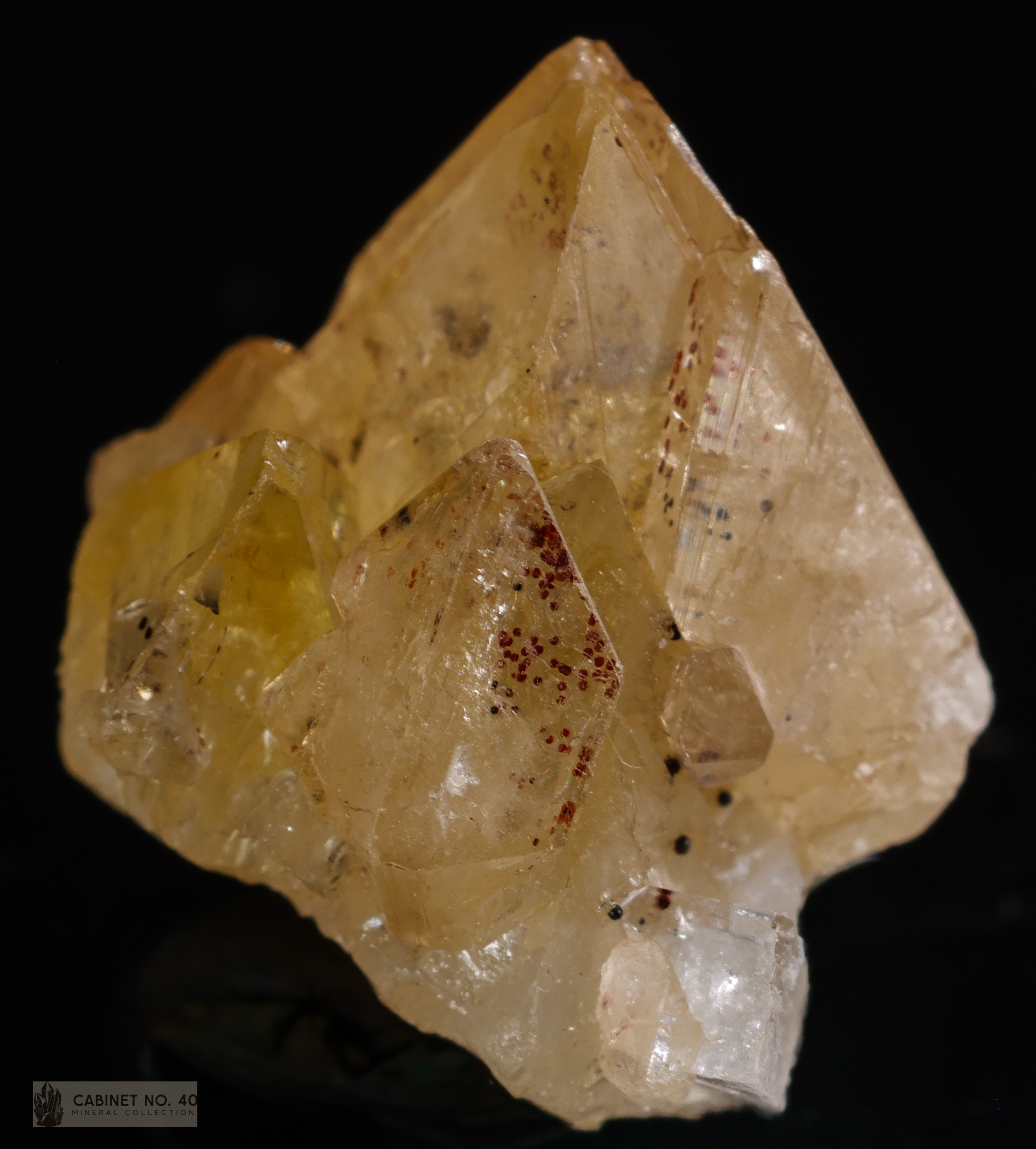
Powellite is a rare molybdate mineral, a calcium molybdate, often forming tetragonal crystals of variable color.
Properties
- Mohs hardness
- 3.5-4
- Luster
- Adamantine or greasy
- Streak
- white
- Density
- 4.26
- Cleavage
- Indistinct on {112} {011} and {001}.
- Fracture
- Nieokreślony
- Transparency
- Transparent,Translucent
- Crystal system
- Tetragonal
Diagnostic features
## Identification Powellite can be identified by its tetragonal crystal habit, often bipyramidal or tabular, and by its characteristic adamantine or greasy luster. The mineral's color, though variable, often includes shades of yellow, brown, and green. For black specimens, their blue hue in transmitted light is a diagnostic feature. A Mohs hardness of 3.5-4 is also helpful in identification. ## Distinguishing from Similar Minerals Powellite is sometimes confused with other minerals from the scheelite group, especially scheelite (CaWO₄), due to crystallographic and habit similarities. However, it differs in chemical composition (molybdate instead of tungstate). Distinguishing it from scheelite often requires chemical analysis or density analysis, as powellite is slightly lighter. Other minerals with similar color and habit, such as wulfenite (PbMoO₄), have different hardness and density. ## Crystal Forms Powellite most commonly forms tetragonal crystals, which can have a bipyramidal, tabular, or pseudo-octahedral habit. Granular aggregates, crusts, radial aggregates, and fibrous forms are also common.
Geological environment
## Genesis Powellite is a secondary mineral, formed in the oxidation zones of molybdenum deposits. It can also occur in pegmatites, skarns, and hydrothermal veins. Its formation is associated with the weathering and transformation processes of primary molybdenum minerals, such as molybdenite. ## Mineral Associations Powellite often co-occurs with other secondary molybdenum minerals, such as molybdenite, wulfenite, as well as minerals like quartz, calcite, epidote, garnets, and other silicate minerals typical of skarn and hydrothermal environments. ## Localities Significant powellite localities include the United States (e.g., Arizona, California, Nevada), India (especially in Maharashtra state, where it occurs in basalt vesicles), Russia (in the Urals), the Czech Republic, Germany, and Australia.
Rarity
Common
For collectors
## Quality Criteria The most valued powellite specimens are those with well-formed, distinct crystals, especially bipyramidal or tabular, with intense and uniform color. The transparency of the specimens and a strong adamantine or greasy luster also increase their collector's value. Large, aesthetic crystal aggregates or specimens with interesting mineral associations are particularly sought after. ## Popular Localities Among the most prized powellite localities are those in India, especially from the Deccan region, where the mineral occurs in basalt vesicles, forming aesthetic, yellow or greenish-yellow crystals. Specimens from Arizona in the USA are also highly valued for their quality and variety of colors.
Care and storage
## Cleaning Powellite is a mineral of moderate hardness, so it should be handled with care. For cleaning specimens, it is best to use a soft brush and lukewarm water. For heavier soiling, a mild soap can be used, followed by thorough rinsing with distilled water to avoid mineral deposits. ## What to Avoid Avoid using aggressive chemicals, such as acids or strong detergents, which can damage the mineral's surface. Powellite is sensitive to high temperatures, so it should not be exposed to direct heat sources. Prolonged exposure to intense sunlight can lead to fading of some color varieties. It is also important to avoid sudden temperature changes, which can cause cracks. ## Storage Powellite specimens are best stored in a dry place, away from direct sunlight and heat sources. Due to its hardness, it is recommended to store it separately from harder minerals to avoid scratches. Enclosed display cases or boxes lined with soft material are ideal, protecting against dust and mechanical damage.