Nsutite
Chemical formula: Mn<sup>2+</sup><sub>0.6-0.7</sub>Mn<sup>4+</sup><sub>0.4-0.3</sub>O<sub>0.8-0.6</sub>(OH)<sub>1.2-1.4</sub>
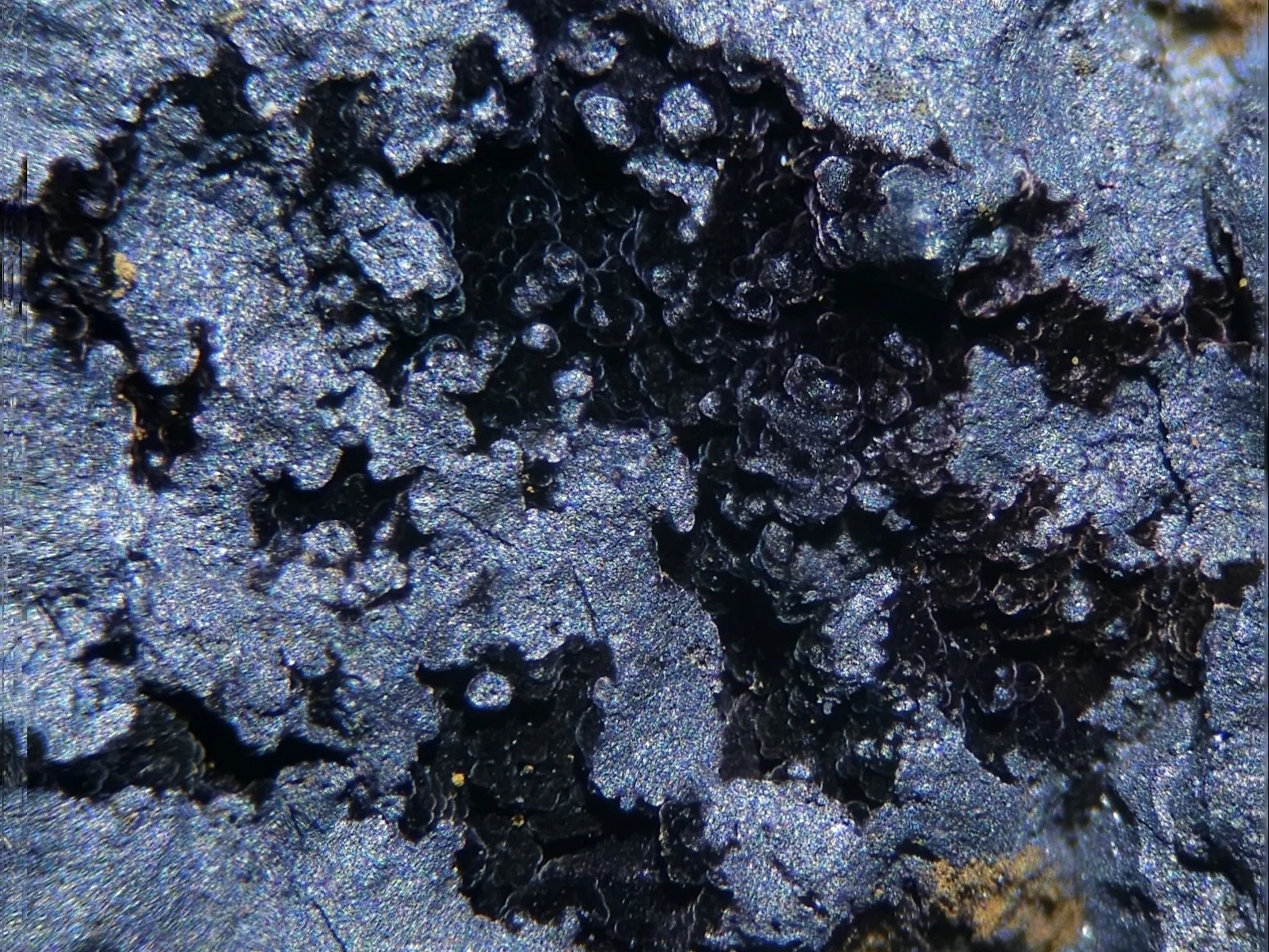
Nsutite is a manganese oxide mineral, a polymorph of manganite, characterized by variable chemical composition and occurrence in reniform or earthy aggregates.
Properties
- Mohs hardness
- 6.5-8
- Luster
- Matowy do półmetalicznego
- Streak
- grey-black
- Density
- 4.24
- Cleavage
- Brak
- Fracture
- Nierówny
- Transparency
- Nieprzezroczysty
- Crystal system
- Hexagonal
Diagnostic features
## Identification Nsutite can be identified by its grayish-black to black color, dull or submetallic luster, and typical aggregate forms: reniform, botryoidal, or earthy. A grayish-black streak is also characteristic. A Mohs hardness in the range of 6.5-8 is an important diagnostic feature. ## Distinguishing from Similar Minerals Nsutite can be confused with other manganese oxides, such as pyrolusite or cryptomelane. It is usually distinguished from pyrolusite by its greater hardness and lack of distinct cleavage. It differs from cryptomelane in its crystal structure, although macroscopically they can be difficult to distinguish without specialized examination. Manganite has lower hardness and a different crystallization habit. ## Crystal Forms Nsutite rarely forms well-developed crystals. It most commonly occurs as dense, compact aggregates with reniform, botryoidal, mammillary habits, or as coatings and earthy masses. Sometimes it forms fibrous or radial structures within aggregates.
Geological environment
## Genesis Nsutite forms under oxidizing conditions, often in the weathering zones of manganese deposits. It is a secondary mineral, forming as a result of the alteration of other manganese minerals, such as rhodonite or manganite. It also occurs in sedimentary manganese deposits, where it forms through diagenetic processes. ## Mineral Associations Nsutite often co-occurs with other manganese oxides and hydroxides, such as pyrolusite, cryptomelane, psilomelane, as well as goethite, hematite, and clay minerals. It can also be found in association with quartz and calcite. ## Localities The most important nsutite localities include the Nsuta mine in Ghana, where it was discovered. Other known occurrences include Brazil, India, Gabon, Australia, and some deposits in the United States and Europe.
Rarity
Uncommon
For collectors
## Quality Criteria Collectively valuable nsutite specimens are those that exhibit well-formed reniform or botryoidal shapes, with an intense, uniform grayish-black color and distinct luster. The size of the specimen, its completeness, and the absence of mechanical damage also influence its value. Aggregates with visible radial or fibrous internal structures are particularly sought after. ## Popular Localities The most prized nsutite specimens typically come from its discovery locality – the Nsuta mine in Ghana. Other localities that provide interesting specimens include deposits in Brazil and India.
Care and storage
## Cleaning Nsutite is a relatively hard mineral, but due to its porous nature and potential occurrence in earthy aggregates, it should be handled with care. Soft brushes and lukewarm water can be used to clean specimens. For heavier soiling, gentle rinsing under running water can be attempted, followed by drying the specimen with a soft cloth. ## What to Avoid Avoid using aggressive chemical agents that could damage the mineral's surface or alter its color. Nsutite is not sensitive to sunlight or typical temperature changes, but prolonged exposure to extreme conditions may be inadvisable. Mechanical damage should also be avoided, especially for brittle, earthy aggregates. ## Storage Nsutite specimens are best stored in a dry, dust-free place. They can be displayed in closed cabinets or boxes to protect them from accumulating contaminants. Due to its dark color, it presents well in a contrasting environment.