Mohawkite
Chemical formula: (Cu,Ni)₆As
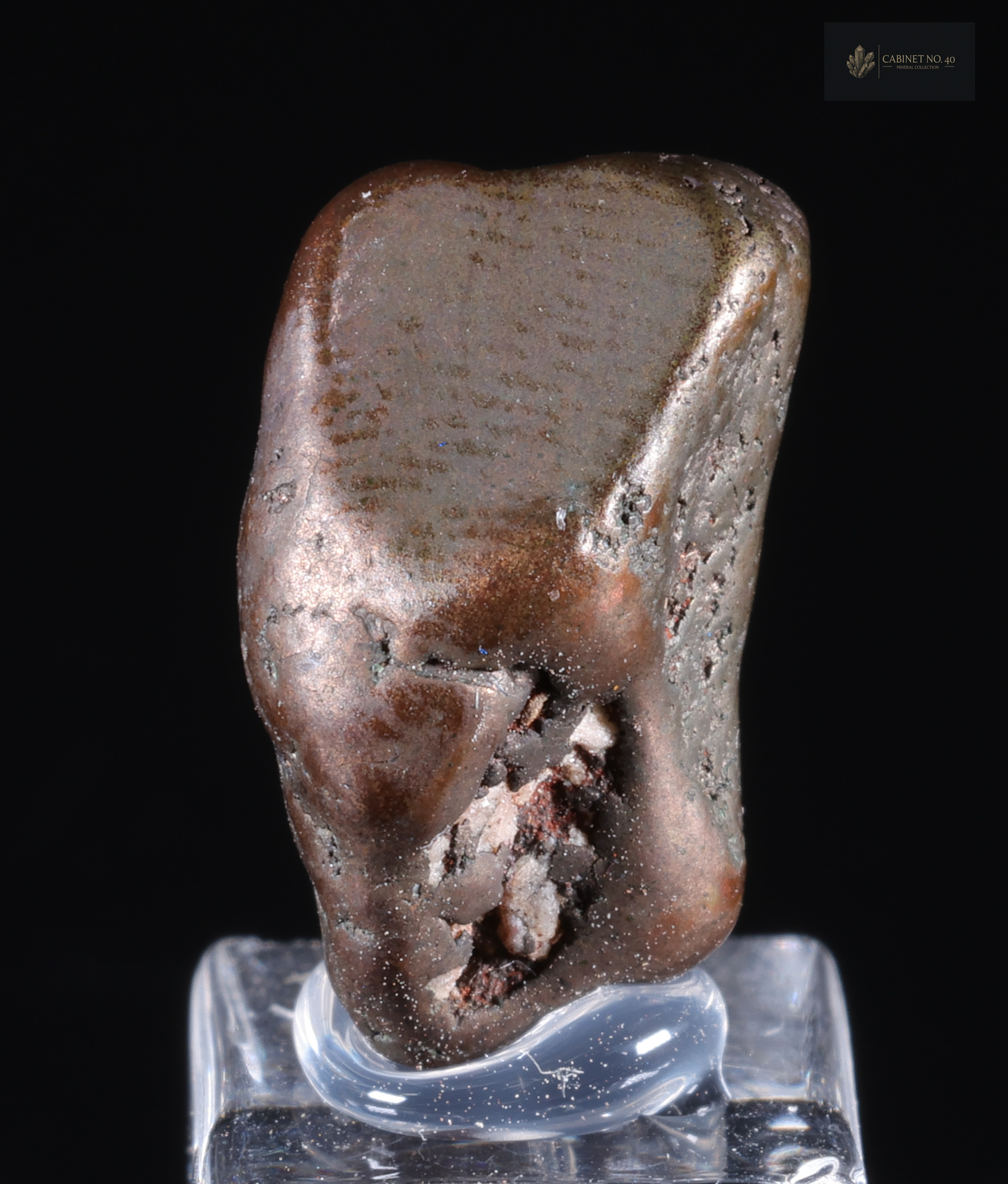
Mohawkite is a rare mineral, an arsenide of copper and nickel, occurring as irregular masses and grains.
Properties
- Mohs hardness
- 3.5
- Luster
- Metaliczny
- Streak
- Czarna
- Density
- 0
- Cleavage
- Brak
- Fracture
- Nierówny
- Transparency
- Nieprzezroczysty
- Crystal system
- Heksagonalny
Diagnostic features
## Identification Mohawkite can be identified by its metallic luster, copper-red color on a fresh fracture, which quickly darkens to brownish-black. It usually occurs as irregular masses and grains. Its brittleness is also a diagnostic feature. ## Distinguishing from Similar Minerals Mohawkite can be confused with other copper or nickel arsenides, as well as with native copper. It differs from native copper by its typically darker, duller surface and the presence of nickel and arsenic in its chemical composition. For accurate identification, chemical analysis or X-ray diffraction are often necessary. ## Crystal Forms Mohawkite typically does not form well-developed crystals. It occurs mainly as compact, granular, or lamellar aggregates, as well as irregular masses.
Geological environment
## Genesis Mohawkite is a secondary mineral, forming in hydrothermal ore veins, often in the oxidation zones of copper and nickel deposits. It occurs in environments rich in arsenic, copper, and nickel. ## Mineral Associations Mohawkite often co-occurs with other copper minerals, such as native copper, chalcocite, bornite, as well as arsenopyrite and other arsenides. ## Localities The most famous occurrences of mohawkite are in the Mohawk mine in Keweenaw County, Michigan, USA, from which it gets its name. Other, less significant occurrences have been reported in other regions of the world, but Michigan remains the primary source of this mineral.
Rarity
Very rare
For collectors
## Quality Criteria The most prized mohawkite specimens are those that exhibit a distinct copper-red color on a fresh fracture, before it undergoes significant oxidation. Clean, compact masses with a clear metallic luster are also highly valued. Specimen size is important, but due to the mineral's rarity, even smaller, well-preserved samples are valuable. The absence of mechanical damage and minimal surface oxidation increase its collector appeal. ## Popular Localities The Mohawk mine in Michigan, USA, is the historical and most important locality for mohawkite, and specimens from there are most sought after by collectors.
Care and storage
## Cleaning Mohawkite is a relatively soft and brittle mineral, so it should be handled with care. For cleaning, it is best to use a soft, dry cloth or brush to gently remove dust. Avoid using water, especially for prolonged soaking, as this can accelerate the oxidation process of the mineral's surface. ## What to Avoid Avoid contact of mohawkite with acids and other aggressive chemicals, which can damage its surface or cause irreversible chemical changes. The mineral is sensitive to moisture and air, leading to darkening and dulling of the surface. Exposure to direct sunlight is also not recommended, as it can accelerate oxidation processes. ## Storage Mohawkite is best stored in tightly sealed containers, away from moisture and air, to minimize oxidation. Airtight boxes with soft lining are ideal, protecting the specimen from mechanical damage. Storing in a dark place, away from heat and light sources, will help preserve its original appearance for longer.