Metavauxite
Chemical formula: Fe<sup>2+</sup>Al<sub>2</sub>(PO<sub>4</sub>)<sub>2</sub>(OH)<sub>2</sub>·8H<sub>2</sub>O
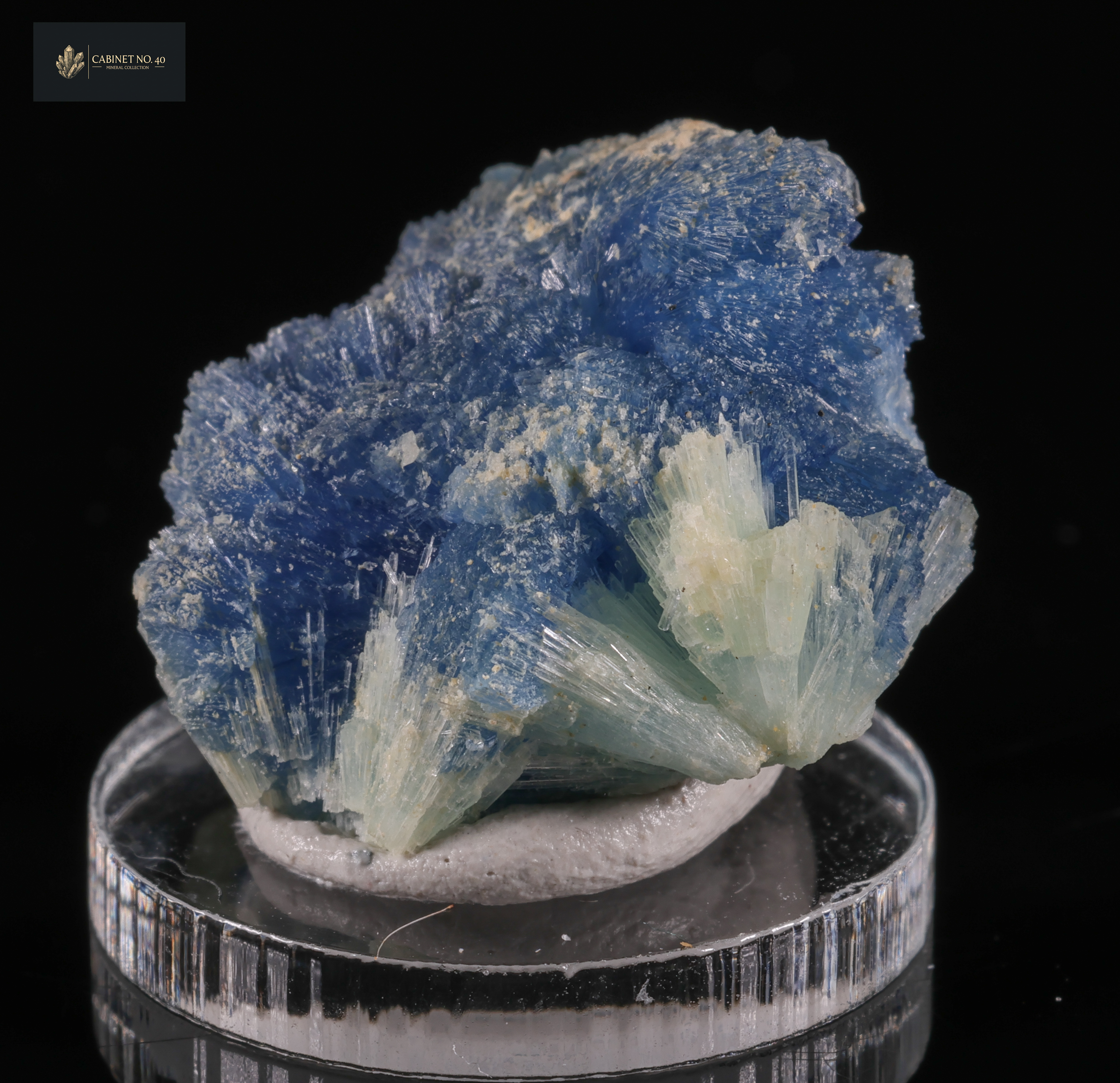
Metavauxite is a rare hydrated iron and aluminum phosphate, forming small, often radial clusters of crystals with delicate colors.
Properties
- Mohs hardness
- 3
- Luster
- Szklisty
- Streak
- White
- Density
- 2.345
- Transparency
- Transparent,Translucent
- Crystal system
- Monoclinic
Diagnostic features
## Identification Metavauxite can be identified by its characteristic radial clusters of small, acicular or platy crystals. The colorless, white, or pale green color, combined with low hardness (3 on the Mohs scale) and vitreous luster, are key diagnostic features. It often occurs in association with other phosphates. ## Distinguishing from Similar Minerals Metavauxite can be confused with vauxite, from which it differs in its degree of hydration and crystallographic system. Vauxite is triclinic, while metavauxite is monoclinic. Macroscopic differentiation can be difficult without laboratory analysis. Other similar phosphates may have different hardness, density, or distinct crystal forms. ## Crystal Forms Metavauxite typically forms small, acicular or platy crystals, which often arrange themselves into radial, fan-like, or spherulitic aggregates. The crystals are usually elongated along the b-axis and flattened along the a-axis.
Geological environment
## Genesis Metavauxite is a secondary mineral, formed in the oxidation zones of hydrothermal deposits rich in phosphates. It forms as a result of weathering and transformation processes of other phosphate minerals, in the presence of iron and aluminum-containing solutions. It occurs in paragenesis with other rare phosphates. ## Mineral Associations Metavauxite often co-occurs with other phosphate minerals, such as vauxite, paravauxite, marcasite, quartz, and limonite. These associations are typical of environments where hydrothermal and weathering processes have occurred. ## Localities The most known and prized specimens of metavauxite come from the Siglo Veinte mine (Llallagua) in the Potosí Department, Bolivia. This is the main and practically only source of well-formed crystals of this mineral. Other, less significant occurrences are very rare and do not provide specimens of collector's value.
Rarity
Extremely Rare
For collectors
## Quality Criteria The most attractive collector's specimens of metavauxite are those with well-formed, radial or fan-like crystal clusters. Specimens with an intense, pale green color and those that are transparent are highly valued. The size and aesthetics of the aggregates, as well as the absence of mechanical damage, influence the value of the specimen. Specimens on matrix, especially with other rare minerals, are particularly desirable. ## Popular Localities Practically all high-quality metavauxite specimens come from the Siglo Veinte mine (Llallagua) in Bolivia. This is the classic and most important locality for this mineral, providing the most aesthetic and prized specimens in the world.
Care and storage
## Cleaning Metavauxite is a delicate mineral and requires careful cleaning. It is best to use a soft brush or brush to remove dust. For heavier soiling, the specimen can be gently rinsed in distilled water, avoiding a strong stream of water and prolonged soaking. ## What to Avoid Avoid using any chemical agents, including detergents and acids, as they can damage the mineral's surface. Due to the water content in its structure, metavauxite is sensitive to high temperatures, which can lead to dehydration and changes in appearance. Prolonged exposure to direct sunlight can also cause color fading. It is also important to avoid sudden changes in temperature and humidity. ## Storage Metavauxite specimens are best stored in closed display cases or boxes, away from dust and direct light. Due to their delicacy, they should be provided with stable conditions that protect them from impacts and vibrations. Ideal storage is in a place with constant, moderate temperature and humidity.