Manganobabingtonite
Chemical formula: Ca₂MnFeSi₅O₁₄OH
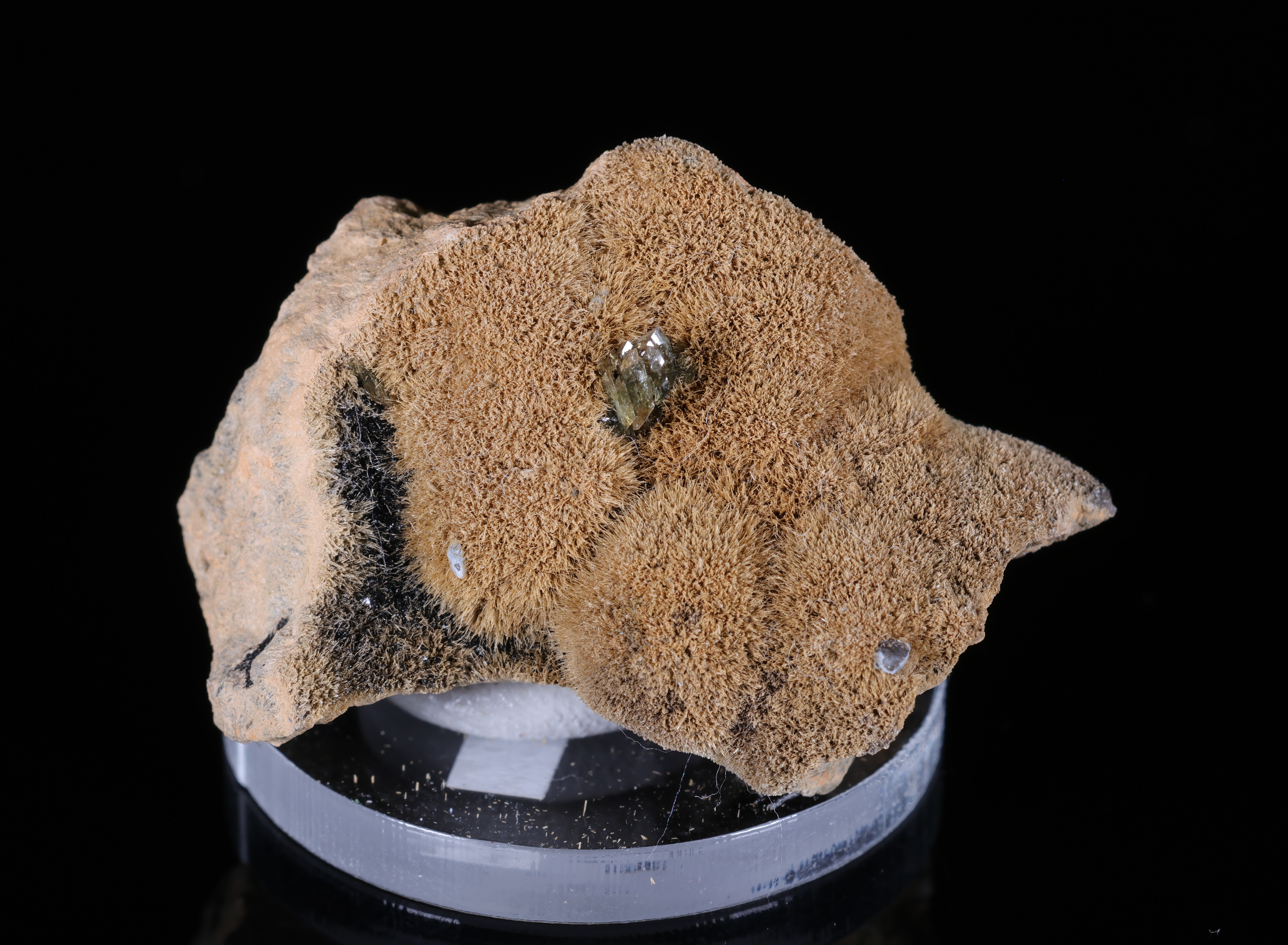
Manganobabingtonite is a rare silicate mineral, a variety of babingtonite, characterized by a significant manganese content.
Properties
- Mohs hardness
- 5.5-6
- Luster
- Vitreous
- Streak
- Greenish black
- Density
- 3.35-3.45
- Cleavage
- Perfect on {001}
- Fracture
- Conchoidal to uneven
- Transparency
- Translucent to opaque
- Crystal system
- Triclinic
Diagnostic features
## Identification Manganobabingtonite can be identified by its dark, usually black or dark brown color, vitreous luster, and characteristic crystal habit, often tabular or prismatic. It usually occurs in association with other manganese minerals. ## Distinguishing from Similar Minerals It can be confused with other dark silicate minerals, such as hornblende or augite. Key to differentiation are detailed crystallographic and chemical analyses, which confirm the presence of manganese in the structure. Babingtonite, from which it originates, typically has a lower manganese content. ## Crystal Forms Manganobabingtonite crystals are typically tabular or prismatic, often with well-developed faces. They can form radial, rosette-like, or fine-grained aggregates. They also occur as single, well-formed crystals.
Geological environment
## Genesis Manganobabingtonite forms in hydrothermal environments, often in veins and fissures within metamorphic or igneous rocks rich in manganese. It can also occur in pegmatites. ## Mineral Associations It co-occurs with other manganese minerals such as rhodonite, spessartine, as well as with quartz, epidote, calcite, and prehnite. ## Localities Known localities for manganobabingtonite include Japan (e.g., Ehime Prefecture), the United States (e.g., California), and some regions of Europe where manganese deposits occur.
Rarity
Very rare
For collectors
## Quality Criteria The most prized specimens are those with well-formed, distinct crystals of intense, dark color and vitreous luster. The size of the crystals and their aesthetic arrangement on the matrix also influence their collector's value. Purity and absence of mechanical damage are crucial. ## Popular Localities Specimens from Japan are particularly sought after, valued for their crystallization quality and color intensity.
Care and storage
## Cleaning Manganobabingtonite specimens should be cleaned carefully, using a soft brush and lukewarm water. For more stubborn dirt, distilled water can be used. Avoid vigorous scrubbing to prevent damage to delicate crystals. ## What to Avoid Avoid contact with strong acids and bases, which can damage the mineral's surface. Prolonged exposure to direct sunlight may lead to slight color changes, although the mineral is relatively stable. Avoid sudden temperature changes. ## Storage Manganobabingtonite is best stored in enclosed display cases or boxes, away from dust and moisture. It is advisable to place it on a soft surface to prevent mechanical damage. Collector's specimens should be displayed in areas with stable temperature and humidity.