Larimar
Chemical formula: NaCa₂Si₃O₈(OH)
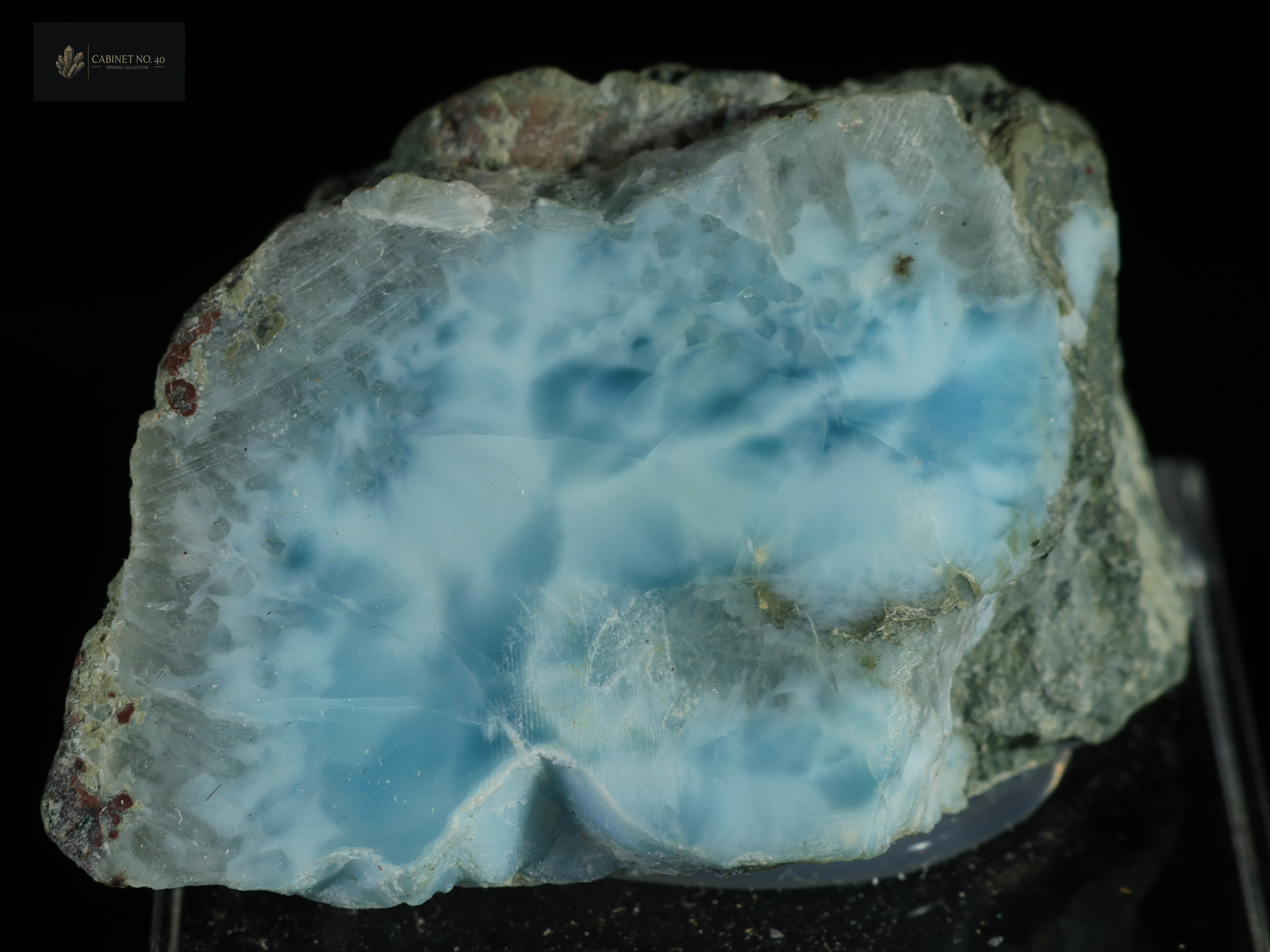
Larimar is a blue variety of pectolite, a sodium calcium silicate, distinguished by its characteristic, often banded or mottled pattern resembling water.
Properties
- Mohs hardness
- 5
- Luster
- Szklisty do jedwabistego
- Density
- 2.74
- Transparency
- Przezroczysty do przeświecającego
- Crystal system
- Triclinic
Diagnostic features
## Identification Larimar can be identified by its characteristic blue color, often with white or gray patterns. It usually occurs in compact masses with a fibrous or radial structure. When polished, it exhibits a vitreous to silky luster. Its hardness is 5 on the Mohs scale, meaning it can be scratched by a steel blade. ## Distinguishing from Similar Minerals Larimar is sometimes confused with turquoise, chrysocolla, or chalcedony. It differs from turquoise by its typically milkier, bluer hue and characteristic white patterns. Chrysocolla often has a more greenish tint and is slightly softer. Chalcedony, although it can occur in similar colors, usually does not have such distinct fibrous structures and patterns as larimar. ## Crystal Forms Larimar most commonly occurs as compact, fibrous, or radial aggregates. More rarely, it forms small, acicular crystals in fissures.
Geological environment
## Genesis Larimar forms in cracks and cavities in volcanic rocks, mainly basalts, as a result of hydrothermal processes. Water rich in silica and calcium, flowing through the rocks, deposits minerals in open spaces. The blue coloration is due to the presence of copper in the mineral's structure. ## Mineral Associations Larimar often co-occurs with other secondary minerals such as calcite, hematite, natrolite, and other zeolites. It can also be found in association with native copper. ## Localities The only known locality for gem-quality larimar is the Baoruco area in the Barahona province on the southwestern coast of the Dominican Republic.
Rarity
Extremely Rare
For collectors
## Quality Criteria The most prized specimens of larimar are characterized by an intense, uniform blue color, without visible impurities or cracks. Specimens with distinct, aesthetic patterns resembling waves or clouds are also highly valued. Transparency and luster also affect the stone's value. Large, well-colored specimens are more desirable. ## Market Prices Larimar prices vary and depend on quality, size, and color intensity. Small, poorly colored pieces can cost a dozen dollars, while large, high-quality specimens with intense color and interesting patterns fetch prices from tens to hundreds of dollars per gram or carat, especially in the form of polished cabochons or jewelry components. ## Popular Localities The only commercially significant source of larimar is the Dominican Republic, specifically the Los Chupaderos area in the Baoruco mountains. All specimens available on the market originate from there.
Care and storage
## Cleaning Larimar is a relatively soft mineral, so it should be cleaned gently. It is best to use a soft cloth dampened with lukewarm water and a small amount of mild soap. After washing, rinse the mineral thoroughly with clean water and dry it with a soft cloth. A soft brush can also be used to remove dirt from hard-to-reach areas. ## What to Avoid Avoid contact of larimar with strong chemicals such as acids, alkalis, detergents, or solvents, which can damage its surface or change its color. The mineral is sensitive to sudden temperature changes and prolonged exposure to direct sunlight, which can lead to fading of the color. Due to its hardness, larimar is susceptible to scratches, so it should be protected from impacts and contact with harder objects. Ultrasonic and steam cleaning methods should also be avoided. ## Storage Larimar should be stored separately from other, harder minerals and jewelry to prevent scratches. It is best to wrap it in a soft cloth or place it in a separate compartment in a jewelry box. Store in a dry place, away from direct sunlight and heat sources.