Cuprite
Chemical formula: Cu<sup>1+</sup><sub>2</sub>O
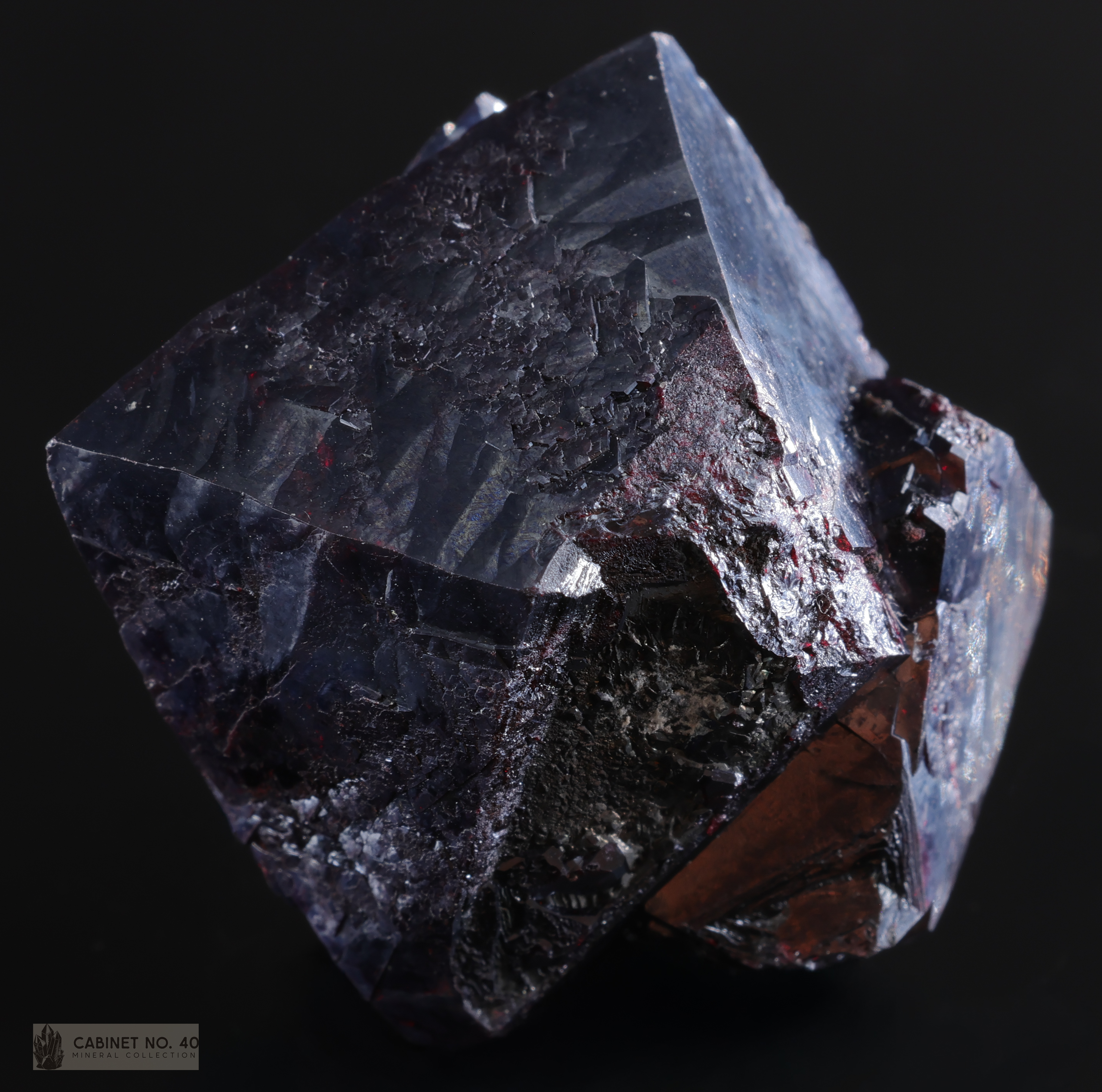
Cuprite is a copper oxide, a secondary mineral formed in the oxidation zones of copper deposits, characterized by its intense red color and adamantine luster.
Properties
- Mohs hardness
- 3.5-4
- Luster
- Adamantine to sub-metallic
- Streak
- Shining metallic brownish-red.
- Density
- 6.14
- Cleavage
- Interrupted on {111}, more rarely on {001}.
- Fracture
- Muszlowy do nierównego
- Transparency
- Transparent,Translucent
- Crystal system
- Isometric
Diagnostic features
## Identification Cuprite can be identified by its characteristic dark red to carmine color, adamantine or submetallic luster, and relatively low hardness (3.5-4 on the Mohs scale). A diagnostic feature is also its shiny, metallic, brownish-red streak. Crystals often have well-developed octahedral, dodecahedral, or cubic forms. ## Distinguishing from Similar Minerals Cuprite can be confused with other red minerals, such as cinnabar or garnet. It differs from cinnabar by its lower density and lack of perfect cleavage. Garnets are much harder and have a different streak. From hematite, which can also be red, cuprite differs in streak (hematite has a red streak) and luster. ## Crystal Forms Cuprite most often forms isometric crystals, taking the forms of octahedra, rhombic dodecahedra, and cubes. Granular and massive aggregates are also common, as are characteristic fibrous aggregates known as chalcotrichite.
Geological environment
## Genesis Cuprite is a secondary mineral, formed in the oxidation zones of copper deposits. It forms as a result of the weathering of primary copper minerals, such as chalcopyrite, bornite, or chalcocite, in the presence of oxygen and carbon dioxide. This process occurs in shallow parts of the Earth's crust, where oxygen-rich groundwater reacts with copper sulfide minerals. ## Mineral Associations Cuprite often co-occurs with other secondary copper minerals, such as native copper, malachite, azurite, chrysocolla, tenorite, and with limonite. Sometimes it is also accompanied by primary minerals from which it formed, e.g., chalcopyrite. ## Localities Significant cuprite deposits occur in many places around the world. Important localities include: Russia (Urals), Kazakhstan, Democratic Republic of Congo (Katanga), Namibia (Tsumeb), Australia (Broken Hill), Chile, United States (Arizona, Michigan), and France.
Rarity
Very Common
For collectors
## Quality Criteria The most prized cuprite specimens are those with well-formed, large, and undamaged crystals, especially octahedral or dodecahedral ones. Intense, uniform color (carmine to dark red) and strong adamantine luster increase collectible value. Specimens of the chalcotrichite variety, characterized by long, thin needles, are also highly sought after. Clarity and lack of inclusions of other minerals are additional advantages. ## Popular Localities Particularly prized cuprite specimens come from Tsumeb, Namibia, where large and perfectly formed crystals have been found. Other important localities include Chessy, France, where beautiful specimens with malachite occur, and mines in Arizona, USA, known for diverse forms and colors of cuprite.
Care and storage
## Cleaning Cuprite is a relatively soft mineral, so it should be cleaned gently. To remove dust and small impurities, it is best to use a soft brush. For heavier soiling, lukewarm distilled water can be used to gently rinse the specimen, avoiding prolonged soaking. ## What to Avoid Avoid using strong chemicals, acids, and detergents, which can damage the mineral's surface. Cuprite is sensitive to high temperatures and sudden temperature changes, which can lead to cracks. Prolonged exposure to direct sunlight can affect the intensity of its color. Due to the presence of copper, the mineral can react with moisture, so it is recommended to store it in a dry environment. ## Storage Cuprite is best stored in closed display cases or boxes, away from dust and direct sunlight. It is advisable to place a desiccant in the container, especially in areas with high humidity. Specimens should be protected from impacts and scratches, as the mineral is relatively soft.