Crocoite
Chemical formula: Pb<sup>2+</sup>Cr<sup>6+</sup>O<sub>4</sub>
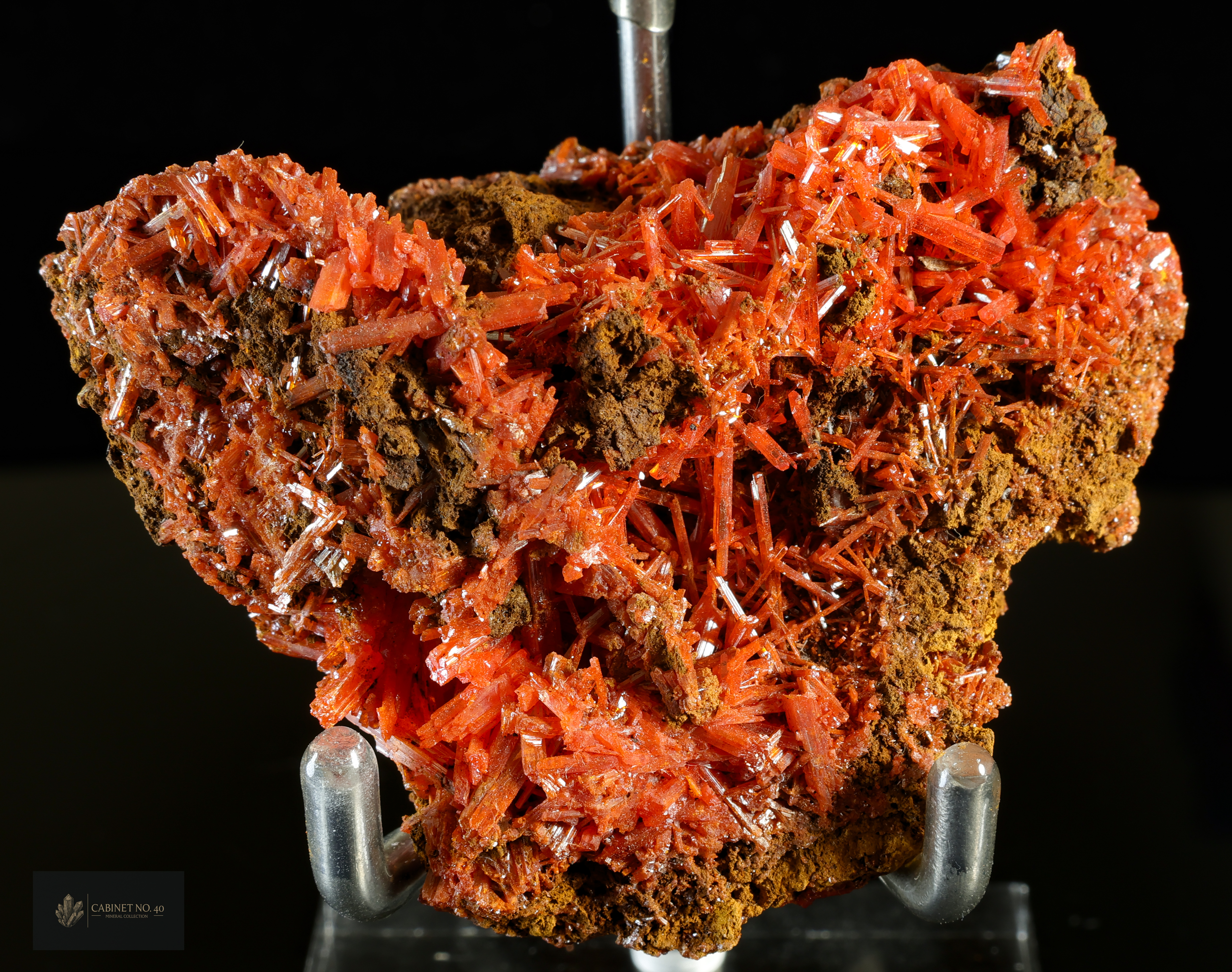
Crocoite is a rare chromate mineral with an intense orange-red color, forming elongated, acicular crystals.
Properties
- Mohs hardness
- 2.5-3
- Luster
- Adamantine, vitreous
- Streak
- Yellow-orange
- Density
- 5.97
- Cleavage
- Distinct on {110}, indistinct on {001} and {100}.
- Fracture
- Muszlowy do nierównego
- Transparency
- Transparent,Translucent
- Crystal system
- Monoclinic
Diagnostic features
## Identification Crocoite can be identified by its characteristic, intense orange-red color and elongated, often acicular crystals. The adamantine to vitreous luster is also a diagnostic feature. The streak of the mineral is yellow-orange. ## Distinguishing from Similar Minerals Crocoite can be confused with some vanadate minerals, such as wulfenite; however, wulfenite typically forms tabular crystals and has a different streak color. The color and crystal form of crocoite are distinctive enough that misidentification is rare. ## Crystal Forms Crocoite most commonly occurs as elongated, prismatic, or acicular crystals. It often forms radiating, fibrous aggregates, as well as massive or granular aggregates. Crystals can reach significant sizes, even up to several centimeters in length.
Geological environment
## Genesis Crocoite is a secondary mineral that forms in the oxidation zones of lead deposits where chromium-bearing rocks are present. Chromium is usually supplied by the weathering of ultramafic rocks or serpentinites. It forms as a result of reactions between chromium-rich solutions and lead minerals, such as galena. ## Mineral Associations Crocoite often co-occurs with other secondary minerals of the oxidation zone, such as cerussite, pyromorphite, wulfenite, goethite, limonite, and manganese-bearing minerals. ## Localities The most famous and prized crocoite localities are in the Dundas mine in Tasmania, Australia, where specimens of exceptional quality and size are found. Other significant occurrences include Berezovsk in the Urals, Russia, where it was discovered, as well as Brazil and the Philippines.
Rarity
Uncommon
For collectors
## Quality Criteria The most desirable crocoite specimens are those with an intense, deep orange-red color, with well-formed, undamaged, and transparent crystals. The length and slenderness of the crystals, as well as their arrangement on an aesthetic matrix, significantly influence their collector's value. Specimens with large, single crystals or dense radiating aggregates are particularly prized. ## Popular Localities The Dundas mine in Tasmania, Australia, is the most renowned source of world-class crocoite specimens. Specimens from this region are highly valued for their color, size, and excellent crystallization.
Care and storage
## Cleaning Crocoite is a relatively soft mineral, requiring gentle cleaning. It is best to use a soft, dry brush to remove dust. For heavier soiling, the specimen can be carefully rinsed with distilled water, avoiding prolonged soaking. ## What to Avoid Avoid using any chemical cleaning agents, which can damage the mineral's surface or alter its color. Crocoite is sensitive to sunlight, which can cause fading, so it should not be exposed to direct sunlight. High temperatures and sudden temperature changes can also be harmful. Due to its lead content, direct contact with the mouth should be avoided, and hands should always be washed after handling the specimen. ## Storage Crocoite specimens are best stored in enclosed display cases or boxes, away from dust and light. It is important to ensure stable temperature and humidity. Due to its fragility, avoid shocks and impacts that could damage the delicate crystals.