Conichalcite
Chemical formula: CaCu<sup>2+</sup>As<sup>5+</sup>O<sub>4</sub>(OH)
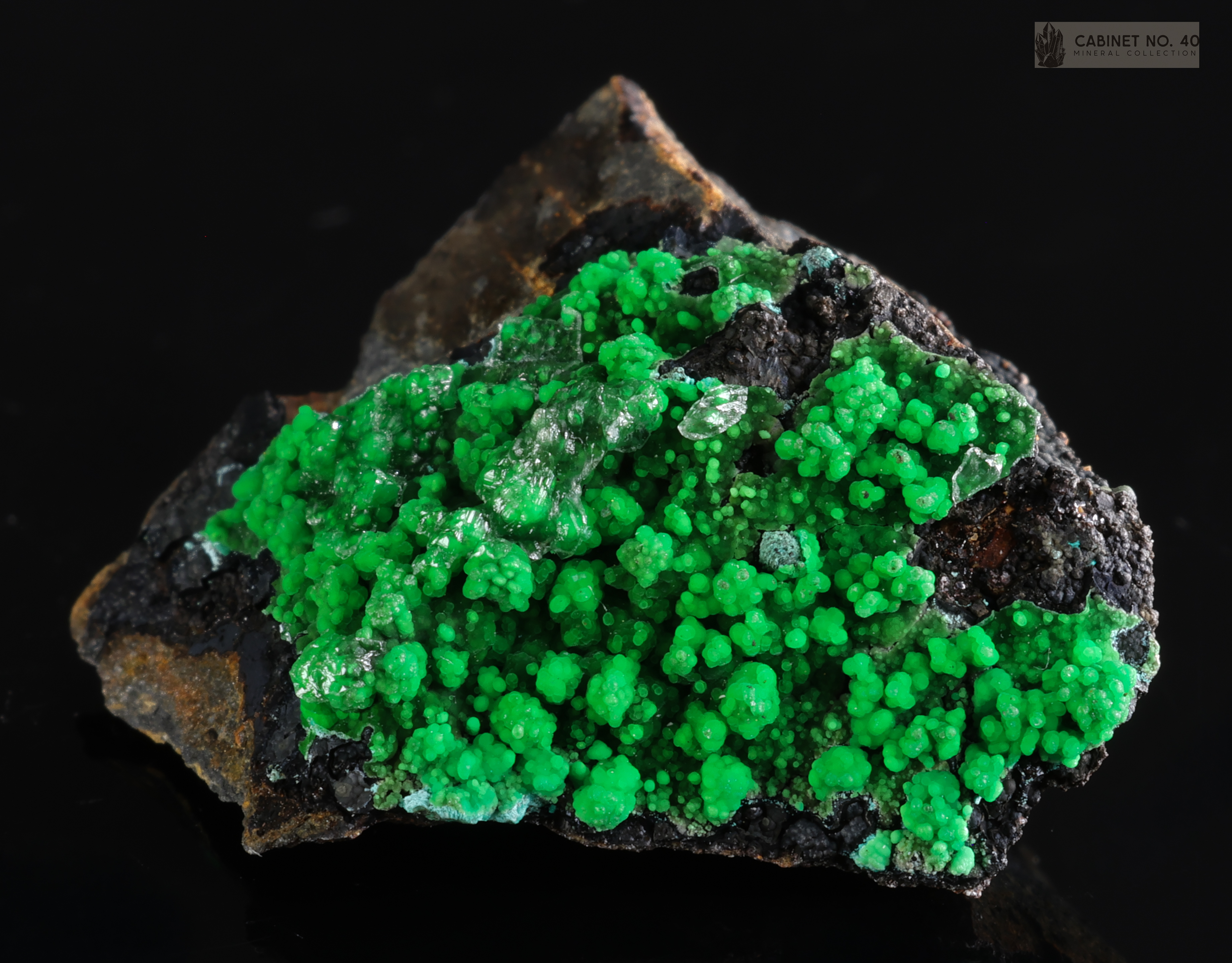
Conichalcite is a rare arsenic, copper, and calcium mineral, forming characteristic green, radial aggregates.
Properties
- Mohs hardness
- 4.5
- Color
- Green, yellow-green, greenish yellow; light green to yellowish green in transmitted light.
- Luster
- Szklisty do jedwabistego
- Streak
- Light green
- Density
- 4.33
- Cleavage
- Brak
- Fracture
- Irregular/Uneven
- Transparency
- Translucent
- Crystal system
- Orthorhombic
Diagnostic features
## Identification Conichalcite can be identified by its characteristic green color, radial or fibrous habit, and occurrence in the oxidation zones of copper deposits. It often forms coatings and crusts on other minerals. The luster is vitreous to silky. ## Distinguishing from Similar Minerals Conichalcite is sometimes confused with other green copper minerals, such as malachite or pseudomalachite. It is distinguished from malachite by its lack of reaction with hydrochloric acid (malachite effervesces), as well as its hardness and habit. It differs from pseudomalachite in chemical composition and hardness. It can sometimes be confused with libethenite, but conichalcite has a different chemical composition and usually a more radial habit. ## Crystal Forms Conichalcite most commonly occurs as radial, fibrous, or botryoidal aggregates. Crystals are usually acicular, very fine, forming coatings, crusts, or spherulites. Well-formed, single crystals are rarely found.
Geological environment
## Genesis Conichalcite is a secondary mineral, formed in the oxidation zones of copper and arsenic deposits. It forms as a result of the reaction of copper- and arsenic-rich solutions with calcium minerals in the surrounding rocks. It occurs in oxygen-rich environments, often in vugs and rock fractures. ## Mineral Associations Conichalcite often co-occurs with other secondary minerals of the oxidation zone, such as malachite, azurite, chrysocolla, limonite, pseudomalachite, olivenite, and arsenic-bearing minerals like adamite. ## Localities Known occurrences of conichalcite include Tsumeb in Namibia, where some of the best specimens have been found. Other localities include Gold Hill in Utah (USA), Mapimi in Mexico, Lavrion in Greece, and various places in Germany and Chile.
Rarity
Rare
For collectors
## Quality Criteria The most prized conichalcite specimens are those with an intense, vibrant green color, with well-formed radial or spherulitic aggregates. Large, aesthetic crystal aggregates, free from mechanical damage and impurities, are particularly sought after by collectors. A contrasting matrix on which the mineral is embedded is also important. ## Popular Localities The most famous and valued conichalcite specimens come from the Tsumeb mine in Namibia, renowned for its exceptional quality of secondary minerals. Other important sources include Gold Hill in Utah, USA, and Mapimi in Mexico.
Care and storage
## Cleaning Conichalcite is a relatively delicate mineral, so it should be cleaned carefully. It is best to use a soft brush or paintbrush to remove dust. For heavier dirt, lukewarm distilled water can be used to gently rinse the specimen. After washing, it should be thoroughly dried, preferably in the air. ## What to Avoid Avoid using strong chemicals, acids, and bases, which can damage the mineral's surface or alter its color. Conichalcite is sensitive to high temperatures and prolonged exposure to sunlight, which can lead to fading. It should not be exposed to sudden temperature changes. ## Storage Conichalcite is best stored in enclosed display cases or boxes, away from dust and direct sunlight. Maintaining stable temperature and humidity is advisable. Delicate specimens, especially those with a radial structure, should be stored in a way that protects them from mechanical damage.